


Diversification Efforts Target Myanmar’s Heavy Rare Earths
\nMyanmar’s rare earth sector is attracting attention from India, the United States, and other nations seeking to diversify critical mineral supplies. The country possesses heavy rare earth elements (HREE), specifically dysprosium (Dy) and terbium (Tb), which are located primarily in Kachin State under the influence of the armed Kachin Independence Army (KIA) and Kachin Independence Organisation (KIO).
\nDysprosium and terbium are sought after for enhancing the thermal performance of permanent magnets used in electric motors, advanced electronics, and defense technologies. The United States Geological Survey (USGS) estimates that Myanmar produced approximately 22,000 tonnes of rare earth oxide (REO) equivalent in 2025, accounting for 7.1% of global production in 2024.
\nDespite this output, Myanmar lacks the refining and manufacturing capacity to process rare earths into higher-value industrial products. This gap creates strategic industrial value outside the country, particularly in China, which remains central to Myanmar’s rare earth trade due to its processing capabilities. S&P Global estimates that Myanmar supplied about 52.8% of China’s rare earth imports in 2025.
\nThe International Energy Agency (IEA) estimates that China accounted for about 91% of global refining output of magnet rare earths and 94% of sintered permanent magnet manufacturing in 2024. This dominance underscores the strategic interest of other nations in establishing alternative supply chains.
\n\nStrategic Interest in the Historic Stilwell Road
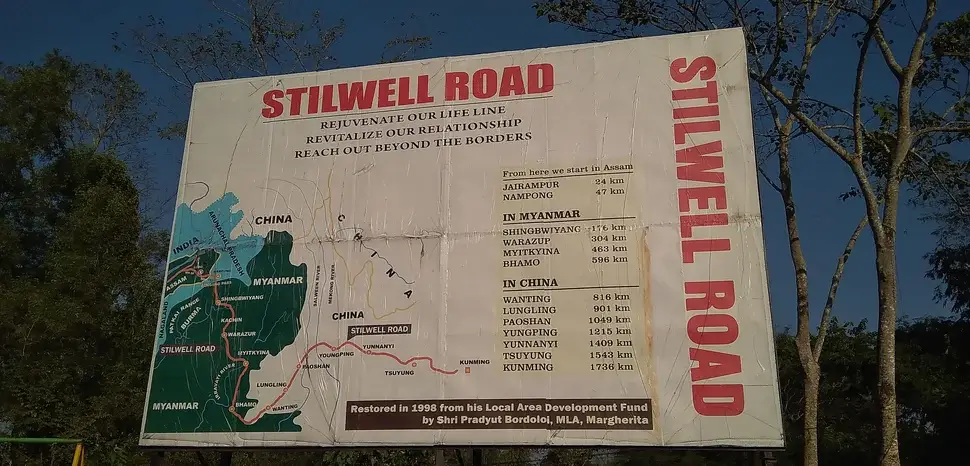
\nThe historic Stilwell Road, also known as the Ledo Road, connects Ledo in India’s Assam region with Kunming in China through northern Myanmar. Originally a Second World War supply route, the road has attracted renewed interest not for military logistics, but for accessing rare earth elements.
\nHowever, turning these resources into a reliable alternative source of supply is complicated by armed conflict, contested authority, and weak infrastructure in northern Myanmar. HREE extraction is concentrated in Kachin State, where the KIA/KIO maintains significant influence and control over the area adjacent to the road.
\n\nIndia’s Manufacturing Push and US Supply Chain Goals
\nIndia has identified critical minerals as important to manufacturing, energy, telecommunications, and defense. The Indian government is seeking to expand domestic rare earth processing and permanent magnet production. In November 2025, the Indian government approved a Rs. 7,280 crore (approximately US$760 million) scheme to establish 6,000 metric tonnes per annum (MTPA) of sintered rare earth permanent magnet (REPM) manufacturing capacity.
\nThe United States aims to diversify critical mineral sources and reduce dependence on foreign processing networks. A January 2026