

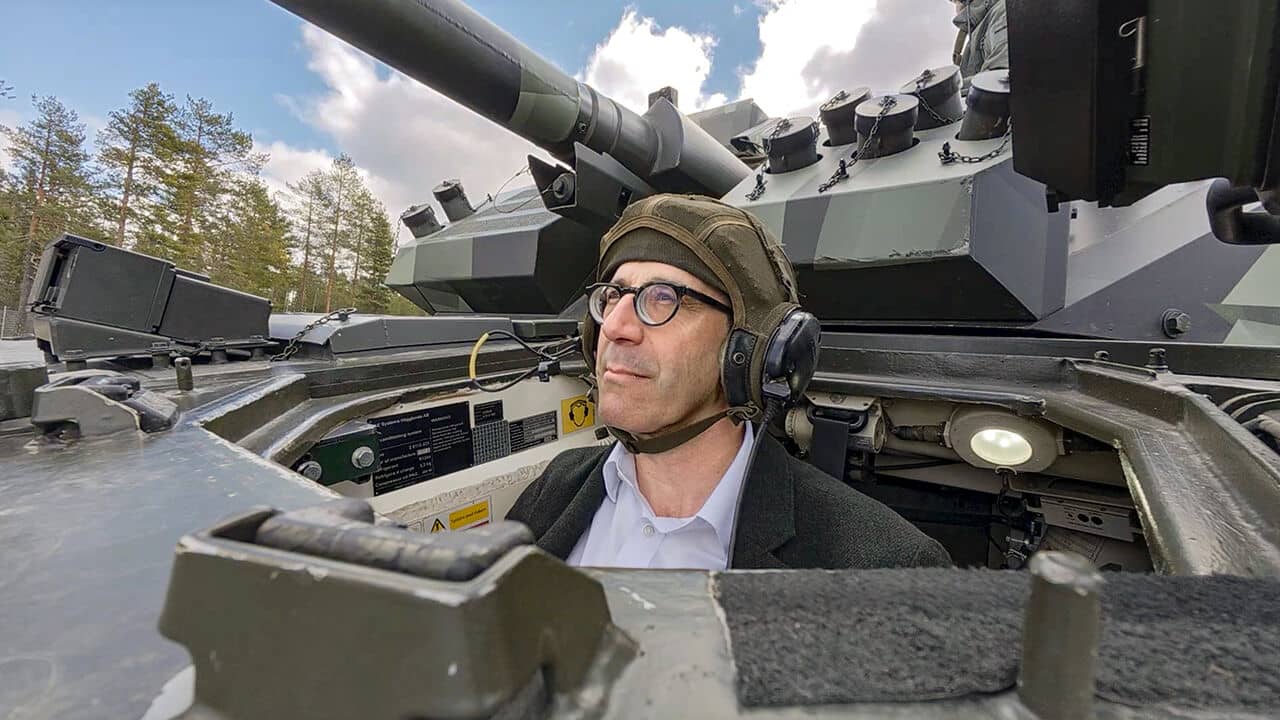

Examining the Interior of Heavy Armor
The latest installment of "The War Room" newsletter, published by The Economist, offers a detailed look at the operational environment inside one of modern military hardware's most imposing platforms. The piece, titled "Inside a 38-tonne armoured beast," was authored by Jonathan Rosenthal, who serves as the international editor for the publication. Published on August 3, 2026, the article moves beyond standard technical specifications to provide a first-hand account of what it entails to operate such heavy machinery.
Rosenthal’s report focuses specifically on an infantry fighting vehicle (IFV), a category of armored combat vehicle designed to transport infantry and provide fire support during ground engagements. The subject of his exploration is described not merely by its function, but by its sheer mass: 38 tonnes. This weight class places the vehicle in the upper tier of conventional IFVs, suggesting a design prioritized on heavy protection and firepower rather than rapid strategic mobility.
Operational Perspective from the Driver’s Seat
To convey the reality of operating such equipment, Rosenthal did not rely solely on interviews or external observation. Instead, he took the vehicle for a spin, allowing readers to experience the interior environment through his direct engagement with the machine. This method of reporting provides a visceral understanding of the spatial constraints and physical demands placed on crew members who operate these vehicles in active theaters.
The newsletter format allows for a narrative approach that blends technical assessment with personal observation. By positioning himself inside the cabin, Rosenthal highlights the contrast between the external perception of the vehicle as an invulnerable fortress and the internal reality of a confined, mechanical workspace. The description of the "spin" implies a controlled test environment, likely designed to demonstrate the vehicle's maneuverability despite its significant tonnage.
Technical Specifications and Design
The primary metric emphasized in the report is the 38-tonne weight of the armored beast. This figure serves as the central anchor for understanding the vehicle's capabilities and limitations. In military engineering, weight dictates armor thickness, suspension complexity, and engine power requirements. A vehicle of this mass requires a robust powertrain to maintain tactical speeds on varied terrain, from paved roads to rough, unpaved battlefields.
The term "armoured beast" used in the title reflects the imposing physical presence of the IFV. The exterior is designed to deflect small arms fire and shrapnel, while the interior must protect the crew from ballistic threats and improvised explosive devices. The 38-tonne specification suggests a high level of protection, likely incorporating composite armor or reactive plating, though specific material compositions are not detailed in the provided source context.
Contextualizing Modern Infantry Support
The publication of this piece in "The War Room" newsletter situates the vehicle within broader discussions on modern warfare and military technology. As conflicts evolve, the role of infantry fighting vehicles remains critical for bridging the gap between heavy armor and dismounted infantry. The ability to move troops safely across contested ground while providing direct fire support is a key requirement for contemporary armies.
Rosenthal’s assignment as international editor underscores the global interest in such military developments. The focus on an infantry fighting vehicle indicates an ongoing attention to land-based combat capabilities, particularly those that emphasize crew survival and firepower density. The 38-tonne figure serves as a benchmark for readers to compare against other vehicles in the global arsenal.
The Role of the War Room Newsletter
"The War Room" newsletter functions as a specialized publication within The Economist, dedicated to defense and security issues. By featuring hands-on reporting from Rosenthal, the newsletter aims to demystify complex military hardware for a general audience. The approach combines journalistic rigor with immersive storytelling, allowing readers to grasp the practical implications of defense spending and technological advancement.
The August 3, 2026 publication date places this report in the context of current geopolitical tensions and military modernization efforts. While specific operational deployments are not mentioned in the source material, the timing suggests relevance to ongoing discussions about national defense strategies and the procurement of heavy armor for infantry units.
Implications for Crew and Combat
The interior experience described by Rosenthal provides insight into the daily reality of armored crews. Operating a 38-tonne vehicle requires not only technical skill but also endurance, given the noise, vibration, and confined space inherent in such designs. The "spin" taken by the author likely demonstrated the vehicle's stability and control systems, which are essential for maintaining accuracy while moving.
The emphasis on the interior highlights the human element of mechanized warfare. Behind the steel and electronics are soldiers who must operate effectively under stressful conditions. The newsletter’s focus on this aspect offers a counterpoint to purely strategic analyses, grounding the discussion in the physical experience of those who use these machines.
Future of Heavy Armor
The detailed examination of this specific IFV contributes to the broader understanding of armored warfare trends. As military technologies advance, the balance between protection, mobility, and firepower remains a central challenge. The 38-tonne vehicle represents one solution to these challenges, prioritizing heavy armor at the cost of strategic weight.
Reports like Rosenthal’s help inform public discourse on defense priorities. By providing clear, factual accounts of military equipment, publications like The Economist enable readers to make informed judgments about global security issues and the role of heavy armor in modern conflict scenarios.