

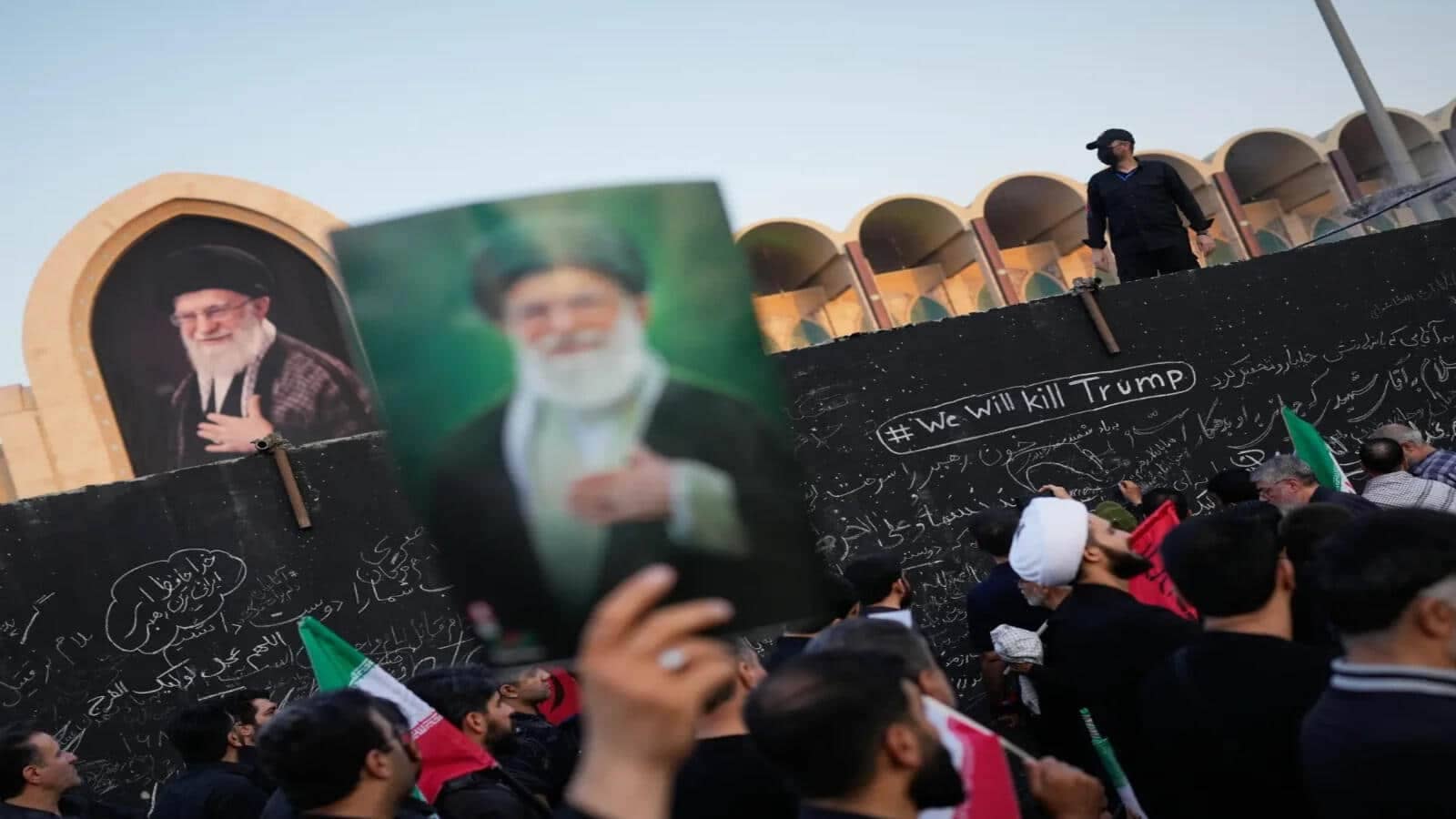

Thousands Gather for Supreme Leader's Final Rites in Tehran
Thousands of mourners converged on Iran's capital, Tehran, on Sunday for the funeral ceremony of the late Supreme Leader Ayatollah Ali Khamenei. The solemn event unfolded amidst a backdrop of persistent geopolitical tensions involving Iran, the United States, and Israel, lending additional weight and scrutiny to the public display of national unity and mourning. The sheer scale of the gathering underscored the profound impact of Khamenei's decades-long leadership on the nation and its people.
Attendees, predominantly dressed in black as a traditional sign of mourning, filled the streets and public squares, creating a vast sea of somber faces. They carried a multitude of Iranian national flags, religious banners bearing Islamic inscriptions, and numerous portraits of the deceased Supreme Leader. This visual demonstration of collective grief and allegiance served as a powerful public spectacle, meticulously organized yet reflecting genuine sentiment. The gathering was not merely a funeral but also a significant moment for Iran's leadership, occurring at a critical juncture marked by impending domestic political transitions and considerable regional uncertainties that demand careful navigation by the incoming administration.
Anti-Western Sentiment Dominates Public Discourse
During the funeral proceedings, the atmosphere was charged with overt political messaging, transforming the mourning ceremony into a platform for nationalistic and ideological expression. Reports, including those from Pragativadi, indicated that a speaker at the event actively led chants specifically directed against the United States and Israel. These vocal expressions of defiance were echoed by many attendees, who displayed banners emblazoned with hostile political messages. The collective demonstration of animosity underscored a deep-seated anti-Western sentiment prevalent within certain segments of the population, particularly concerning perceived foreign interference in Iran's internal affairs and regional policies. The messages conveyed during the ceremony reinforced the long-standing opposition to what is often characterized as imperialistic influence in the Middle East.
The display of such strong political rhetoric at a state funeral highlights the intertwining of religious and political identity in Iran, where public ceremonies often serve as platforms for expressing national and ideological stances. This integration ensures that significant national events are not just commemorative but also reaffirm core revolutionary principles and geopolitical positions.
Unverified Claims Circulate Online Amidst Tensions
In parallel with the official proceedings, various videos began circulating rapidly on social media platforms, purportedly showing individuals making additional, unscripted statements during the gathering. While these clips quickly gained traction online and were shared widely, their authenticity has not been independently verified by any official body, Iranian state media outlets, or third-party observer organizations. The proliferation of such unconfirmed content in a highly sensitive political environment raises significant questions about information dissemination and the potential for misinformation, especially when genuine news is scarce or contested. These unverified clips continue to circulate online without official confirmation, contributing to a complex and often confusing information landscape.
Iran Navigates Leadership Transition Amid Regional Flux
The funeral ceremony for Ayatollah Ali Khamenei was held at an exceptionally sensitive juncture for Iran. His passing necessitates a significant domestic political transition, a process that inherently brings both challenges and opportunities for the country's future direction. The event itself is widely perceived as a crucial moment for the country's leadership as it seeks to maintain stability and direction amid these changes, signaling continuity while preparing for new leadership. This internal shift occurs concurrently with persistent and profound diplomatic uncertainty surrounding various regional conflicts and international relations, placing additional pressure on the transitional period.
Strained Diplomatic Relations Persist on Key Issues
The broader regional context is defined by heightened tensions, particularly between Tehran, Washington, and Jerusalem. Available reports, including those from Pragativadi and other sources from this period, did not include any responses from opposing parties, underscoring the deep divisions and lack of immediate diplomatic engagement. Key diplomatic channels between these powers remain largely closed on a multitude of critical issues. These include complex nuclear negotiations, which have seen intermittent progress and frequent stalemates over the years, representing a significant point of contention on the international stage. Furthermore, ongoing proxy warfare across various theaters in the Middle East continues to fuel instability, with Iran and its adversaries often supporting opposing factions in conflicts throughout the region.
The absence of open dialogue on such vital matters contributes to an environment of continued instability and unpredictability, making the navigation of both domestic and international challenges particularly arduous for Iran's leadership. The funeral, therefore, not only marked the end of an era for Iran but also served as a public affirmation of national resolve in the face of external pressures and internal transitions, with the world observing closely how the nation's leadership will navigate these multifaceted challenges and shape its future trajectory.