


The Normalization of Violence and Financial Opacity
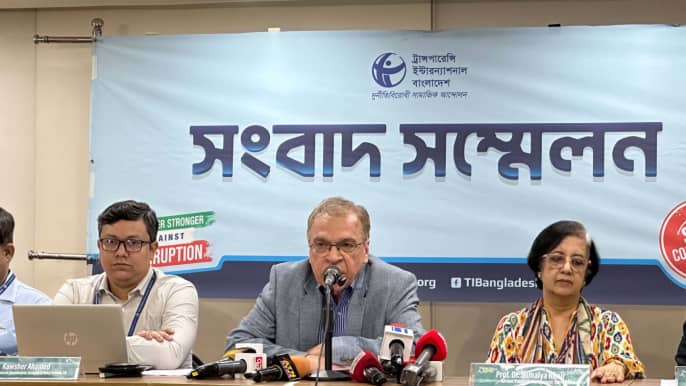
Transparency International Bangladesh (TIB) Executive Director Iftekharuzzaman stated that money, muscle power, and political violence have become normalized within the country's major political parties. He made these remarks while unveiling a research report titled "Institutional Governance of Political Parties in Bangladesh" at a press conference on November 1.
Iftekharuzzaman attributed the normalization of violence and corruption to a lack of effective measures against irregularities, weak accountability, and insufficient legal frameworks for internal democracy and political financing transparency. He noted that the lack of transparency fosters competition for patronage based on financial resources and highlighted a significant gap between formally reported party finances and actual activities.
According to Iftekharuzzaman, abuse of power, black money, and political criminalization are fueling internal conflicts within major parties. He claimed these factors are turning political affiliation into power-driven business ventures. The executive director argued that dynastic and elite dominance in party leadership is permitted by the lack of participation from grassroots representatives, women, and individuals from diverse backgrounds.
Businessmen Dominate Parliamentary Elections
The TIB study provided specific data regarding the composition of parliamentary candidates and elected members across recent election terms. The research found that businessmen dominated parliamentary elections from the ninth to the 13th terms.
In the ninth election, businessmen accounted for 47.4% of candidates and 56.6% of elected MPs. This figure rose in the tenth election, where they represented 56.9% of candidates and 57.7% of elected MPs. By the 13th parliamentary election, 48.5% of candidates and 59.9% of elected MPs were businessmen, according to the research.
Recommendations for Legal and Institutional Reform
The report made 12 recommendations to improve governance within political parties. These include amending the Representation of the People Order (RPO), 1972, and the Political Party Registration Rules, 2008, to ensure transparency.
Additional recommendations involve bringing political parties under the Right to Information Act, 2009, and strengthening the Election Commission's oversight of party financial accounts and organizational activities.
Iftekharuzzaman stated that political parties deserve credit for advancing democracy in Bangladesh but must share responsibility for its failures alongside other stakeholders. He emphasized that addressing these governance gaps requires structural changes to legal frameworks and increased accountability mechanisms.