

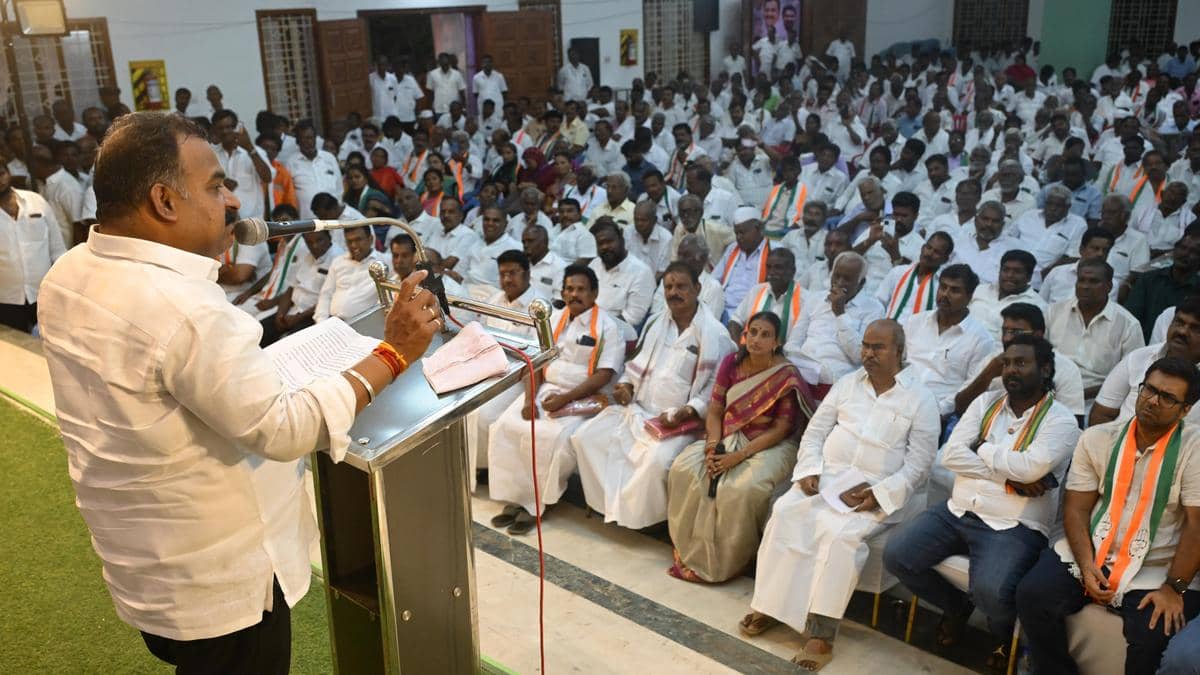

Political Accusations Surrounding Medical Entrance Examinations
The president of the Tamil Nadu Congress Committee (TNCC) has leveled significant allegations, asserting that the Bharatiya Janata Party (BJP) is strategically leveraging the widespread network of National Eligibility cum Entrance Test (NEET) coaching centers for political gain. This claim underscores a perceived intersection between the burgeoning educational infrastructure dedicated to medical entrance preparation and the BJP's broader political strategy across India. The TNCC president suggests that the national ruling party is not merely observing but actively capitalizing on the existing system of medical admissions, which heavily relies on standardized testing and, consequently, on a parallel coaching industry.
This assertion by the TNCC president serves as a direct and pointed criticism of the fundamental framework of the NEET examination itself. The comments extend beyond a simple critique of political maneuvering, delving into the broader implications of the test. Specifically, the TNCC leader has drawn attention to NEET’s profound impact on students from diverse backgrounds and its perceived erosion of educational equity, particularly across different socioeconomic strata within Tamil Nadu and beyond.
Concerns Over Educational Equity and Student Access
At the core of the TNCC president's allegations is the argument that the NEET coaching industry has evolved beyond its educational purpose, transforming into a potent vehicle for political mobilization. According to the TNCC president, the BJP is actively utilizing these numerous coaching centers as conduits to expand its influence, not only among the aspiring medical students themselves but also within their families and wider communities. This criticism implicitly suggests that the very structure of the coaching ecosystem inherently favors students who possess the financial means to afford extensive, often expensive, preparation, thereby creating a significantly uneven playing field for those from less privileged backgrounds.
The statement from the TNCC leader further underscores deep-seated concerns regarding how standardized testing mechanisms, such as NEET, fundamentally affect equitable access to medical education. By explicitly linking the proliferation and operation of these coaching centers to the BJP's pursuit of political gain, the TNCC president is directly challenging the perceived neutrality and fairness of the current medical admission process. The implication is clear: political entities are not merely passive observers but are actively engaging with and benefiting from this educational sector for electoral advantage, potentially at the expense of genuine meritocracy and equal opportunity.
Systemic Bias in Medical Aspirations
The central premise of the TNCC president’s argument posits that NEET coaching centers are not solely educational institutions designed to aid students, but rather are being strategically leveraged for political ends. This perspective frames the entire issue as one of inherent systemic bias. The financial and logistical demands associated with intensive NEET preparation—including tuition fees, study materials, and often relocation to urban centers for better coaching—create significant barriers. These very demands, according to the TNCC president, inadvertently or intentionally create opportune pathways for political parties to insert themselves into the daily concerns, anxieties, and aspirations of students and their parents.
The criticism articulated by the TNCC president is not confined merely to the academic outcomes or the pass rates of the NEET examination. Instead, it extends to the broader social dynamics and economic pressures that surround the test. By alleging that the BJP derives political and potentially financial profit from this arrangement, the TNCC president is pointing to a perceived exploitation of the intense anxieties of students striving for medical seats and the profound aspirations of their parents for their children’s future. This alleged exploitation, the argument suggests, turns a critical educational pathway into a tool for political leverage.
Tamil Nadu's Political Stance on National Education Policies
The allegations made by the TNCC president firmly embed the contentious issue of medical admissions within the broader political debate in Tamil Nadu. These remarks are not isolated but form part of a more extensive critique by the Congress party and other regional parties against national policies that significantly impact state-level education and student welfare. By specifically targeting the BJP, the Congress party is attempting to frame the national government’s approach to medical education as one that prioritizes commercial interests and the profitability of the coaching industry over the fundamental principle of equitable access to higher education for all citizens.
This political maneuvering by the TNCC highlights the persistent and often intense tension between state-specific educational concerns and the overarching national examination frameworks imposed by the central government. The TNCC president’s comments serve to galvanize opposition against the current structure of NEET, portraying it not as a neutral, merit-based selection system, but as a framework that can be manipulated and exploited for partisan political gain, thereby undermining its stated purpose.
Contrasting Narratives on Educational Access
The allegations put forth by the TNCC president represent a strategic effort to draw public attention to the significant disparities prevalent in access to medical education. By sharply focusing on the pervasive role and alleged political exploitation of coaching centers, the party aims to underscore the immense financial burdens placed upon students, particularly those hailing from economically disadvantaged backgrounds or rural areas. This narrative directly contrasts with the official stance often articulated by proponents of NEET, which asserts that the examination provides a uniform and standardized benchmark for all medical aspirants, ensuring a level playing field based purely on merit.
The political discourse surrounding these claims continues to evolve, with various political parties and educational stakeholders weighing in on the multifaceted impact of the examination system. The TNCC president’s statements significantly contribute to an already growing body of criticism regarding the profound social and economic implications of standardized medical entrance tests in India, particularly in states like Tamil Nadu where the debate over NEET has been historically fervent.