

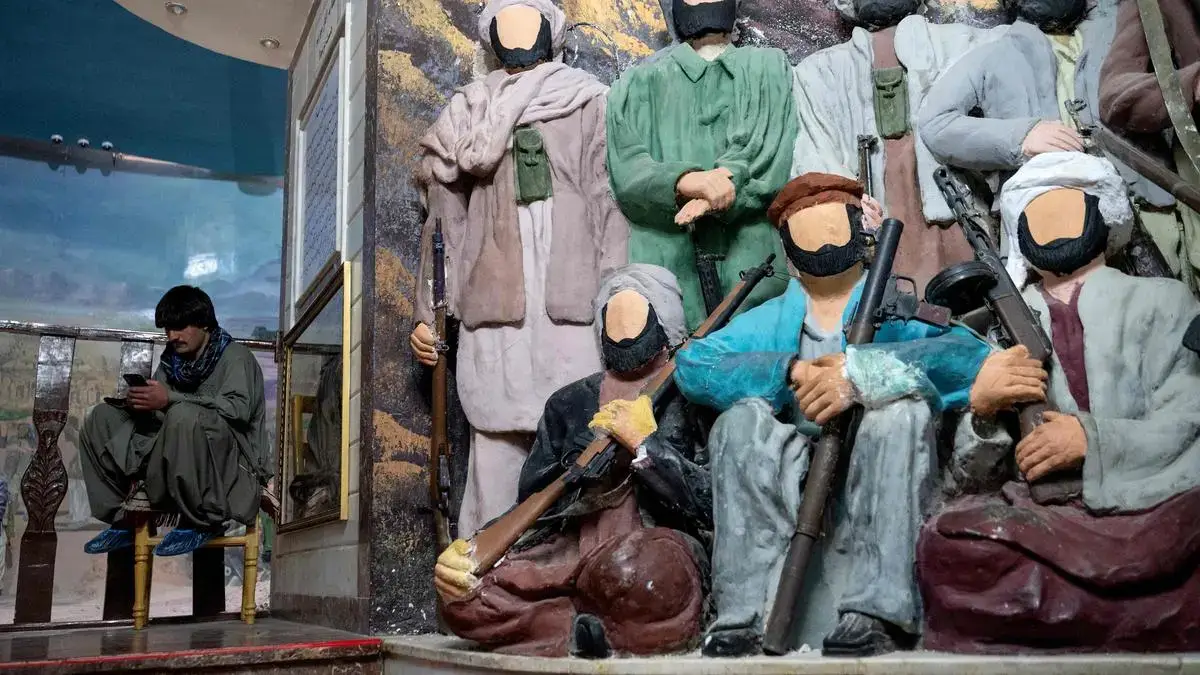

The Historical Genesis of Terror Infrastructure
According to former Indian Police Service (IPS) officer Anju Gupta, the current landscape of terrorism in South Asia is deeply rooted in geopolitical decisions made during the Cold War era. In her book titled "Glocal Terror in South Asia," Gupta explores the intricate connections between terrorism within India and the broader Af-Pak terror infrastructure. Her work aims to join the dots regarding how India became a primary target for jihadist groups operating in the region.
The narrative begins with the Afghan Jihad, a conflict that served as the genesis for modern terror hubs in the area. This movement was propped up by a coalition of the United States, Saudi Arabia, and Pakistan. These three entities were united in their strategic objective to fight against the Soviet Union (USSR) during its occupation of Afghanistan. The support provided during this period laid the foundational structures that would later evolve into transnational terrorist networks.
Gupta’s analysis suggests that the organizational frameworks established during the Afghan jihad did not dissipate after the Soviet withdrawal. Instead, they matured and expanded their operational scope. The book unravels how these early alliances and training facilities transformed over decades, eventually turning their attention toward new targets, including India.
Muridke: From Regional Hub to International Target
Central to Gupta’s examination is Muridke, a small town located just 30 kilometers from Lahore in Pakistan. For years, Muridke operated under the radar of international attention until it became widely known in India following specific military actions. The town gained significant notoriety after Operation Sindoor in 2025, when the Indian Air Force struck Lashkar-e-Taiba’s (LeT) sprawling headquarters and primary training hub situated there.
Before the events of 2025, Muridke had already established itself as a critical node in the Af-Pak terror infrastructure. The town hosted the main headquarters of Lashkar-e-Taiba, one of the most prominent militant groups in the region. Beyond being an administrative center, it served as a primary training facility for jihadists. The presence of such extensive facilities indicates a long-term commitment to cultivating terrorist capabilities in the area.
The rise of Muridke as a terror hub was not an overnight development. According to Gupta, its prominence has been decades in the making. The town’s evolution from a local settlement to a global symbol of jihadism is tied directly to the earlier support it received during the Afghan jihad. The infrastructure built with foreign backing provided the logistical and ideological framework necessary for groups like LeT to operate openly and expand their reach.
Operational Implications and Strategic Shifts
The connection between the Afghan jihad and the current terror landscape in South Asia highlights a shift in strategic focus. What began as a regional conflict against Soviet forces evolved into a transnational jihadist movement. India, previously not the primary target of these early networks, found itself on the radar of jihadis due to the expansionist goals of groups like Lashkar-e-Taiba.
Gupta’s book details how the ideological and operational links between Afghan mujahideen veterans and Pakistani militant groups facilitated this shift. The training facilities in Muridke became a conduit for sending fighters into Kashmir and other parts of India. The town’s proximity to Lahore allowed it to serve as a logistical base, while its isolation provided a degree of security for high-level planning.
The 2025 Indian Air Force strike on Muridke marked a significant escalation in the conflict. By targeting the headquarters and training hub, India directly challenged the operational capacity of LeT. The strike brought international attention to the town’s role as a terror hub, validating Gupta’s assertions about its historical and contemporary significance.
Geopolitical Consequences of Past Alliances
The book also addresses the geopolitical consequences of the alliances formed during the Afghan jihad. The support provided by the US, Saudi Arabia, and Pakistan against the USSR created a legacy of militant infrastructure that persists today. Gupta argues that this legacy is directly responsible for the current security challenges faced by India.
By examining the historical roots of these groups, Gupta provides a comprehensive view of how terrorism in South Asia became a transnational issue. The book does not merely list events but connects them to show a clear line of continuity from the Soviet-Afghan war to the present day. This perspective underscores the long-term impact of geopolitical choices made decades ago.
The identification of Muridke as a key terror hub serves as a case study for this broader phenomenon. The town’s history illustrates how local conflicts can be instrumentalized by external powers, leading to prolonged instability in the region. As Gupta notes, the roots of Muridke’s rise are found in the Afghan jihad, highlighting the enduring nature of these geopolitical tensions.
Future Implications for Regional Security
The exposure of Muridke’s role in the terror infrastructure has implications for regional security dynamics. The strike in 2025 demonstrated India’s willingness to target terrorist infrastructure across borders. However, the historical context provided by Gupta suggests that dismantling physical infrastructure may not be sufficient without addressing the ideological and organizational roots.
The book serves as a reminder that the current threat landscape is a product of historical decisions. The connections between past alliances and present-day terrorism require a nuanced understanding to address effectively. Gupta’s work provides this understanding by tracing the lineage of terror groups from their Afghan origins to their current operations in South Asia.