

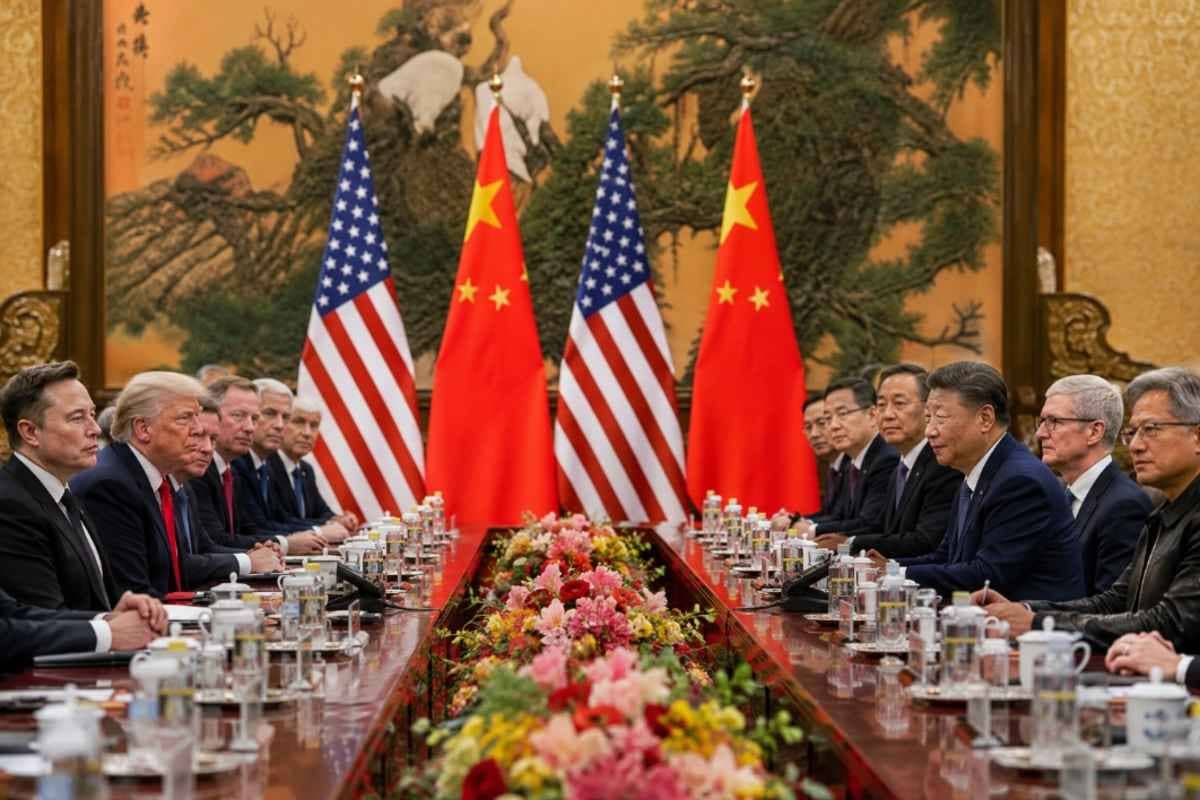

US and Chinese Presidents Convene in Beijing Amid Geopolitical Strain
High-Stakes Discussions on Trade and Technology
US President Donald Trump and Chinese President Xi Jinping met in Beijing for a series of high-stakes discussions. The talks unfolded against a backdrop of increasing geopolitical tensions between the two global powers, with particular focus on economic and technological competition.
The agenda for the bilateral meeting encompassed critical areas of contention that have shaped the relationship between Washington and Beijing in recent years. These included persistent disagreements over international trade practices, the rapidly evolving landscape of artificial intelligence (AI), and strategic access to and control over semiconductor technology.
Key Areas of Tension: Trade, AI, and Semiconductors
Trade: The trade relationship between the United States and China has been a significant source of friction. Concerns raised by the U.S. side have frequently centered on the substantial trade deficit, allegations of intellectual property theft, and perceived barriers to market access for American companies operating in China. Previous administrations have implemented tariffs and other trade measures in an attempt to address these imbalances, leading to retaliatory actions from Beijing.
Artificial Intelligence: Competition in artificial intelligence represents another critical dimension of the bilateral relationship. Both nations view AI as a foundational technology with profound implications for economic growth, national security, and global influence. The race for AI dominance involves significant investments in research and development, talent acquisition, and the establishment of ethical frameworks, with each country aiming to lead in this transformative field.
Semiconductor Access: Access to and control over advanced semiconductor technology has emerged as a paramount strategic concern. Semiconductors are fundamental components for virtually all modern electronic devices, from consumer electronics to advanced military systems. The United States has implemented export controls and other restrictions aimed at limiting China's access to advanced chip manufacturing equipment and designs, citing national security concerns. China, in turn, has prioritized self-sufficiency in its domestic semiconductor industry, investing heavily to reduce reliance on foreign technology.
Global Tech Leaders Join the Dialogue
A notable aspect of the Beijing meeting was the presence of several prominent figures from the global technology sector. Their participation underscored the direct relevance of the discussions to the future of the technology industry worldwide. These leaders represent companies at the forefront of innovation in areas directly impacted by US-China relations, including electric vehicles, consumer electronics, and advanced computing.
Among the high-profile attendees were:
- Elon Musk: CEO of Tesla and SpaceX, whose companies operate extensively within both the US and Chinese markets, particularly in electric vehicles and advanced manufacturing.
- Tim Cook: CEO of Apple Inc., a company with significant manufacturing operations and a vast consumer base in China, making it highly sensitive to trade policies and supply chain stability.
- Jensen Huang: CEO of Nvidia Corporation, a leading designer of graphics processing units (GPUs) and AI chips, whose business is directly affected by semiconductor export controls and the global competition for AI dominance.
The presence of these industry leaders suggests a direct engagement between policymakers and the private sector on issues that have far-reaching economic and technological implications. Their involvement could provide insights into industry perspectives on supply chain resilience, technological collaboration, and the potential impacts of policy decisions on global innovation and market dynamics.
The discussions in Beijing are expected to inform future policy directions for both nations as they navigate the complexities of their intertwined economies and competing technological ambitions.