

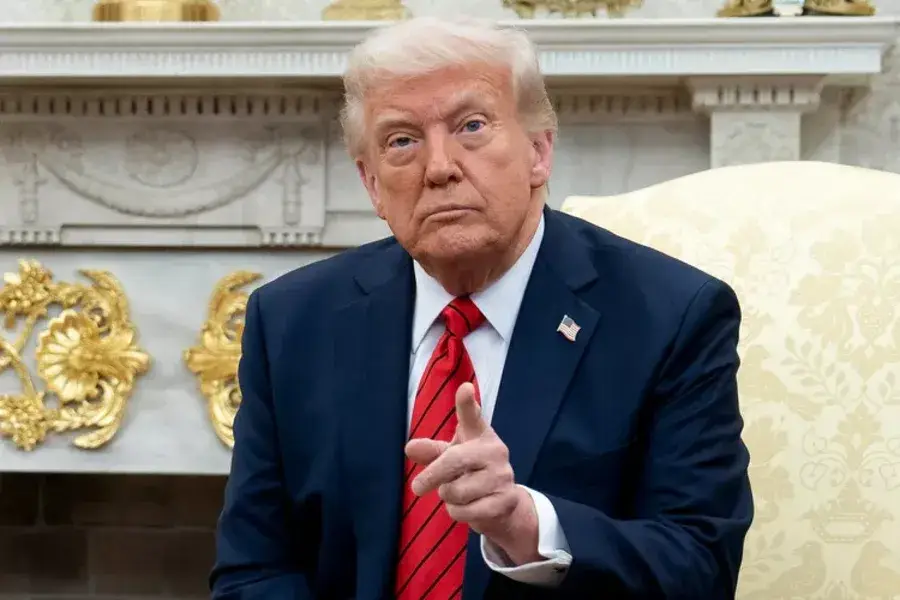

Executive Order Waives Tariffs on Russian Energy Buyers
U.S. President Donald Trump signed an executive order on Sunday exempting Russia from a new sanctions measure under the Graham Act, a decision that immediately drew criticism from lawmakers in both political parties.
The executive order provides a waiver from 100 percent tariffs targeting the top five purchasers of Russian oil and gas, specifically naming India and China among those affected by the exemption. According to the text of the order, these waivers will remain in effect until the President or Secretary of State determines that further action is necessary, a determination to be made in consultation with the Treasury Secretary and the U.S. Trade Representative.
The move effectively nullifies a key economic pressure mechanism established by Congress last month. The Graham Act, formally known as the Lindsey O. Graham Sanctioning Russia and Iran Act, was passed overwhelmingly by the Senate with an 86-11 vote to increase economic pressure on Russia and Iran.
Trump Defends Decision at Mar-a-Lago
Speaking to reporters at his Mar-a-Lago resort in Miami, Trump defended the waiver as a strategic necessity. He stated that the decision was in the interest of the United States and the wider world.
"It’s a very good decision, and it’s going to be a decision that’s good for the country, and I think good for the world because we’re really at a world stage," Trump told reporters. His remarks came a day after he signed the executive order, signaling an administration priority to ease tensions with major energy consumers of Russian resources.
Bipartisan Backlash From Senate
The exemption triggered immediate pushback from Republican and Democratic senators who had supported the original legislation. Critics argued that the waiver undermined the legislative branch's authority and failed to hold the Kremlin accountable for its actions in Ukraine.
Republican Senator Thom Tillis of North Carolina called the decision "beyond irresponsible." He questioned what part of enforcing a law passed 86-11 by the Senate the administration did not understand. Tillis accused the administration of "capitulating to a Russian dictator" who illegally invaded Ukraine. He further argued that the administration should focus on resolving the Iran conflict to lower energy prices rather than easing pressure on Russia.
Republican Senator John Cornyn of Texas also criticized the waiver, stating that the late Lindsey Graham, for whom the act is named, "would be appalled" by the decision. Tillis and Cornyn’s comments highlighted internal Republican dissent regarding the administration's foreign policy approach to Moscow.
Democratic Senators Condemn Waiver
Democratic lawmakers were equally vocal in their opposition. Senator Elizabeth Warren of Massachusetts accused Trump of "thumbing his nose at Congress" and enabling Russian President Vladimir Putin to continue the war in Ukraine.
Warren called on lawmakers to take action to reverse the administration’s decision, framing the waiver as a direct challenge to congressional oversight. Her comments reflected broader Democratic concerns that the executive branch was unilaterally dismantling bipartisan sanctions regimes.
Republican Criticism of Trust in Russia
Beyond the legislative and diplomatic objections, specific Republican senators raised fundamental questions about trust in the Russian leadership. Republican Senator Darline Graham of South Carolina criticized the exemption, stating she does not trust Putin or Russia.
Graham argued that the administration should choose to put pressure on Russia to end the war and lower gas prices, rather than granting exemptions that benefit Moscow's economy. Her stance underscored a segment of the Republican party that views the waiver as a betrayal of the legislative intent behind the Graham Act, which was designed specifically to isolate the Russian regime economically.