

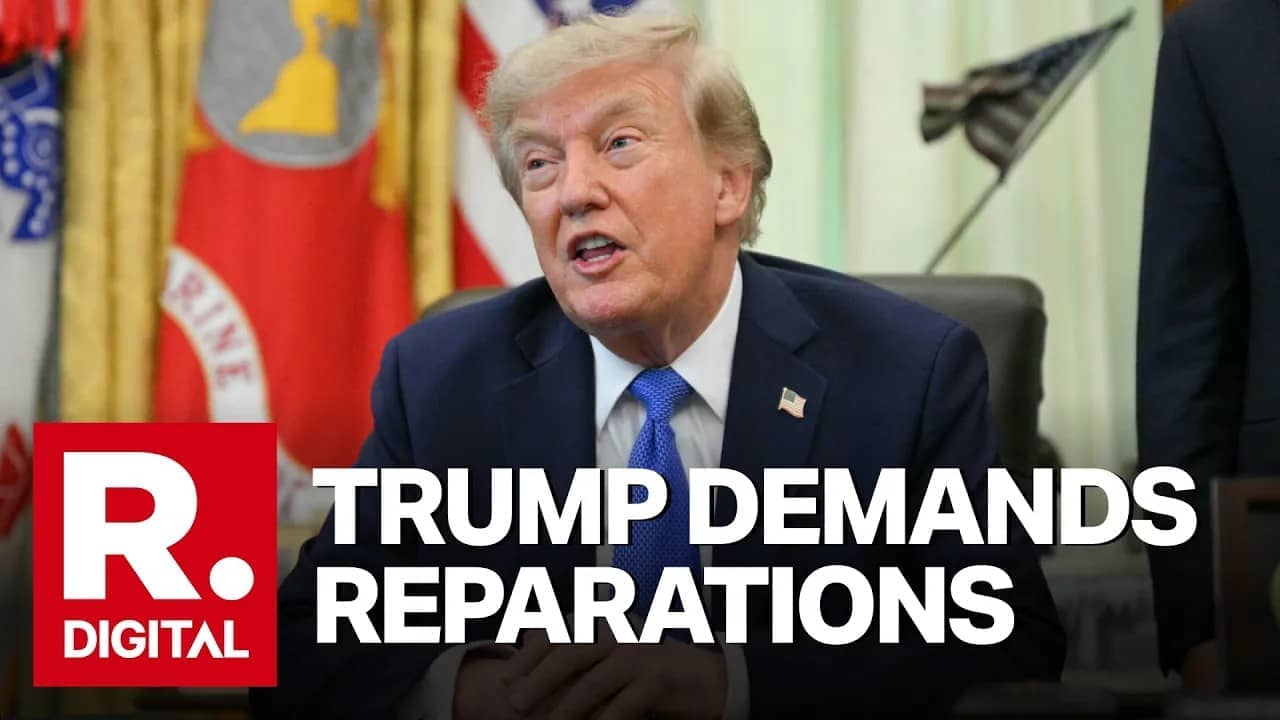

Presidential Counter-Demand for Fifty Years of Damage
President Donald Trump issued a demand on Monday that Iran pay reparations for damage caused over a 50-year period. The statement was delivered from the Oval Office as part of a broader response to Tehran's conditions regarding the reopening of the Strait of Hormuz.
In his address, President Trump dismissed the requirements set forth by Iranian Foreign Ministry spokesperson Esmail Baghaei. The Iranian official had outlined specific prerequisites that must be met before the critical waterway could be reopened to international shipping. By demanding compensation for historical grievances spanning half a century, the U.S. president sought to counterbalance Tehran's current strategic positioning.
The demand marks a significant escalation in diplomatic rhetoric between the two nations. While Iranian officials have framed their actions as necessary leverage, the White House has characterized the situation through the lens of past damages incurred by the United States. This approach shifts the focus from immediate tactical concessions to long-term historical accountability.
Strategic Calculations Behind Iran's Position
Iranian leaders operate under the assessment that they have effectively cornered President Trump in the current geopolitical standoff. According to reports, Tehran’s leadership believes it possesses significant leverage over the United States due to several converging factors. These include the diminishing stockpiles of key U.S. weapons, specifically advanced missile interceptors, and the deep unpopularity of the war among the American public.
Iranian strategists are betting that military pressure will ultimately force the United States to accept Iranian control over the Strait of Hormuz, a crucial artery for global energy supplies. They believe that time is on their side in this confrontation. The closure or disruption of the strait has kept the price of gas and other goods high, a situation that Iranian officials anticipate will persist ahead of U.S. congressional elections scheduled for November.
The calculation extends beyond immediate economic pressure. Iranian leaders recognize that attempting to open the strait by force would be costly for the United States and might require the deployment of American ground troops. Additionally, Tehran relies on the potential support of its Houthi allies in Yemen, who could widen the scope of conflict if necessary.
Geopolitical Risks and Global Implications
The strategy adopted by Iran’s leadership carries substantial risks, according to analysts monitoring the region. The belief that military pressure will yield a favorable outcome for Tehran hinges on several volatile variables. The diminishing capacity of U.S. missile defense systems is cited as a primary factor in Iranian confidence, suggesting that traditional deterrents may be less effective than in previous decades.
Furthermore, the timing of the conflict intersects with domestic political pressures in the United States. The unpopularity of the war among American voters creates a potential vulnerability that Iranian leaders aim to exploit. By maintaining pressure on global energy prices, Tehran hopes to influence the political landscape ahead of the November congressional elections.
The situation has drawn attention from global economic forums, with the widening Iran-U.S. conflict cited as a major geopolitical story. The potential for the Houthi allies in Yemen to expand their operations adds another layer of complexity to the crisis. If the conflict widens, the impact on global energy markets and regional stability could be severe.
Assessing the Path Forward
The current standoff centers on the Strait of Hormuz, a waterway named by some accounts for a Zoroastrian deity destined to emerge victorious after a 9,000-year standoff with an adversary. Iran’s leadership has adopted a similar narrative of inevitable victory, believing that their strategic patience and military positioning will force a U.S. concession.
President Trump’s response, however, rejects the premise that the United States is vulnerable to such pressure. By demanding reparations for damage done over 50 years, the administration signals a willingness to engage on historical terms rather than immediate tactical ones. This approach challenges Iran’s assumption that time and economic disruption will compel Washington to yield.
As tensions remain high, both sides appear entrenched in their positions. Iran continues to hold its leverage based on perceived U.S. weaknesses, while the United States counters with demands for historical accountability. The outcome of this standoff will depend on whether Iranian calculations regarding American political and military constraints hold true or if they underestimate the resolve of the U.S. administration.