

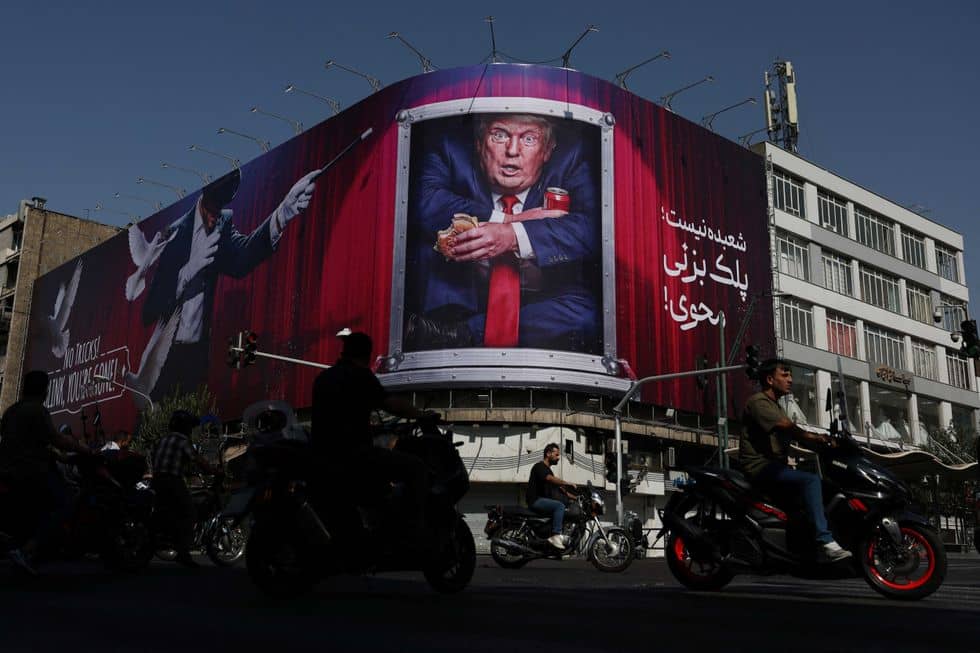

Proposal for Geopolitical Rebranding Emerges
President Donald Trump has put forth a proposal to rename the Strait of Hormuz to "TRUMP STRAIT," a move that distinctly aligns with his established personal and corporate branding strategy, which has been a hallmark of his career. The suggestion was publicly disseminated on Wednesday morning via a post on his social media platform, Truth Social. In his characteristic style, Trump's post included a direct query to his followers and a provocative comment about the region's climate. He wrote, "Now that we have it under U.S.A. control, should we change the name Hormuz Strait to TRUMP STRAIT???" He further elaborated on his vision for the region, stating, "Like America itself, it would be 'hotter' than ever before!"
This proposal represents a significant extension of Trump’s long-standing practice of attaching his name to commercial properties and ventures. For decades prior to his entry into politics, the 80-year-old president cultivated a business model centered on imprinting his brand identity onto a wide array of assets, including prominent towers, luxury hotels, and championship golf courses. This consistent approach to personal branding, which conflates his identity with the properties he owns or influences, has now, in his second term in Washington, D.C., been applied to matters of international geography and geopolitical strategy, signaling a unique blend of personal marketing and foreign policy.
The suggestion to rename the waterway carries profound implications, primarily asserting a claim of dominance and control. Trump’s post explicitly indicated that such a renaming would serve as a clear signal that the United States had effectively gained undisputed control over the crucial shipping lane. The Strait of Hormuz is not merely a geographical feature; it stands as one of the world's most vital maritime chokepoints, indispensable for the transit of global energy supplies. Its strategic importance means that any alteration to its designation or any perceived shift in its control is inherently subject to intense international scrutiny and potential diplomatic repercussions.
Regional Instability and Economic Impact
This unconventional proposal from President Trump emerges against a backdrop of significantly heightened military activity and escalating tensions in the Middle East. The region has been embroiled in a conflict initiated by Trump on February 28, which has subsequently triggered a series of ongoing retaliatory actions by Iran directly targeting U.S. forces and interests. Reports confirm that Iran has launched a barrage of missiles and drones toward U.S. positions, characterizing these actions as direct responses to a recent and renewed round of U.S. strikes conducted within Iranian territory. These recent escalations mark a concerning departure from a period of relative calm, following weeks during which a ceasefire had been tentatively in place, underscoring the volatile nature of the current geopolitical climate.
Amidst these active hostilities, the Strait of Hormuz itself continues to be a perilous zone for commercial shipping traffic. The ongoing conflict has rendered the waterway exceptionally hazardous, raising serious concerns for global maritime trade. Concrete evidence of this danger emerged when two oil tankers, navigating within the strait, were struck on Monday by unknown projectiles. This incident further exacerbates the already complex challenge of ensuring safe passage for commercial vessels through this critical maritime artery. The pervasive instability has led to a significant disruption of normal shipping operations, forcing vessels to navigate an environment fraught with risk.
Shipping and Oil Market Disruptions
The profound disruption of established trade routes through the Strait of Hormuz has already manifested in measurable and significant effects on global energy markets. Data indicates that shipping traffic in the strait remains substantially below pre-war averages, signaling a dramatic reduction in commercial activity through this indispensable chokepoint. This downturn in maritime commerce directly reflects the acute concerns among shipping companies and insurers regarding the safety and security of transiting the strait. The prevailing uncertainty surrounding the safety of the waterway has, in turn, become a primary driver of heightened volatility in international oil prices, as traders and markets react to the perceived risks to supply.
Since the renewed fighting commenced, the benchmark price of Brent crude oil has surged, climbing above $95 per barrel. This significant increase represents a rise of more than 30 percent from the price recorded at the very start of the war. The escalating costs of crude oil are a direct reflection of the market's immediate and apprehensive reaction to the tangible threats posed to global supply chains by the intensifying conflict in the region. Such a sharp rise in oil prices can have widespread economic implications, affecting everything from transportation costs to consumer prices globally, underscoring the Strait of Hormuz's pivotal role in the world economy.
International Reaction and Strategic Implications
President Trump's renaming proposal has garnered considerable attention, primarily as a symbolic gesture introduced amidst ongoing and active combat operations. While Trump explicitly framed the suggested name change as a definitive reflection of U.S. control over the crucial waterway, the physical reality on the ground and at sea presents a starkly different picture, one where control remains deeply contested. Iran’s persistent launch of missiles and drones toward U.S. positions unequivocally demonstrates that the assertion of U.S. control over the airspace and surrounding waters of the Strait of Hormuz is actively being challenged by opposing forces, creating a discrepancy between the proposed symbolic declaration and the operational realities of the conflict.
The unusual juxtaposition of a personal branding initiative with the gravity of active warfare has distinctly highlighted the unconventional nature of Trump’s approach to foreign policy. By deliberately invoking his established commercial identity and personal brand in the midst of a significant geopolitical dispute, the president has effectively merged personal marketing tactics with elements of national military and diplomatic strategy. This unique approach raises questions about the intended audience and impact of such a proposal, especially concerning its reception by international partners, allies, and adversaries alike. Their reactions and interpretations of this move remain a significant point of focus as the conflict continues to unfold.
As the war persists and its intensity fluctuates, the economic indicators directly tied to the Strait of Hormuz serve as a sensitive and critical barometer for assessing the broader impact of the hostilities on a global scale. With the price of Brent crude oil remaining elevated and shipping volumes through the vital chokepoint significantly depressed, the stability of the region continues to be an absolutely critical factor influencing global economic health. Within this complex and volatile landscape, marked by military engagements and economic repercussions, the proposed name change stands as a distinct and highly visible political statement, adding another layer to the multifaceted challenges in the Middle East.