

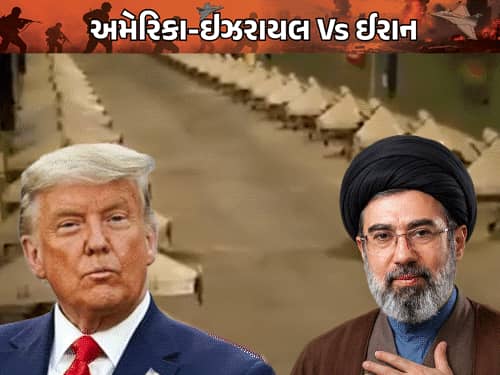

Trump Rejects "Obama-like" Iran Deal, Criticizes Opposition Amidst Unsigned Agreement
United States President Donald Trump declared on Monday that he would not pursue an agreement with Iran that mirrors the Joint Comprehensive Plan of Action (JCPOA), the nuclear deal forged by the Obama administration in 2015. President Trump articulated a clear position, stating that any potential future accord with Tehran would either be a "good deal" that serves American interests, or there would be "no deal at all." These statements emerged amidst ongoing diplomatic overtures and unconfirmed media reports regarding a possible understanding between Washington and Tehran.
President Trump's Definitive Stance on a Future Iran Agreement
President Trump has consistently been a vocal critic of the JCPOA, which was signed by Iran and the P5+1 group of world powers (China, France, Germany, Russia, the United Kingdom, and the United States). The agreement aimed to limit Iran's nuclear program in exchange for the lifting of international sanctions. However, President Trump characterized the Obama-era deal as a "disaster," asserting that its provisions had inadvertently facilitated Iran's potential path to developing nuclear weapons capabilities. His administration officially withdrew the U.S. from the JCPOA in May 2018, subsequently reimposing and escalating sanctions on Iran with the stated goal of compelling Tehran to negotiate a more comprehensive agreement.
In his recent remarks, President Trump reiterated his conviction that any new agreement must fundamentally differ from the JCPOA. He emphasized a binary outcome for future negotiations: either a substantially improved and more stringent agreement that addresses all perceived shortcomings of the previous deal, or a complete absence of any formal accord. This stance underscores his administration's demand for more expansive restrictions on Iran's nuclear activities, as well as its ballistic missile program and regional influence, which were not explicitly covered by the 2015 agreement.
Frustration with Opposition Leaders and Domestic Criticism
President Trump also expressed considerable frustration with domestic opposition leaders who have publicly criticized the prospect of a new deal with Iran. Utilizing social media platforms, he conveyed his displeasure, stating that individuals who lacked comprehensive knowledge or insight into the potential agreement were nonetheless vocal in their condemnation. He described these critics as "weak" and accused them of fostering division within the nation, suggesting that such internal dissent could undermine the United States' negotiating leverage on the international stage.
His comments highlighted a recurring theme in his foreign policy approach, where he has often sought to project an image of national unity behind his diplomatic initiatives while simultaneously confronting what he perceives as unhelpful domestic political opposition. The President's remarks underscored his belief that a unified front is essential for successful international negotiations, particularly with adversaries like Iran.
Current Status: No Signed Agreement Amidst Diplomatic Channels
Despite numerous media reports and speculation suggesting that the United States and Iran might sign an agreement as early as Sunday, no such accord has been officially announced or confirmed by either nation. Earlier reports had indicated that a potential agreement could involve an extension of a ceasefire in a regional conflict and the reopening of the Strait of Hormuz, a critical maritime chokepoint for global energy shipments.
In a separate but related development, Iran communicated a verbal message to the United States through the Sultanate of Oman. Oman has historically maintained diplomatic ties with both Washington and Tehran and has frequently served as a neutral intermediary in sensitive discussions between the two countries. Iran's Deputy Foreign Minister, Kazem Gharibabadi, confirmed that he had delivered a message from Iran's Foreign Minister, Abbas Araghchi, to Oman's Foreign Minister. The specific details and contents of this verbal message were not publicly disclosed, but its transmission signaled the continued existence and utilization of indirect communication channels between the United States and Iran amidst ongoing tensions.
Iran's Internal Decision-Making Process
Regarding the internal processes for any potential agreement with foreign powers, Iran's President Masoud Pezeshkian stated that no significant national decision, particularly one of such geopolitical magnitude, would be finalized without the explicit approval of the Supreme Leader. This declaration reaffirms the fundamental structure of power within the Islamic Republic of Iran, where the Supreme Leader, Ayatollah Ali Khamenei, holds ultimate authority over all major state matters, including foreign policy, national security, and any international treaties or agreements. Elected officials, including the President, operate within the framework of the Supreme Leader's directives and ultimate oversight.
Israel's Expressed Concerns Over a Potential U.S.-Iran Deal
The prospect of a new agreement, or even an interim understanding, between the United States and Iran has elicited significant concern in Israel. An unnamed Israeli official conveyed apprehension, suggesting that such a deal could inadvertently send a detrimental signal to Iran. This signal, according to the official, might be interpreted by Tehran as an indication that it can effectively leverage the strategic Strait of Hormuz as a tool for exerting political and economic pressure on the international community.
Israel has consistently viewed Iran's nuclear program, its development of ballistic missiles, and its support for various regional proxy groups as profound and existential threats to its national security. Consequently, Jerusalem has historically advocated for a firm and uncompromising international stance against Tehran. The Strait of Hormuz, a narrow waterway connecting the Persian Gulf to the Gulf of Oman and the Arabian Sea, is globally recognized as a vital strategic choke point. A substantial portion of the world's seaborne oil and liquefied natural gas passes through this strait daily, making any perceived Iranian influence or potential disruption of navigation a matter of acute international strategic and economic concern.