


State Visit Marks First Capital Trip in Over a Decade
President Donald Trump and Chinese President Xi Jinping met in Washington on Thursday for a state visit that marked the Chinese leader’s first trip to the US capital in more than ten years. The summit, which took place four months after their previous meeting, focused on maintaining diplomatic channels rather than securing major policy shifts.
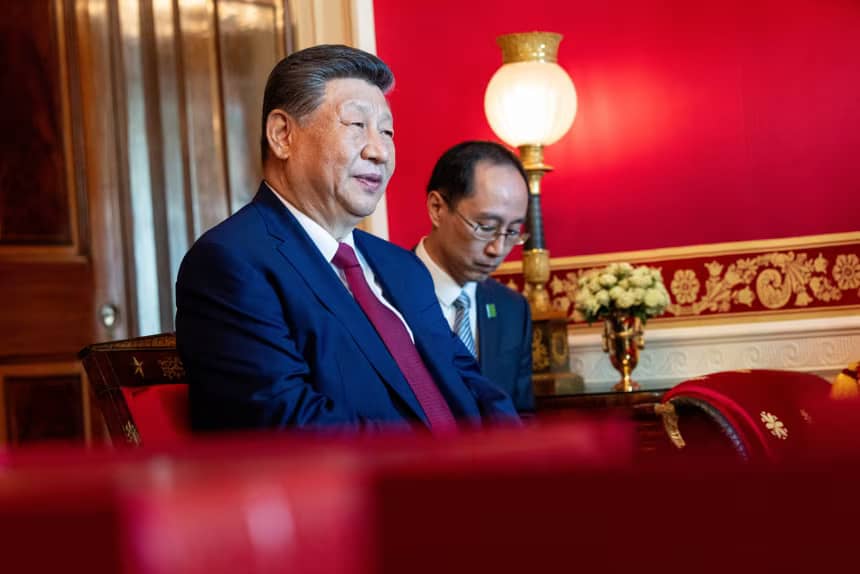
During the visit, the two leaders extended an existing trade truce and exchanged gifts and compliments. They also acknowledged the potential for cooperation in regulating artificial intelligence development to mitigate associated dangers. The Washington trip was characterized by ceremonial events, including a tea ceremony with First Lady Melania Trump in the White House’s Red Room and a state dinner at the executive mansion.
At the state dinner, Xi Jinping emphasized the importance of bilateral cooperation. He framed China’s economic rise as beneficial to the United States rather than adversarial. “The friendship between the two peoples is a worthy cause that holds great promise,” Xi said during his remarks. “Let us join hands and move forward side by side.”
Xi also drew parallels between the political platforms of the two nations’ leaders. He likened Trump’s “Make America Great Again” slogan to his own strategic vision for the “Great rejuvenation of the Chinese nation,” a plan aimed at transforming China into a global powerhouse.
Despite the warm rhetoric, the summit yielded few substantive concessions, keeping rivals talking without resolving deep-seated economic tensions. Xi Jinping expressed hope that the United States would welcome Chinese companies and business operations, signaling Beijing’s desire for continued market access despite ongoing protectionist measures from Washington.
Diplomatic Warmth Masks Economic Realities
While the public exchanges were cordial, underlying structural issues remain. Xi Jinping emphasized cooperation and framed China’s rise as a boon to America rather than a threat, stating, “The friendship between the two peoples is a worthy cause that holds great promise.” This framing attempts to counter narratives of inevitable conflict, yet practical barriers persist.
Trump stated, “President Xi and I both understand that we represent different systems, but the ties between our people endure. We’ve never gotten along better.” However, this personal rapport has not translated into immediate policy changes for Chinese businesses operating in or seeking entry to the US market.
The economic context of the summit highlights a complex dynamic. Despite US protectionist measures, China has maintained record exports, strong AI and robotics development, and a firm grip on rare earth metals. This resilience suggests that Beijing feels less pressure to make concessions during diplomatic engagements, allowing it to maintain its strategic posture while engaging in high-level dialogue.
Access Restrictions and Internal Concerns
The summit’s media coverage was notably restricted. Major TV news networks did not air the meeting after Trump barred reporters from CNN, MSNBC, and Politico from the White House press pool, though a court later overturned the ban. This restriction limited immediate public access to the details of the negotiations, adding an layer of opacity to the proceedings.
Behind the scenes, there were indications that the relationship remained fragile. Cui Hongjian of Beijing Foreign Studies University stated that Xi traveled to Washington without business executives, indicating that the US-China relationship had yet to make substantial breakthroughs in business or trade. The absence of corporate leaders suggested that neither side expected immediate commercial wins from the visit.
Furthermore, Wu Xinbo, a Chinese Foreign Ministry adviser, told CNN there were concerns in Beijing that some of Trump’s team were less positive about US-China relations than the president. This internal divergence within the US administration adds uncertainty to the durability of the truce and the sincerity of the diplomatic overtures.
Ultimately, while the leaders traded niceties and extended a temporary peace, the fundamental strategic competition continues. The summit served as a mechanism to keep rivals talking, preventing escalation in the short term, but it did not resolve the underlying tensions that define the US-China relationship.