


Market Performance and Capital Flows
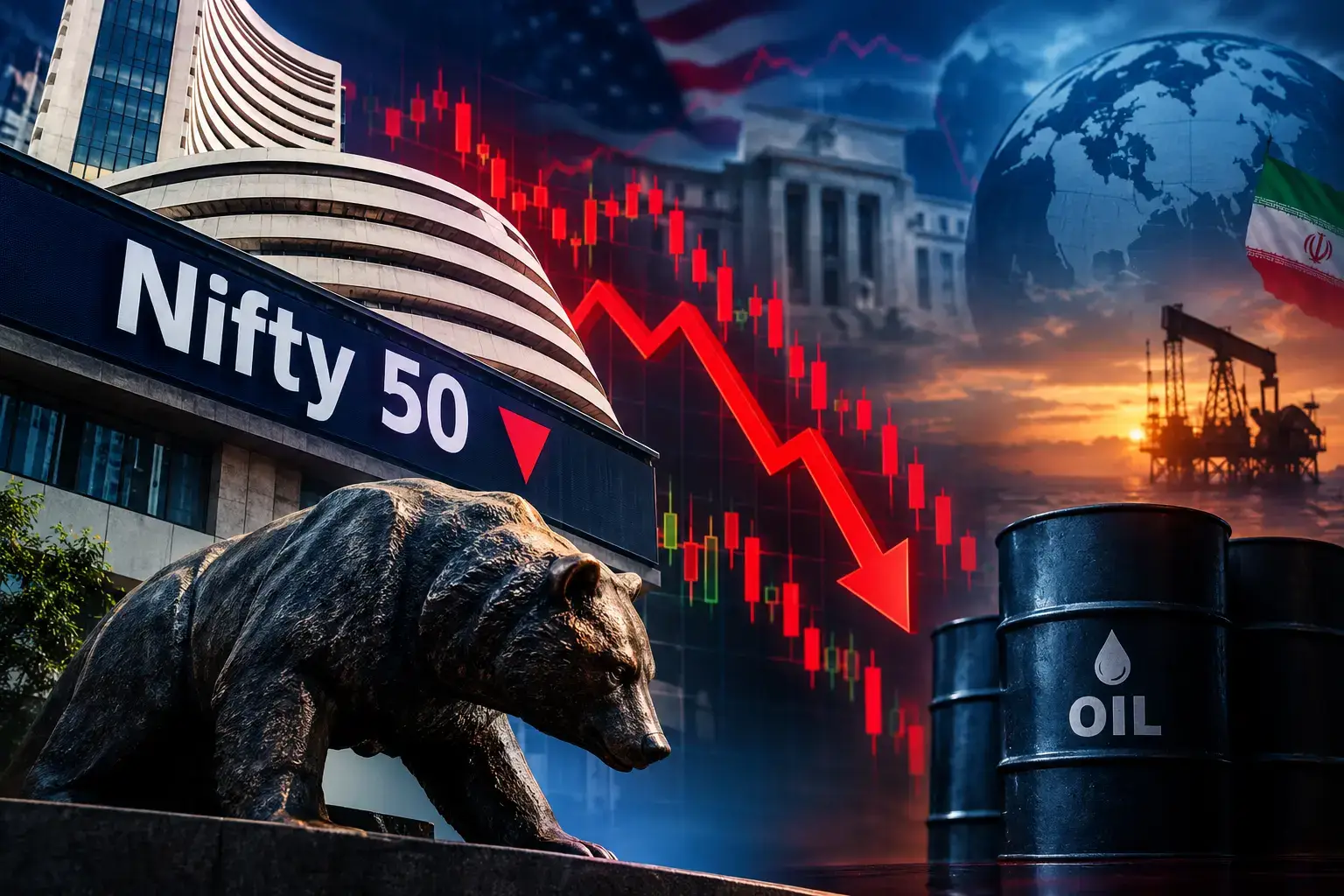
Indian equities extended their losing streak to seven weeks this week, marking the longest such run in six years, according to Inkl. The Nifty 50 index fell approximately 0.88% for the week, despite a late rebound that occurred as oil prices eased and value buying emerged.
Foreign investors remained a significant drag on market performance, pulling out roughly Rs 18,531 crore so far this month through September 25. In contrast, domestic institutions absorbed much of the selling pressure with purchases totaling around Rs 52,617 crore during the same period.
Elevated crude prices, rising US Treasury yields, geopolitical uncertainty, and accelerating foreign institutional investor (FII) outflows kept risk appetite subdued throughout the trading session. Analysts indicate that crude oil prices, global bond yields, geopolitical developments, and FII flows will drive Indian equity markets in the coming week.
Geopolitical Tensions and Oil Prices
Geopolitical developments, particularly regarding the United States and Iran, have been central to market volatility. Vinod Nair, Head of Research at Geojit Investments, stated that investors were closely tracking developments around the US-Iran conflict and prospects for renewed diplomatic engagement, as well as US-China discussions.
Ponmudi R, CEO of Enrich Money, noted that Iran made a seven-day proposal to the United States aimed at ending the ongoing conflict and reopening the strategically important Strait of Hormuz. This development could ease concerns over global energy-supply disruptions if negotiations progress, potentially reducing the geopolitical risk premium in crude oil.
However, the proposal remains conditional on US acceptance, leaving markets sensitive to further developments in the negotiations. Hariselvan Radhakrishnan, Founder & CEO of HST Wealth, stated that progress in US-Iran negotiations could help reduce the geopolitical premium in oil prices, while renewed escalation or disruptions to supply could intensify inflationary pressures.
Ponmudi R added that a continuation of the decline in oil prices could provide further support to domestic equities, while any renewed escalation in the Middle East could quickly reverse the trend. He noted that Brent crude remaining above $100 continued to pressure domestic macroeconomic conditions and corporate margins, although recent moderation in oil prices offered some near-term relief.
Hariselvan Radhakrishnan stated that Brent crude near $105-106 a barrel remained too elevated to provide meaningful macroeconomic relief. Vinod Nair noted that although crude oil prices ended the week lower, heightened volatility kept inflation concerns elevated, weighing on overall market sentiment.
Macroeconomic Indicators and Future Outlook
While external factors weighed heavily on sentiment, domestic economic indicators showed signs of resilience. Vinod Nair stated that India's flash PMI estimates for September came in stronger than expected, pointing to resilient activity across manufacturing and services.
Despite this domestic strength, rising US yields continued to pressure emerging-market flows, allowing external factors to outweigh domestic macroeconomic comfort, according to Vinod Nair. He emphasized that the interplay between global liquidity conditions and local growth metrics remains critical for market direction.
Looking ahead, Hariselvan Radhakrishnan stated that US economic data would take centre stage, with labour-market indicators, inflation readings and manufacturing data likely to shape expectations for monetary policy. Stronger-than-expected readings could keep Treasury yields and the dollar elevated, tightening financial conditions for emerging markets and potentially weighing on the rupee, foreign portfolio flows and Indian equity valuations.
Conversely, Hariselvan Radhakrishnan noted that softer data could ease rate concerns, lower bond yields and create room for a relief rally across risk assets. As investors weigh fear against potential recovery, the market remains poised to react sharply to these upcoming global economic signals.