

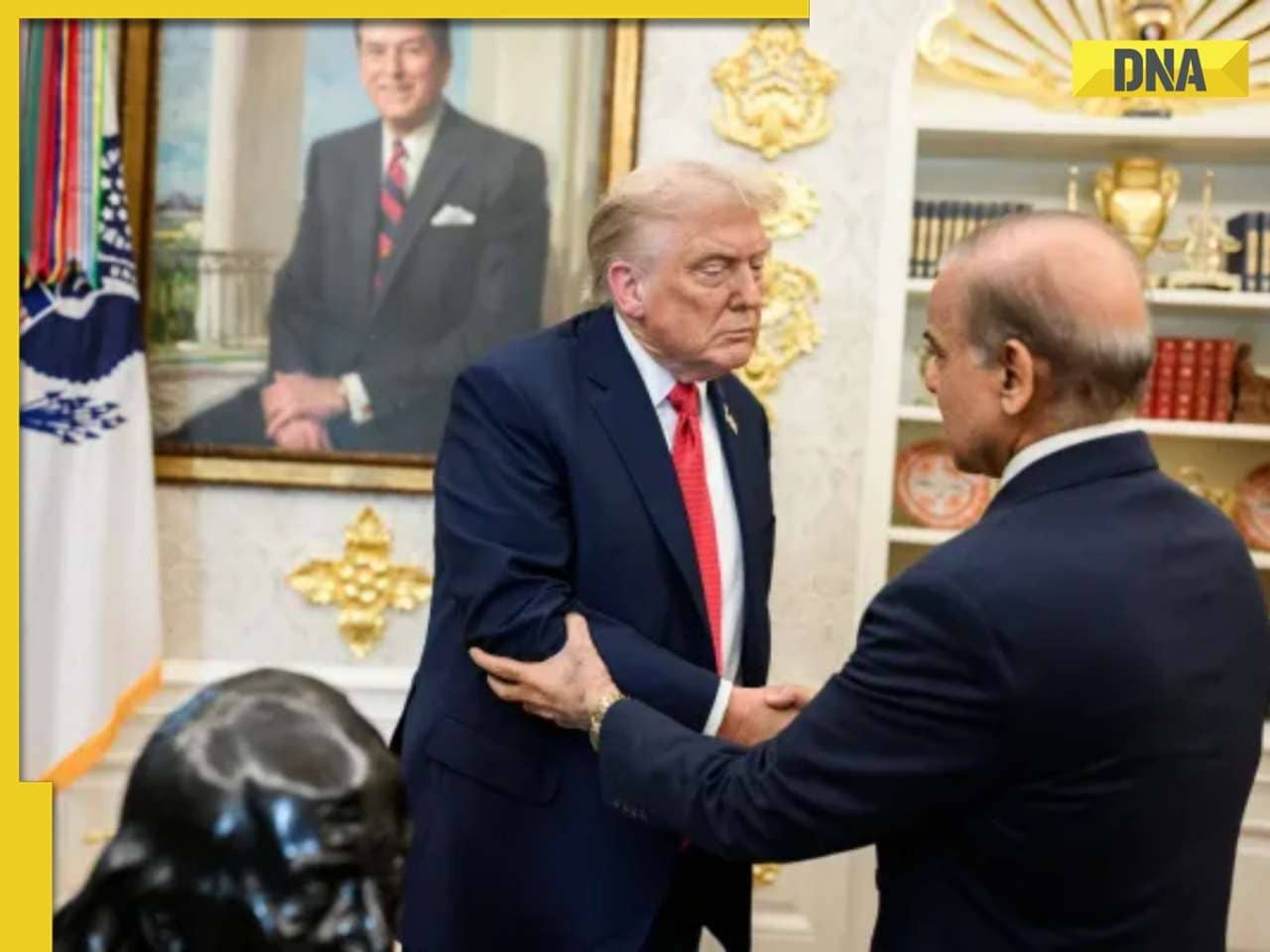

Former U.S. President's Post Sparks Debate in Pakistan
A recent social media post by former U.S. President Donald Trump concerning the Abraham Accords has drawn significant attention, particularly in Pakistan. The post, which discussed potential future expansions of the landmark diplomatic agreements, specifically mentioned Pakistan's Chief of Army Staff, General Asim Munir. Notably, the post reportedly did not include Pakistan's Prime Minister, Shehbaz Sharif, an omission that has triggered considerable political debate within the country and raised questions regarding leadership dynamics.
Context of the Abraham Accords
The Abraham Accords are a series of normalization agreements signed in 2020, brokered by the Trump administration. These agreements established diplomatic relations between Israel and several Arab nations, including the United Arab Emirates, Bahrain, Sudan, and Morocco. The stated aim of the accords was to foster peace and stability in the Middle East by promoting cooperation and dialogue. The agreements marked a significant shift in regional diplomacy, as they bypassed the traditional prerequisite of a resolution to the Israeli-Palestinian conflict for Arab states to normalize relations with Israel.
Since their initial signing, the Trump administration and its allies have expressed aspirations for other nations to join the accords, further expanding the circle of normalization. Discussions and speculation have occasionally included other countries in the broader Middle East and South Asia, though no further agreements have been publicly announced involving Pakistan.
Diplomatic Protocol and Pakistan's Leadership Structure
In most parliamentary democracies, including Pakistan, the Prime Minister serves as the chief executive and head of government. The Prime Minister is constitutionally responsible for the country's foreign policy and represents the nation on the international stage. Diplomatic engagements, particularly those involving significant international agreements or discussions with foreign heads of state or government, are typically conducted through the office of the Prime Minister or the Ministry of Foreign Affairs under the Prime Minister's direction.
Pakistan's Chief of Army Staff, while holding a position of considerable influence and importance within the country's security apparatus, is constitutionally subordinate to the civilian government. The Army Chief's primary role is to lead the armed forces and manage national defense. While military leaders often play a role in security-related foreign policy discussions, the overall diplomatic representation of the state rests with the civilian leadership.
The Specifics of Trump's Post
The social media post in question, attributed to Donald Trump, made reference to the Abraham Accords and their potential for expansion. Within this context, the post specifically named General Asim Munir, Pakistan's Chief of Army Staff. The precise wording of the post, which circulated widely across social media platforms and news outlets, highlighted General Munir's alleged involvement or potential role in discussions related to the accords.
The reported absence of Prime Minister Shehbaz Sharif's name from the post, despite his constitutional role as the head of government and chief architect of Pakistan's foreign policy, immediately drew scrutiny. This omission was interpreted by many as an unusual departure from standard diplomatic practice, where discussions of state-level agreements typically involve the head of government or head of state.
Political Debate and Spotlight on General Munir
The mention of General Munir and the reported omission of Prime Minister Sharif quickly ignited a political debate within Pakistan. Political commentators, analysts, and opposition figures raised questions regarding the implications of such a reference from a former U.S. President. The incident placed General Munim in a prominent spotlight, drawing attention to his perceived influence in matters traditionally handled by civilian leadership.
The situation has led to broader questions regarding the distribution of power and leadership within Pakistan. Observers have discussed whether the post inadvertently highlighted the military's perceived role in shaping Pakistan's foreign policy, even in areas typically reserved for civilian authorities. The debate underscored ongoing discussions about civil-military relations in Pakistan and the respective domains of influence for elected officials and the military establishment.
The post's content and its subsequent reception in Pakistan have been widely discussed across various media channels, with many analyzing the potential diplomatic implications of a former U.S. President's direct reference to a military chief in the context of international accords, while seemingly bypassing the country's elected head of government.