

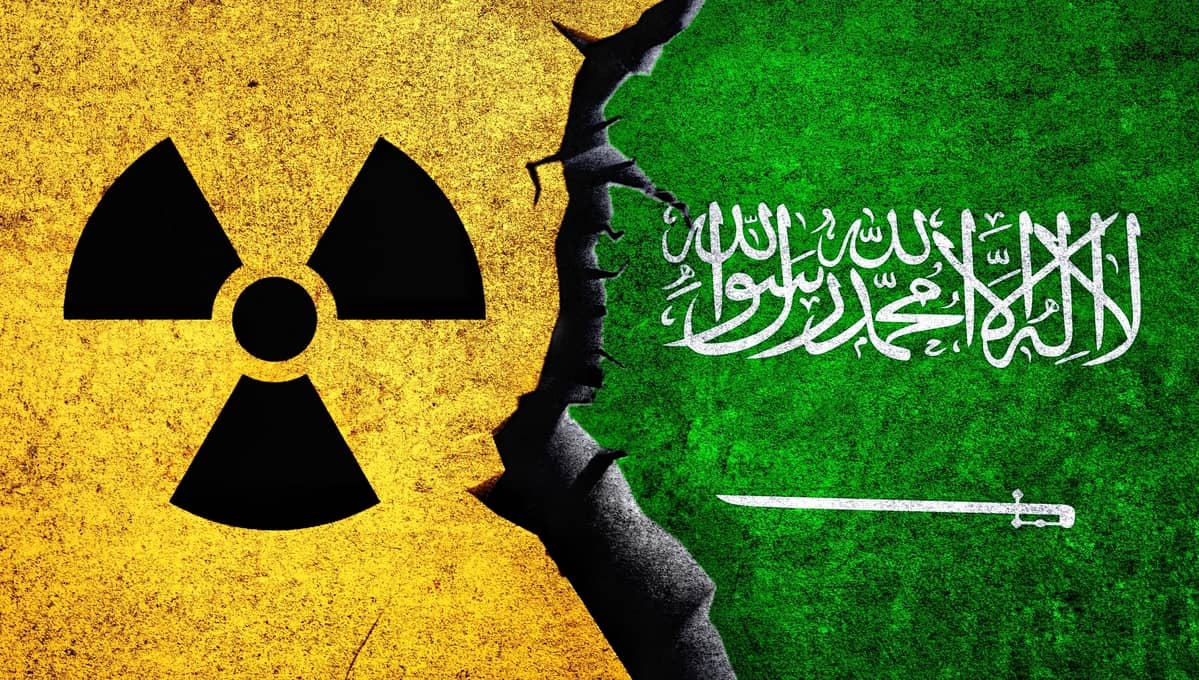

U.S.-Saudi Nuclear Accord Points to Energy Sector Shift
A reported nuclear agreement established between the United States and Saudi Arabia has been interpreted by financial analysts as a signal of increasing global interest in nuclear energy infrastructure. According to reports from The Motley Fool, this diplomatic development suggests that demand for uranium is rising alongside broader investments in clean power generation technologies.
The article published on August 1, 2026, notes that such an accord could serve as a catalyst for investors looking at the nuclear sector. The publication states that President Trump's involvement in finalizing this deal with Saudi Arabia marks a significant moment where geopolitical cooperation directly intersects with energy market dynamics.
Analysts cited by The Motley Fool argue that when major nations like Saudi Arabia commit to nuclear agreements, it often precedes substantial procurement of fuel and technology required for reactor operations. This logic underpins the expectation that uranium prices or related investment vehicles might see positive movement following such announcements.
Potential Implications for Uranium Exchange-Traded Funds
The primary focus of The Motley Fool's analysis centers on how this specific geopolitical event could impact exchange-traded funds (ETFs) that track the uranium market. According to the source, investors are watching these instruments closely because a confirmed nuclear deal implies future consumption needs.
Market Reaction to Geopolitical Developments
The publication suggests that news of high-profile international agreements often triggers immediate reassessment by traders regarding supply chains and long-term contracts. In this instance, the agreement between Washington and Riyadh is viewed not merely as a diplomatic victory but as an economic indicator.
Specific Funds Cited in Analysis
The Motley Fool article identifies two specific uranium ETFs that could benefit from rising demand driven by such agreements. While exact ticker symbols are sometimes withheld to avoid real-time trading advice, the logic remains consistent: if Saudi Arabia builds or expands nuclear capacity under a U.S.-backed framework, domestic and international producers may increase output.
According to The Motley Fool, these funds aggregate shares of companies involved in uranium mining, milling, and fuel fabrication. An uptick in global demand for reactor-grade material would theoretically translate into higher revenues for the underlying assets held within those ETFs.
Economic Logic Behind Nuclear Investment Surge
The economic rationale presented by The Motley Fool relies on a straightforward supply-and-demand framework applied to nuclear energy. If Saudi Arabia, one of the world's wealthiest nations in terms of oil reserves and sovereign wealth funds, chooses uranium over other fuel sources for its power grid expansion, global buyers must secure that material.
Uranium Supply Constraints
The article notes that uranium supply has historically been constrained by geopolitical factors, mining delays, and environmental regulations. Consequently, any new demand signal from a major economy like Saudi Arabia creates pressure on existing inventories held in stockpiles or mines.
Investor Sentiment Toward Clean Energy Transition
The Motley Fool frames this development within the context of global efforts to decarbonize energy grids. Nuclear power is frequently categorized alongside renewable sources like wind and solar as a low-carbon baseload option. Therefore, an agreement promoting nuclear cooperation aligns with investment themes focused on sustainability.
Role of Sovereign Wealth Funds
Saudi Arabia's state-backed financial entities are mentioned implicitly in the broader context of international energy financing. The Motley Fool implies that sovereign wealth funds may be willing to invest heavily in nuclear projects if political stability and regulatory frameworks support such ventures.
Broader Context of International Energy Cooperation
The agreement represents a continuation or evolution of past diplomatic efforts regarding non-proliferation and peaceful use of atomic energy. The United States has historically engaged with Saudi Arabia on nuclear technology transfers, provided safeguards are in place to prevent weaponization.
Previous Diplomatic Precedents
The Motley Fool references historical patterns where U.S.-Saudi relations have included discussions over civilian nuclear programs. This current agreement reportedly builds upon those earlier frameworks by formalizing cooperation under new leadership terms associated with President Trump's second administration.
Impact on Global Nuclear Market Dynamics
If Saudi Arabia proceeds to construct additional reactors, it would join a growing cohort of nations utilizing nuclear power. Countries including China, India, South Korea, and France have recently announced similar expansion plans. The Motley Fool suggests that this trend reinforces the strategic importance of uranium as a globally traded commodity.
Regulatory Considerations
The article acknowledges that any new nuclear project must comply with international safety standards set by bodies like the International Atomic Energy Agency (IAEA). Compliance requirements can influence timelines and costs, which in turn affect profitability for fuel suppliers included in uranium ETFs.
Investor Takeaways From Recent Reports
The Motley Fool concludes its piece by advising readers to monitor official statements from both governments before making investment decisions. The publication warns that while the deal sounds promising, actual construction timelines and funding commitments will determine whether projected benefits materialize.
Caution Regarding Market Volatility
The article cautions investors against assuming immediate price surges based solely on diplomatic headlines. Uranium markets can be sensitive to macroeconomic variables including interest rates, inflation data, and commodity trading flows unrelated to nuclear policy.
Diversification Strategies Suggested
While highlighting specific uranium ETFs, The Motley Fool also emphasizes portfolio diversification as a prudent approach. Investors are encouraged not to allocate excessive capital based on single geopolitical events but rather to consider long-term structural trends in energy consumption.