


UC Press Publishes New Analysis of Armenia's Global Role
The University of California Press has released significant new research, delving into Armenia's strategic position within the rapidly evolving global system. This academic publication specifically frames its analysis around a concept referred to as "World Order 2.0," positioning Armenia's geopolitical standing amidst broader international structural transformations. The release of this study, reported by MassisPost, highlights a critical examination of how a nation like Armenia navigates a complex and shifting international landscape.
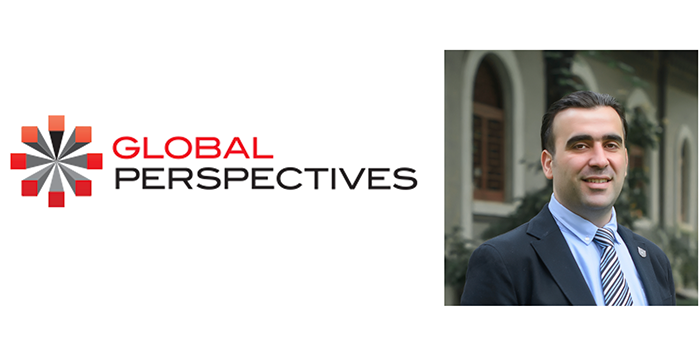
The comprehensive research was authored by Dr. Mher Sahakyan, who serves as the Founder and Director of the China-Eurasia Council for International Affairs. His leadership role within an organization dedicated to the intersection of Chinese and Eurasian geopolitical interests provides a specific lens through which Armenia's strategic alignment is examined. The involvement of the University of California Press as the publisher lends substantial academic weight and broad scholarly reach to this analysis of Armenia's role in current global dynamics.
Dr. Sahakyan's Expertise and Organizational Focus
Dr. Mher Sahakyan's affiliation with the China-Eurasia Council for International Affairs is central to understanding the perspective of the study. As its Founder and Director, Dr. Sahakyan brings specialized expertise in the intricate geopolitical relationships spanning China and the broader Eurasian region. This background suggests an analytical framework that likely considers the interplay of major powers and regional actors, offering insights into how Armenia positions itself within these complex dynamics. The publication's focus on Armenia's strategic role within "World Order 2.0" is thus informed by a deep understanding of Eurasian geopolitical currents and the influence of rising powers.
Navigating the Multipolar 'World Order 2.0'
At the core of the new study is the concept of "World Order 2.0," a term utilized to characterize the emerging multipolar global system. This framework is employed to assess how nations, particularly those like Armenia, are adapting their foreign policy and strategic outlooks in response to shifting international power structures. While the publication's summary does not offer an independent definition of "World Order 2.0," it consistently uses the term to categorize and analyze the current geopolitical landscape, implying a departure from previous unipolar or bipolar global configurations.
The transition to a multipolar system, as implied by "World Order 2.0," suggests a global environment characterized by multiple centers of power, increased competition, and potentially more fluid alliances. For nations such as Armenia, this shift necessitates a careful re-evaluation of traditional partnerships and the exploration of new diplomatic and economic avenues. Dr. Sahakyan's work explores the specific implications of this multipolar shift for Armenia, focusing on its strategic positioning rather than offering a broader theoretical exposition of the new world order itself. The research notes specify that the examination is limited to Armenia's strategic position within this particular evolving order, without detailing the specific mechanisms or historical precursors of "World Order 2.0."
Armenia's Strategic Alignment in a Shifting World
The research directly addresses Armenia's place within this new multipolar system. It highlights the country's unique position as it navigates the transition from previous global orders to the proposed "World Order 2.0." This transition implies a period of significant adjustment for Armenia, requiring astute diplomacy and strategic foresight to secure its interests amidst a more fragmented and competitive international environment. The study, as reported, documents the current strategic positioning identified by the author, rather than speculating on future outcomes or prescribing specific policy directions.
MassisPost's coverage of the research release categorizes it under news relevant to both academia and the Armenian community. This dual classification underscores the study's importance not only for scholars of international relations and geopolitics but also for the Armenian diaspora and those concerned with the nation's international standing. The coverage notes that the study contributes to a broader ongoing discussion regarding Armenia's international relations and its place in global affairs, reflecting the community's keen interest in the country's strategic future. The provided source material does not include responses from opposing parties or alternative viewpoints regarding the study's findings, focusing solely on the announcement and scope of the publication.
Interdisciplinary Relevance and Public Interest
The academic classification of this publication, spanning categories such as Academia, New Publication, and News, alongside tags like Armenia, Armenian Community, and World Order, signifies its broad appeal and interdisciplinary nature. This categorization indicates that the work bridges rigorous academic research with contemporary geopolitical news, making it relevant to a diverse audience. It appeals to scholars seeking in-depth analysis of global power shifts, to policymakers and analysts interested in Armenia's foreign policy, and to members of the Armenian community worldwide who follow developments impacting their homeland's international standing. The study's ability to connect complex academic frameworks with real-world geopolitical implications for a specific nation enhances its impact and reach.