

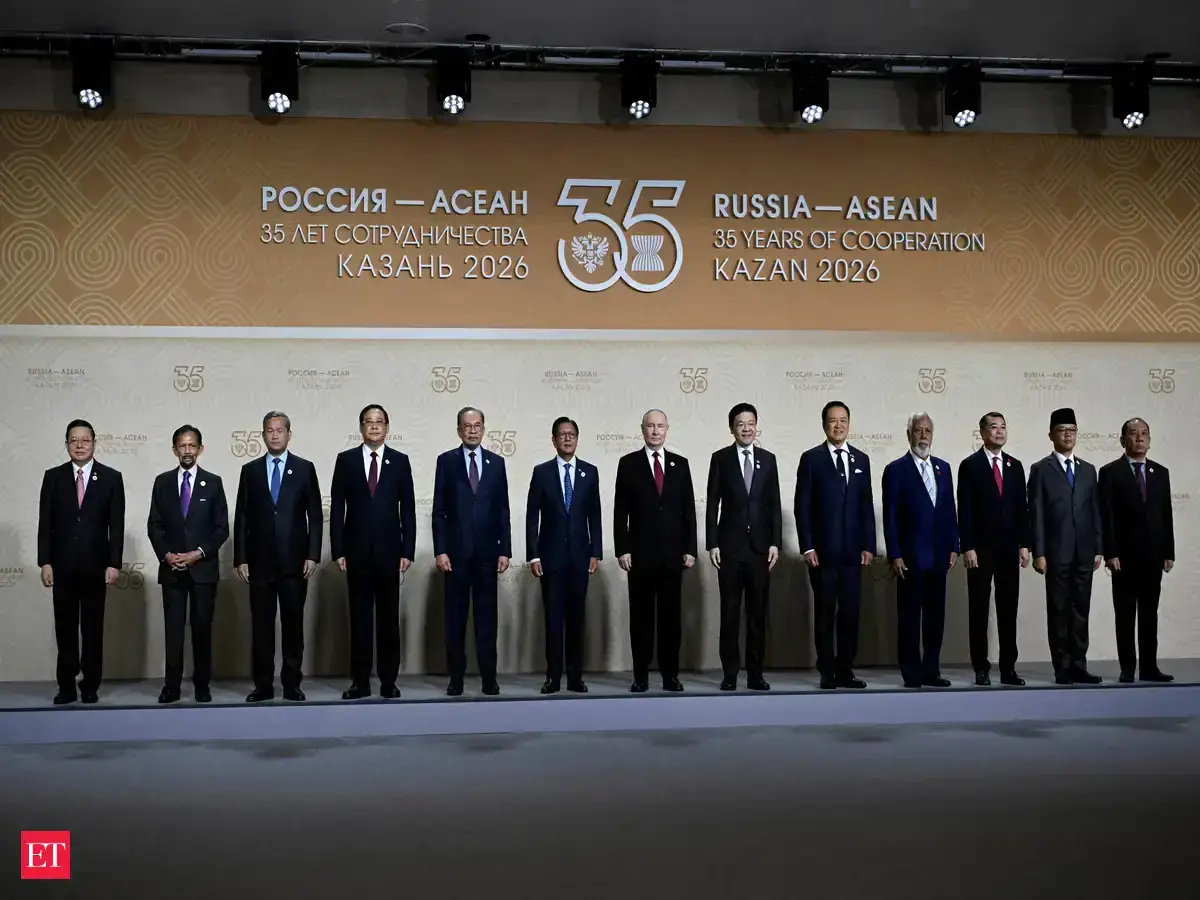

Manila Summit Addresses Geopolitical Pressures
The Association of Southeast Asian Nations (ASEAN) is preparing to host its 49th summit in Manila from November 15-17, with leaders from major global powers expected to attend the gathering. The Philippines is hosting the event amid mounting geopolitical and economic pressures that include the ongoing war in Iran and intensifying rivalry between the United States and China.
According to reports, energy security, artificial intelligence, and regional stability are likely to feature prominently during the discussions. The bloc faces challenges both from external global conflicts and internal regional disputes, including the prolonged civil war in Myanmar, tensions between Thailand and Cambodia, and competing territorial claims in the South China Sea.
ASEAN seeks to maintain its influence in an increasingly polarized geopolitical environment while managing differences among its own members. The summit occurs as the bloc attempts to balance relationships with Washington and Beijing, particularly given that four ASEAN nations have formal claims in the South China Sea.
Regional Cooperation and Economic Integration
The bloc has historically focused on creating a platform for regular dialogue among countries that have experienced political and territorial tensions. Regional forums bring major powers, including China, the United States, Russia, Japan, and India, into discussions with Southeast Asian nations.
This diplomatic architecture is rooted in ASEAN's founding principles established on August 8, 1967, when Indonesia, Malaysia, the Philippines, Singapore, and Thailand signed the Bangkok Declaration. The founding members sought to strengthen regional cooperation, promote economic development, and maintain peace and stability in Southeast Asia.
Unlike the European Union, ASEAN does not have a central institution with the authority to impose decisions on member countries; its functioning is largely based on consultation, consensus, and the principle of non-interference in domestic affairs. This structure has allowed the bloc to expand significantly over decades. Brunei joined in 1984, Vietnam in 1995, Laos and Myanmar in 1997, and Cambodia in 1999.
The organization's demographic and economic weight continues to grow. The bloc had a combined population of 693.2 million in 2025, accounting for 8.4% of the world's population. Its collective economic output stood at $4.3 trillion in 2025, which would make it the world's fifth-largest economy if treated as a single unit; goods trade amounted to $4.4 trillion according to ASEAN data.
Timor-Leste became ASEAN's 11th member in October 2025, further altering the bloc's internal dynamics. The ASEAN Economic Community aims to create a single market and production base, but differences in regulations, non-tariff barriers, and uneven progress among members continue to constrain deeper economic integration.
Financial Safety Nets and Future Initiatives
The region's approach to economic resilience has evolved significantly since the 1997-98 Asian financial crisis exposed the region's vulnerability to external economic shocks. This period encouraged greater financial cooperation with China, Japan, and South Korea, leading to the Chiang Mai Initiative in 2000.
The Chiang Mai Initiative has since evolved into a $240 billion regional financial safety net. In 2026, ASEAN added a facility to provide rapid liquidity during sudden disruptions, including natural disasters and pandemics.
Looking ahead, the bloc is expanding its energy security measures. Nikkei reports that ASEAN is set to launch a joint oil product stockpiling scheme as early as 2027. Additionally, China and ASEAN have made progress on a South China Sea pact, signaling ongoing efforts to manage territorial disputes through diplomatic channels.
The bloc has also expanded economic cooperation through a network of free-trade agreements and the Regional Comprehensive Economic Partnership, which connects ASEAN members with China, Japan, South Korea, Australia, and New Zealand. These mechanisms underscore ASEAN's strategy of maintaining relevance in an increasingly polarized world by fostering both political dialogue and economic interdependence.