

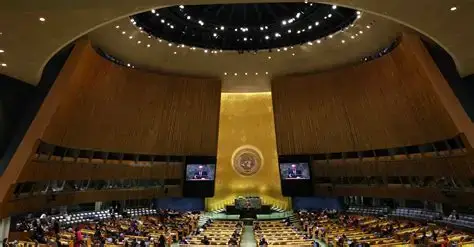

UNGA High-Level Week Commences Amid Leadership Transition
\n\nThe United Nations General Assembly’s high-level week is scheduled to commence on a Tuesday in New York, bringing together diplomats and world leaders for speeches, meetings, and negotiations at UN headquarters. According to The CSR Journal, the gathering arrives at a pivotal juncture as the organization prepares for a leadership transition involving Secretary-General António Guterres.
\n\nThe event draws numerous international figures to the UN headquarters in New York City. The schedule includes an array of formal speeches, bilateral meetings, and multilateral negotiations aimed at addressing global challenges. The timing of this session coincides with significant changes within the UN’s executive leadership, a factor that observers note adds weight to the proceedings.
\n\nSecretary-General Transition Details
\n\nThe current gathering occurs during a period of preparation for a change in the UN’s top administrative role. Secretary-General António Guterres is set to step down as part of this transition. The high-level week serves as one of the final major gatherings under his tenure, providing a platform for member states to discuss ongoing issues before the new leadership takes office.
\n\nDiplomats and world leaders attending the session are expected to engage in discussions that will likely influence the direction of UN priorities during the upcoming term. The transition period is characterized by continuity in current operations while planning for future strategic shifts.
\n\nGeopolitical Conflicts Take Center Stage
\n\nSeveral major geopolitical conflicts are highlighted in reports related to this year’s assembly. Among the most prominent issues is the ongoing situation involving Iran, where former US President Donald Trump has taken a public stance regarding military actions and potential diplomatic resolutions.
\n\nTrump Defends Actions on Iran Conflict
\n\nFormer US President Donald Trump defended his administration's actions regarding the Iran conflict while indicating that possible negotiations may take place at the UNGA. According to reporting by The CSR Journal, Trump’s comments suggest a dual approach of maintaining military pressure while leaving the door open for diplomatic engagement during the General Assembly session.
\n\nThe indication of potential negotiations at the UN venue has drawn attention from international observers. The former president’s defense of prior actions provides context for the US position as it approaches the high-level week. These developments underscore the complexity of the Iran situation and its prominence on the agenda of world leaders attending New York.
\n\nErdoğan Stresses Dialogue for Kashmir Resolution
\n\nIn a separate but equally significant geopolitical development, Turkish President Recep Tayyip Erdoğan emphasized dialogue as a method for resolving the Kashmir issue. Reports from The CSR Journal indicate that Erdoğan used this platform to advocate for peaceful diplomatic channels rather than military confrontation.
\n\nThe emphasis on dialogue by the Turkish president highlights the international interest in the Kashmir dispute. By stressing negotiation, Erdoğan’s position offers a specific pathway for conflict resolution that contrasts with other approaches to the long-standing territorial disagreement between India and Pakistan.
\n\nBroader Regional Developments at UNGA
\n\nBeyond the major conflicts involving Iran and Kashmir, other regional developments are also part of the broader geopolitical landscape surrounding the 2026 General Assembly. The CSR Journal noted additional news items from the region, including legal proceedings in Sri Lanka.
\n\nSri Lanka Court Convictions
\nReports indicate that a court in Sri Lanka has convicted 15 individuals for their involvement in the 2019 Easter bombings. While this specific legal outcome is distinct from the immediate negotiations of the UNGA, it reflects ongoing efforts to address the aftermath of past terrorist attacks in South Asia.
\n\nThe conviction of these individuals serves as a reminder of the security challenges that persist in the region. As world leaders gather in New York, the Sri Lanka case illustrates the broader context of counter-terrorism and judicial accountability that underpins many international discussions.
\n\nSchedule and Logistics of the Assembly
\n\nThe high-level week is structured to accommodate the dense schedule of speeches and negotiations. Diplomats from member states will arrive in New York ahead of the Tuesday start date to prepare for bilateral meetings and side events.
\n\nUN headquarters in New York serves as the central hub for these activities. The logistics of hosting numerous world leaders require extensive coordination among UN staff, host city authorities, and security agencies. The week is expected to be intensive, with back-to-back sessions addressing both immediate crises and long-term policy frameworks.
\n\nAs the assembly progresses, the focus will remain on the interplay between leadership transitions and active geopolitical conflicts. The actions of key figures such as former US President Donald Trump and Turkish President Recep Tayyip Erdoğan will likely shape the tone of negotiations regarding Iran and Kashmir.
\n\nThe CSR Journal’s coverage highlights the interconnected nature of these global issues. From the leadership changes at the UN to specific regional disputes, the 2026 General Assembly represents a critical moment for international diplomacy. The outcomes of the speeches and meetings during this week may influence future diplomatic strategies and conflict resolution efforts in the coming years.
\n\nDiplomats and observers will watch closely as negotiations unfold. The potential for talks on Iran, alongside calls for dialogue on Kashmir, suggest that the high-level week will be defined by attempts to manage active conflicts through both military posturing and diplomatic engagement.