

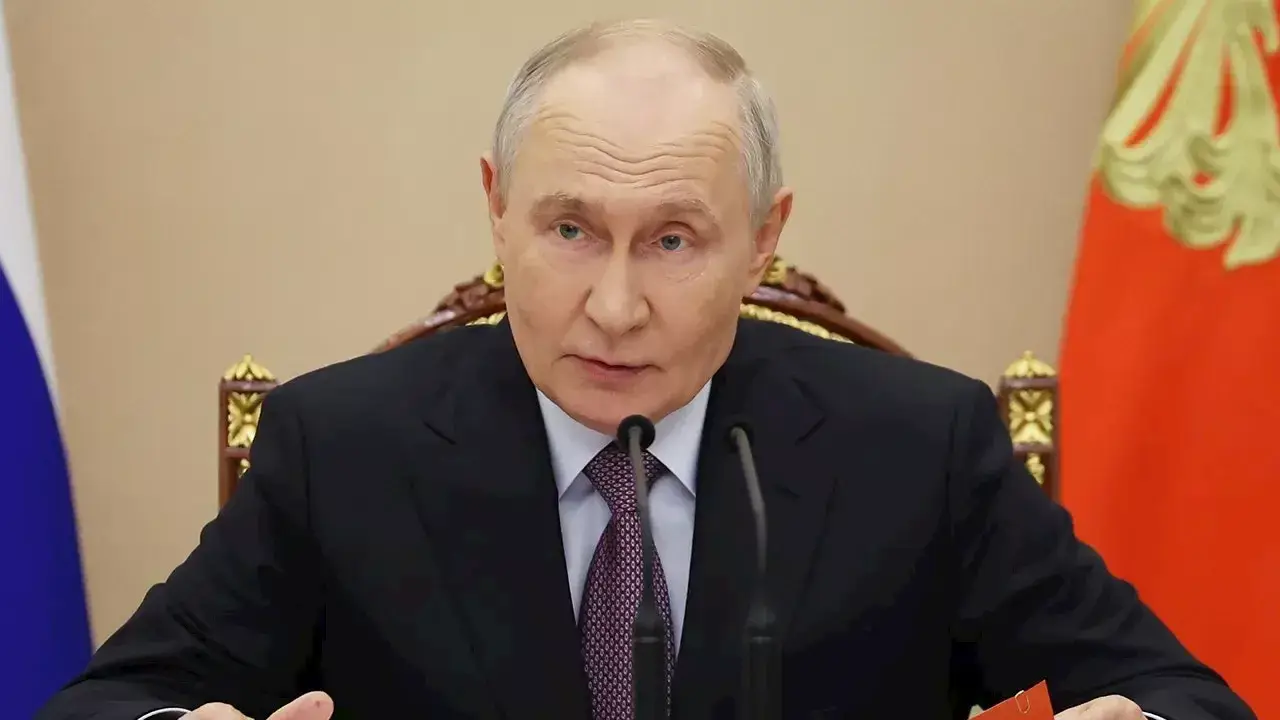

Assessment of Potential Russian Aggression Against NATO Members
U.S. intelligence agencies have assessed that Russian President Vladimir Putin may initiate a limited military attack against a member of the North Atlantic Treaty Organization (NATO) within a specific timeframe. According to reports, this potential conflict is projected to occur between the fall of 2026 and the year 2029.
The intelligence evaluation identifies the Baltic states or Poland as the most probable targets for such an operation. U.S. officials assess that the strategic objective behind a potential attack would be to fragment the NATO alliance, thereby undermining the collective defense commitments that bind the member nations together.
Strategic Objectives and Geographic Focus
The reported assessment suggests that any military action taken by Russia would not necessarily aim for full-scale war with the entire Western alliance but rather a calculated move to test NATO's resolve. The focus on the Baltic states or Poland indicates a strategy aimed at exploiting perceived vulnerabilities in the eastern flank of the alliance.
By targeting these specific regions, the alleged plan seeks to create division among NATO members. The fragmentation goal implies an attempt to disrupt the unified political and military response that characterizes the organization's deterrence posture. U.S. intelligence views this as a significant threat to the stability of European security architecture over the coming years.
Implications for Alliance Cohesion and Regional Security
The warning highlights the ongoing tensions between Russia and Western nations following the conflict in Ukraine. The identification of a specific window from the fall of 2026 through 2029 provides NATO members with a defined period to prepare for potential escalation.
Analysts note that the Baltic states, comprising Estonia, Latvia, and Lithuania, share long borders with Russia or Belarus, making them geographically exposed. Poland, as a key NATO contributor hosting allied forces, represents another critical point of potential confrontation. The assessment underscores the high stakes involved in the region's defense planning.
The report does not detail specific military tactics that might be employed by Russian forces but emphasizes the political intent to weaken the alliance from within. This internal division is viewed as a primary goal for Moscow, aiming to reduce the effectiveness of collective security guarantees without engaging in direct, all-out war with major powers like the United States or France immediately.
Historical Context of NATO-Russia Relations
This intelligence assessment builds upon years of heightened tensions following Russia's annexation of Crimea in 2014 and its full-scale invasion of Ukraine in 2022. The current evaluation suggests that the threat to NATO members has evolved from rhetorical posturing to a tangible military possibility within the specified timeframe.
NATO members have been increasing their defense expenditures and enhancing forward presence in Eastern Europe in response to these long-term threats. The U.S. intelligence warning serves as a formal acknowledgment of the persistent danger posed by Russian leadership under Vladimir Putin, who is assessed as being willing to take significant risks against allied territories.
The focus on fragmenting the alliance suggests that Russia perceives political discord among NATO members as a vulnerability to be exploited. By launching a limited strike, Moscow may hope to trigger disagreements over response protocols, thereby eroding trust and unity within the organization. This strategy relies on the assumption that member states may have differing risk tolerances regarding direct conflict with nuclear-armed Russia.
Regional Reactions and Defense Postures
The Baltic states and Poland have long advocated for robust NATO defenses in their regions. The intelligence report validates their concerns about potential Russian aggression and provides a specific timeline for heightened vigilance.
Allied nations are likely to review their defense strategies in light of this assessment. The possibility of an attack between 2026 and 2029 allows for long-term planning but also presents challenges in maintaining consistent readiness over such an extended period.
The report underscores the critical importance of deterrence in preventing such a scenario. NATO's strategy continues to rely on the principle that any attack on one member is an attack on all, aiming to dissuade Russia from acting on these assessed intentions. The clarity of the U.S. intelligence warning aims to reinforce this deterrent by highlighting the specific nature and timing of the threat.
As the alliance navigates these geopolitical challenges, the focus remains on maintaining unity and readiness. The assessment serves as a stark reminder of the enduring security risks in Europe and the need for sustained political and military cooperation among NATO members to counter potential Russian actions aimed at weakening the organization.