

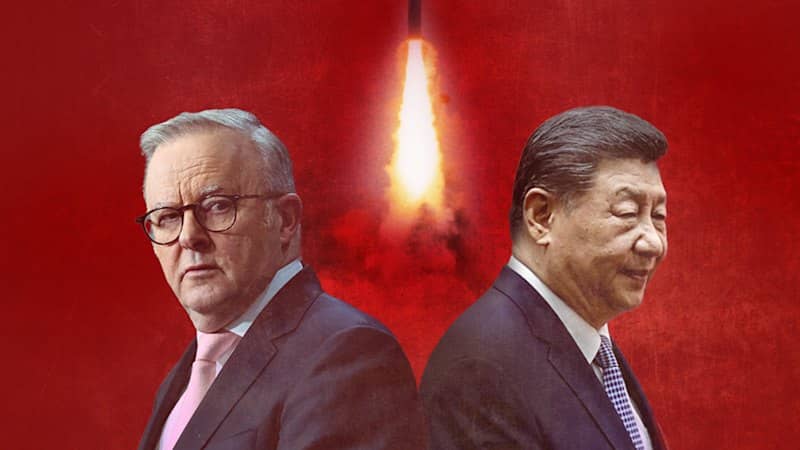

China has recently faced significant criticism following its submarine missile test, an event that has ignited debate over regional security. Observers voiced concerns, asserting that the action destabilizes the region. One particularly sharp critique, published in correspondence on July 8 in The Sydney Morning Herald, described China's missile test as "a hypocritical affront to Australia." This statement underscores the immediate geopolitical sensitivities surrounding such military demonstrations.
However, an alternative perspective directly challenges these concerns. Proponents of this view argue that the Chinese action, far from increasing vulnerability, paradoxically enhances safety and stability within the region, rather than escalating the risk of conflict.
Deterrence Through Mutually Assured Destruction
This alternative argument is rooted in established nuclear strategy definitions, specifically the concept of deterrence. It posits that China is developing a "second strike" capability as an integral part of the deterrence framework known as "mutually assured destruction" (MAD). Under this theoretical model, the ability of a nuclear power to absorb a first strike and still launch a devastating retaliatory attack ensures that no party can initiate a nuclear assault without facing guaranteed, unacceptable consequences. This mutual vulnerability is designed to prevent any initial strike from occurring.
According to Carlo Ursida from Kensington in Victoria, the author of the aforementioned letter, China’s actions, when viewed through this strategic lens, arguably contribute to regional stability. The underlying logic suggests that maintaining a credible deterrent prevents escalation into broader conflict by compelling all parties to exercise extreme caution before initiating hostilities, thereby ensuring a delicate balance of power.
US Nuclear Posture and Treaty Withdrawals
The correspondence published in The Sydney Morning Herald draws a stark contrast between China’s developments and recent shifts in United States nuclear policy. A central point of contention involves the Strategic Arms Reduction Treaty (START) between the US and Russia.
Limits Removed on Nuclear Warheads
Reports indicate that the US decision not to renew this crucial treaty has effectively removed important limits on the number of nuclear warheads held by both participating nations. The expiration or non-renewal of such foundational arms control agreements is widely regarded as a significant factor influencing global security dynamics, potentially paving the way for unchecked expansion of nuclear arsenals.
A Catalyst for a New Arms Race
Beyond specific treaty expirations, recent US national security and defense strategies have signaled a distinct and concerning trajectory. These policies are described as codifying a major shift towards increasing the size of the US’s own nuclear arsenal. This strategic adjustment is not merely an internal policy change but is seen by some as a catalyst for a dangerous new arms race among major global powers. The letter asserts that such moves will inevitably lead to heightened tensions and increased global insecurity as other nations respond in kind, seeking to maintain their own deterrent capabilities.
A Call for Global De-escalation
To address the perceived threats fueling global insecurity, the author advocates for a fundamentally different approach. Instead of expanding nuclear capabilities or dismantling treaty limits, a more balanced and nuanced strategy is proposed, focusing on collective responsibility for global stability.
Reducing Stockpiles for Enhanced Stability
The suggested path forward calls for all nuclear powers to begin reducing their stockpiles immediately. This recommendation aims to ensure stability on both regional and broader international levels by actively lowering the overall threat level associated with large-scale nuclear arsenals. By collectively de-escalating, the risk of accidental use, miscalculation, or deliberate conflict involving nuclear weapons is significantly diminished, fostering a more secure global environment.
Geopolitical Tensions in the Pacific
The timing of China's missile test garnered specific attention due to its coincidence with significant diplomatic events in the region. The letter notes that some observers might argue the test was a predetermined event, strategically programmed in advance to coincide with Australia's sensitive strategic talks with the Solomon Islands.
Diplomatic Interplay and Provocation
During this period, Australian Prime Minister involvement was notable as he sought to secure deals in the Pacific and responded to incidents involving China, including the missile tests on July 8. While the correspondence describes the act as provocative regardless of intent, it highlights the complex interplay between military testing schedules and high-stakes diplomatic negotiations occurring simultaneously across the Pacific Ocean. Such military demonstrations, even if planned long in advance, inevitably carry political weight and can be interpreted as signals or challenges during delicate diplomatic periods.
The "Pacific Ocean of Peace" Contradiction
Critics also referenced the aspirational phrase "Pacific Ocean of Peace," arguing that the promise inherent in this concept was directly contradicted by recent events involving missile tests from Chinese submarines. This juxtaposition underscores the profound tension between stated regional goals for security cooperation and actions taken by individual nations that challenge those objectives through military demonstration or testing protocols, creating an environment of mistrust rather than collaboration.