

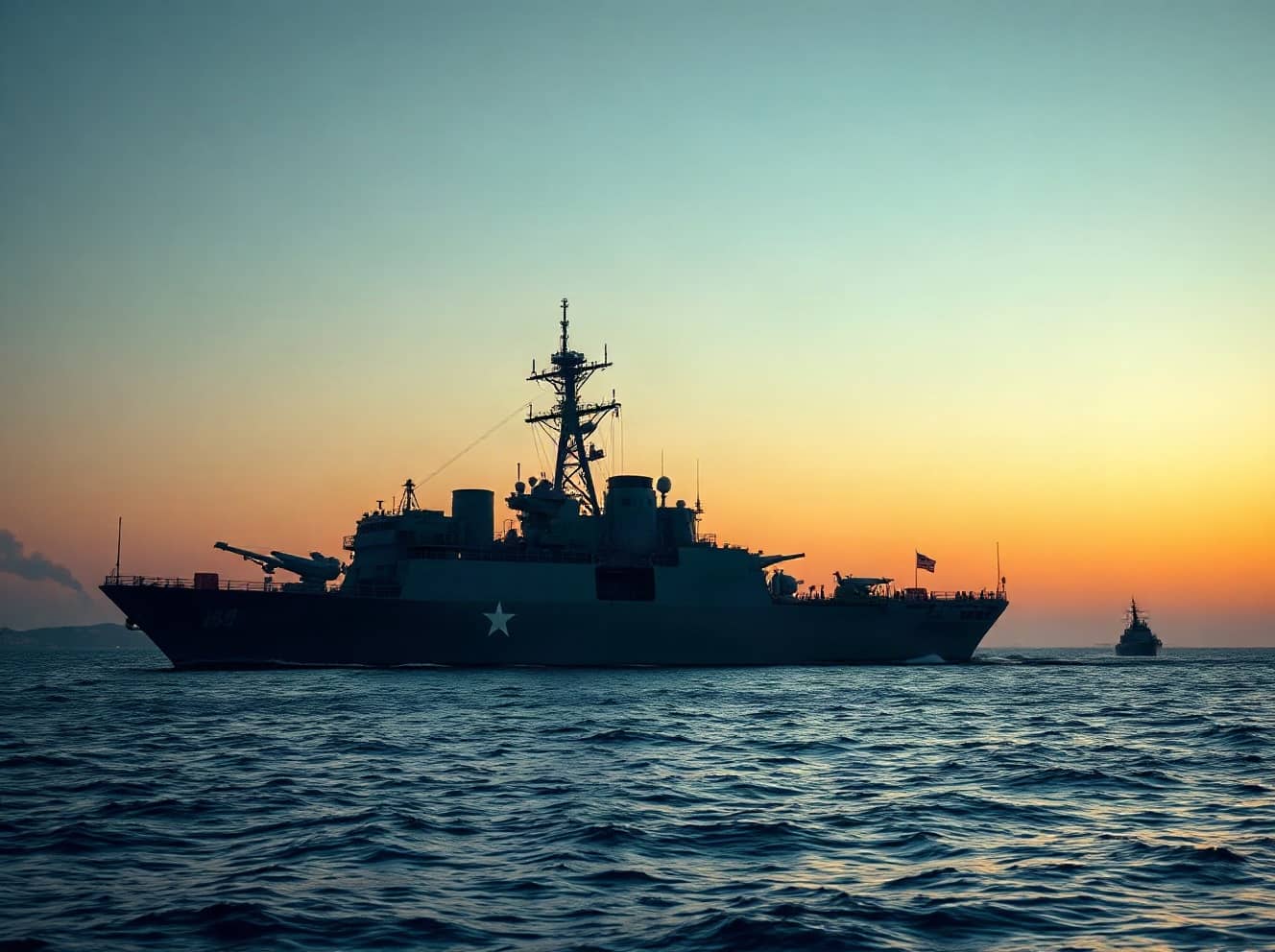

US Military Confirms Direct Strikes on Iranian Air and Sea Defense Installations
The United States military has officially confirmed that it carried out direct strikes targeting Iranian air defense and naval sites. This confirmation, issued by US Central Command (CENTCOM), immediately followed reports describing the operations as a significant escalation in regional tensions. The military action was precise, targeting specific military infrastructure within Iran, rather than broader areas, underscoring the deliberate nature of the engagement.
CENTCOM articulated that the operation was specifically designed with a dual objective: to degrade Iran's ability to conduct future attacks and to protect US and coalition forces operating across the broader Middle East. The confirmed strikes involved the coordinated use of US aircraft and naval assets, deployed against key components of Iran's defensive network. The timing of the operation is directly linked to a series of recent attacks on US personnel and interests in the region, which served as the undeniable catalyst for this decisive military response.
Strategic Intent and Operational Scope
US Central Command provided comprehensive details regarding the strategic intent behind these confirmed strikes. The command stated that the primary goal was to diminish Iran's capacity for future offensive actions. This objective aims to reduce Iran's ability to project power, launch further aggressions, or support proxy groups against regional interests, thereby enhancing stability and security for allied nations and international maritime routes.
Protecting US and coalition forces was cited as a secondary, but equally critical, objective of the operation. These personnel and assets, deployed across various regional locations, have been the subject of persistent threats and attacks, necessitating a robust defensive posture. The selection of Iran's air defense systems and naval installations as targets directly reflects this strategy, aiming to neutralize key components of Iran's military apparatus that could facilitate such attacks against American and allied presence, both on land and at sea.
Composition of US Forces and Precision Targeting
The operation showcased a sophisticated and coordinated deployment of diverse US military capabilities. US aircraft, including both fighter jets and potentially advanced surveillance assets, were integral to the strikes, providing the necessary precision and reach for targeting static and mobile air defense systems. Concurrently, naval assets, potentially including surface combatants or submarines, played a crucial role in targeting Iranian naval installations, demonstrating a comprehensive, multi-domain approach to the engagement.
This combined air and sea approach highlights a sophisticated, multi-domain strategy aimed at maximizing impact on specific military targets while minimizing collateral damage. The identified threats were not generic; the military described the targeted infrastructure as specific points within Iran's defensive network, indicating prior extensive intelligence gathering and careful planning to neutralize identified threats effectively and decisively.
Escalating Regional Dynamics and Preceding Incidents
The confirmed strikes unfold against a backdrop of persistently heightened tensions across the broader Middle East, a region already grappling with complex geopolitical challenges. Crucially, the operation was explicitly framed as a direct response to a series of recent, unprovoked attacks on US personnel and interests in the region. These prior incidents, though not detailed in the immediate confirmation, served as the undeniable catalyst for the significant military action undertaken by the US Department of Defense, signaling a shift in response strategy.