

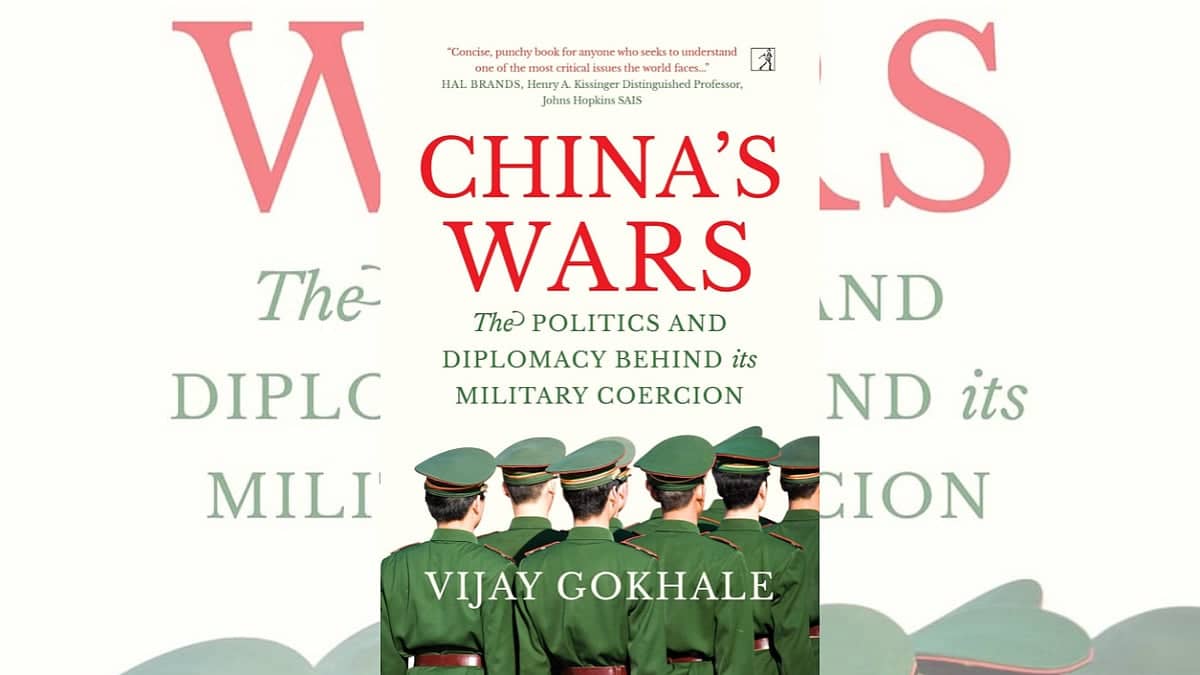

Gokhale's Examination of Beijing's Strategic Playbook
Vijay Gokhale’s book, titled "China’s Wars," offers a comprehensive and detailed examination of Beijing’s coercive tactics and its extensive history of past conflicts. The work serves as an earnest assessment of these historical events, providing readers with a deep dive into the military and strategic behaviors that have characterized China’s engagement with the world. According to a review published by Deccan Herald, this thorough overview makes the book essential reading for anyone interested in understanding the nuances of China's strategic approach.
The text focuses heavily on analyzing the methods employed by Beijing over time, particularly its use of coercion as a tool of statecraft. Gokhale’s work delves into the nature of these conflicts, aiming to provide a clear picture of how China has engaged in warfare and coercion in its past. The review highlights that this assessment is notably thorough, covering the historical dimensions of China's military engagements and offering insights into the patterns of its strategic decision-making.
Past Conflicts and Coercive Diplomacy
The book meticulously explores China's history of past conflicts, presenting them not merely as isolated incidents but as part of a broader pattern of coercive diplomacy. This historical analysis is crucial for understanding Beijing's current posture and potential future actions. By examining these historical precedents, Gokhale illuminates the consistent elements within China's strategic playbook, offering a foundational understanding of its approach to international relations and territorial disputes. The work’s earnest assessment of these historical events underscores the continuity of China’s military and strategic behaviors through different eras.
Navigating Geopolitical Flashpoints and Emerging Threats
Gokhale’s analysis extends beyond historical review to address several critical areas of contemporary geopolitical tension. The book specifically touches upon the 1962 conflict between India and China, examining this pivotal historical event within the broader context of the two nations' complex and often fraught relationship. This exploration helps to frame the long-standing strategic challenges faced by India.
Additionally, the text explores the highly sensitive issue of Taiwan, a topic central to current regional security dynamics and a significant flashpoint in international relations. Gokhale’s discussion on Taiwan provides insights into the potential ramifications of Beijing's ambitions concerning the island, which holds immense strategic importance for global stability.
Furthermore, Gokhale’s analysis includes a detailed discussion on grey-zone warfare. This concept, characterized by actions below the threshold of conventional armed conflict but above routine statecraft, is presented in the context of rising tensions between India and China. The review notes that these specific topics—the 1962 conflict, Taiwan, and grey-zone warfare—are integral to the book’s exploration of future risks for India. By covering these distinct and pressing areas, the author attempts to map out the complex landscape of potential future confrontations and strategic challenges that India may face.
Critique of Strategic Guidance for India
Despite the thorough and earnest assessment of past events and current geopolitical flashpoints, the review suggests that the author fails to provide specific insights that can help shape India’s future strategy. While the book offers a valuable look at history and current dynamics, it does not translate this extensive historical analysis into actionable or specific strategic guidance for New Delhi. The critique points out a significant disconnect between the comprehensive historical overview and its practical application for contemporary policy-making, particularly concerning India's long-term strategic planning.
The review indicates that while the book is undoubtedly valuable for understanding the past and the nature of China's coercive tactics, it ultimately leaves a gap in providing concrete insights for future decision-making. This absence of specific strategic direction is noted as a limitation of the work, particularly for readers and policymakers seeking clear guidance on how India should navigate its multifaceted relationship with China moving forward. The expectation for a book of this nature, especially given its focus on "China's Wars" and "future risks for India," often includes prescriptive elements for national strategy.
The Review's Broader Geopolitical Commentary
The critical evaluation of Vijay Gokhale’s "China’s Wars" was published by Deccan Herald under the headline "A crack at Chinese checkers." The article, written by Gunjan Singh, was last updated on August 15, 2026, at 22:10 IST. The piece is categorized under Opinion, Books, Specials, War, and Features, reflecting its multifaceted nature and broad appeal to readers interested in international affairs and strategic thought.
The review appears in the context of ongoing discussions about India-China relations, which remain a focal point of regional and global geopolitical discourse. It also makes references to broader geopolitical themes such as political theatre and regional security, underscoring the wider implications of Gokhale's work. The review serves as a critical evaluation, balancing praise for the book’s historical assessment and its detailed examination of coercive tactics with constructive criticism regarding its strategic utility for India. The publication highlights the book’s role as essential reading for understanding China’s past and present, while simultaneously pointing out its shortcomings in providing future-oriented, actionable insights for India’s strategic community.