

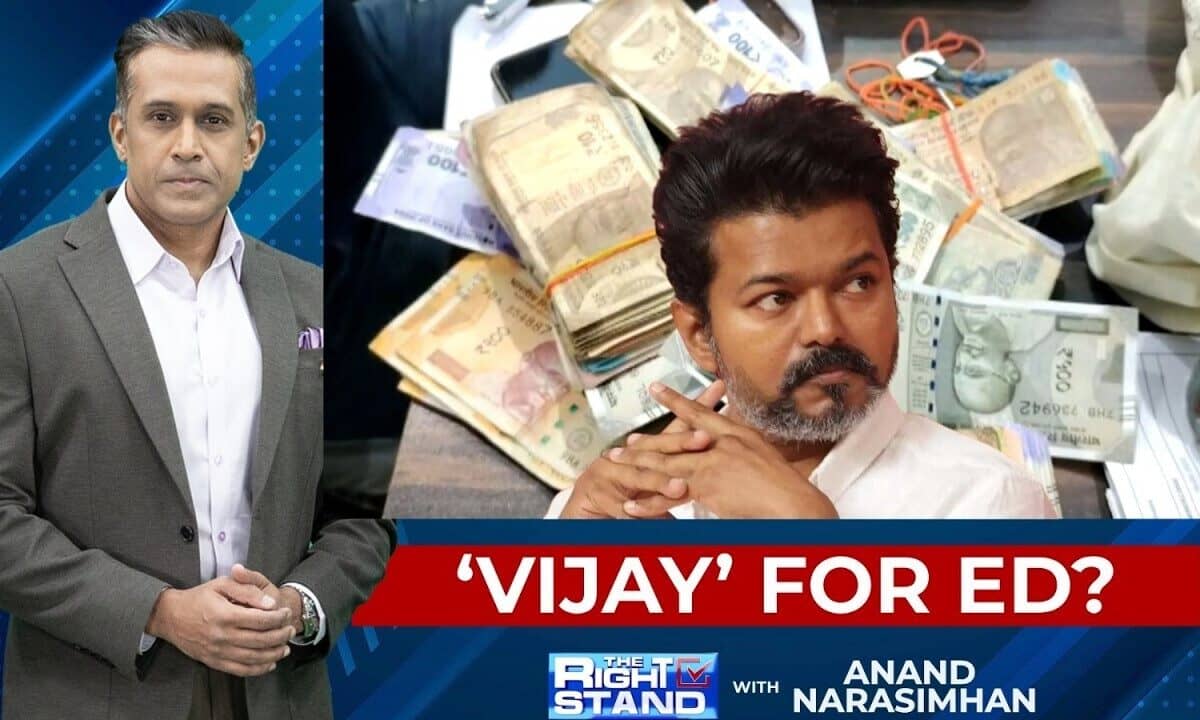

Chief Minister Joseph Vijay Levels Corruption Charges Against DMK
A session of the Tamil Nadu Assembly erupted into significant disruption following Chief Minister Joseph Vijay's direct accusations of corruption against the ruling Dravida Munnetra Kazhagam (DMK). The Chief Minister's claims, delivered amidst a heated legislative environment, marked a notable escalation in the state's political discourse and immediately drew a strong reaction from the opposition.
Citing ED Documents and Historical Precedent
During the intense proceedings, Chief Minister Vijay presented his allegations by referencing specific documents from the Enforcement Directorate (ED). The ED, a multi-disciplinary organization operating under the Department of Revenue, Ministry of Finance, Government of India, is tasked with enforcing economic laws and combating financial crimes, including money laundering. By invoking an agency with such investigative authority, Vijay aimed to imbue his criticisms with institutional weight and legal gravitas.
Beyond contemporary evidence, the Chief Minister further bolstered his claims by referencing findings from past commissions. These historical references served to contextualize the current accusations within a broader narrative of governance issues and alleged malfeasance that, according to Vijay, have characterized the ruling party's history. This dual approach—using both recent investigative data and historical reports—sought to paint a comprehensive picture of systemic corruption, moving beyond isolated incidents to suggest a pattern of behavior.
Opposition's Fiery Response and Assembly Walkout
The immediate aftermath of Chief Minister Vijay's speech saw a dramatic response from opposition members. An uproar filled the assembly hall, signaling their vehement disagreement and rejection of the accusations. This culminated in a collective walkout from the legislative session, effectively halting regular proceedings and underscoring the profound intensity of the disagreement between the ruling coalition and its detractors.
Deepening Political Divides in Tamil Nadu
The walkout was not merely a symbolic gesture but a direct and forceful reaction to what the opposition perceived as politically motivated allegations rather than fact-based criticisms. Legislative observers highlighted that the absence of opposition members prevented any immediate rebuttal or verification of the claims made during the session, leaving the Chief Minister's statements unchallenged in the immediate legislative context. This incident served as a visible manifestation of the growing divide and deepening political rifts that have increasingly characterized interactions within the Tamil Nadu political landscape, reflecting a broader struggle for power and influence.
Scrutiny Over Enforcement Directorate's Role and Political Ethics
In the wake of the assembly disruption, significant debates emerged concerning the credibility and impartiality of the Enforcement Directorate itself, alongside broader questions about political integrity in Tamil Nadu. Critics of Chief Minister Vijay’s strategy questioned the appropriateness of introducing ED documents into a legislative debate, arguing that such matters, particularly those involving ongoing investigations or sensitive financial details, should primarily be addressed through established legal channels and courts, rather than being weaponized on political platforms for public spectacle.
The Debate on Transparency and Accountability
Conversely, supporters of the Chief Minister defended his approach, contending that the use of official documents was not only appropriate but necessary to highlight what they described as systemic issues within the administration. They argued that if past commissions had indeed identified similar patterns of behavior, then the current accusations, supported by ED findings, validated a consistent need for scrutiny. This perspective emphasized the importance of transparency and accountability, suggesting that public officials should be held to high standards and that legislative bodies have a duty to expose alleged wrongdoing, even if it involves controversial investigative agencies.
The discussion also delved into the complex concept of political integrity, with various members expressing divergent views on the ethical standards expected from public officials. While some emphasized the paramount need for transparency and accountability in governance, others voiced strong warnings against the perceived politicization of legal institutions. They argued that using agencies like the ED as tools in political battles could undermine their independence and erode public trust in the justice system. These divergent perspectives illustrate the complex challenges facing the state’s democratic processes, where the lines between political debate and legal due process often become blurred.
Wider Repercussions for Tamil Nadu's Political Landscape
The tumultuous events within the Tamil Nadu Assembly have drawn considerable attention to the fragile nature of political alliances and the potential for further disruptions in legislative business. Political analysts note that such high-stakes confrontations can significantly impact public trust in government institutions, potentially eroding faith in the legislative process itself. Furthermore, these incidents are likely to influence future electoral dynamics, as voters assess the conduct of both the ruling party and the opposition.
Setting a Precedent for Legislative Confrontation
The Chief Minister's strategic use of ED documents as a political tool may establish a significant precedent for how opposition parties choose to challenge the ruling coalition in the future. This approach, blending legislative debate with references to ongoing or past investigations, could become a more frequent tactic. It remains to be seen whether this will lead to an era of more frequent and intense disruptions within the assembly or if it will prompt calls for stricter adherence to decorum and procedural rules to maintain order and facilitate productive governance.
As the situation continues to unfold, stakeholders across the state, including the public, media, and political commentators, await further developments regarding any formal inquiries or official responses from the DMK regarding the allegations. The incident has already ignited widespread discussions across various media platforms and among political pundits about the current state of governance and political ethics in Tamil Nadu. The immediate focus now shifts to how these escalating tensions will be managed in subsequent legislative sessions and whether they will ultimately lead to significant policy changes, increased political polarization, or a re-evaluation of legislative conduct.