

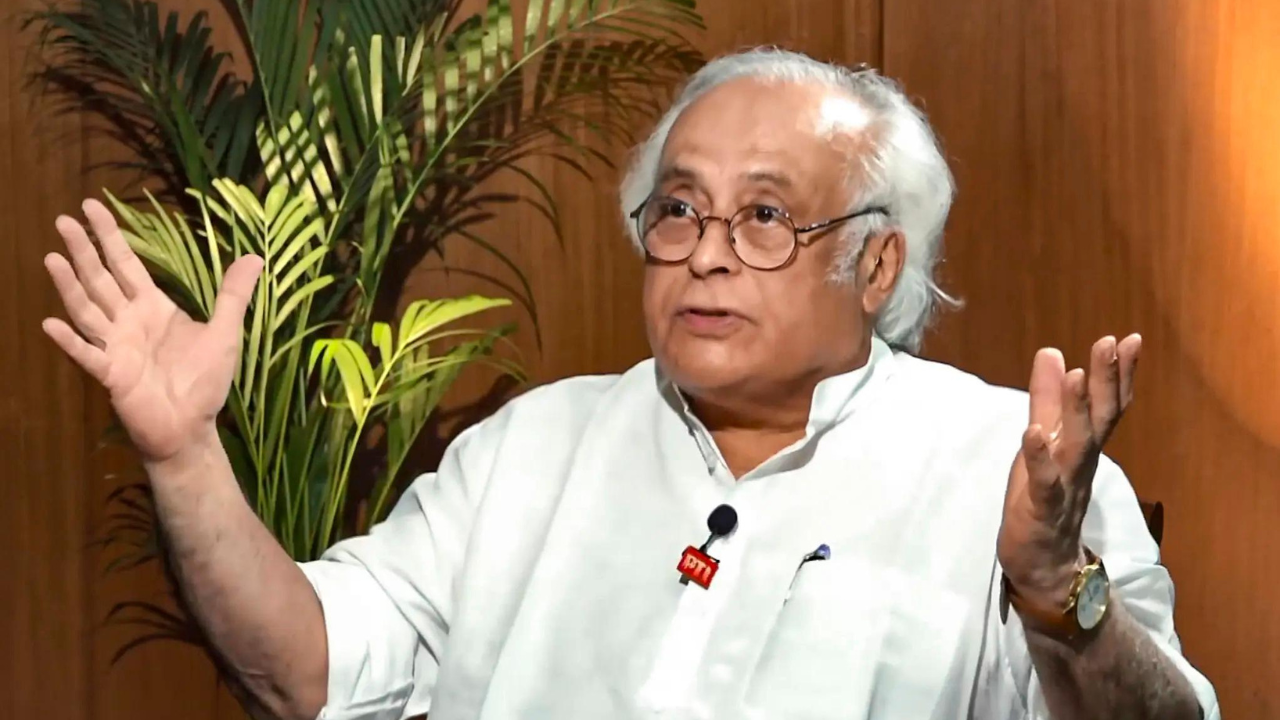

New Delhi: The Congress on Sunday launched a sharp attack on the Bharatiya Janata Party (BJP) and the Rashtriya Swayamsevak Sangh (RSS) over allegations concerning donations for the Ram Temple in Ayodhya. In its statement, the party described the situation as a "scam" allegedly carried out within the BJP-RSS ecosystem.
Congress general secretary Jairam Ramesh publicly questioned why Prime Minister Narendra Modi and Union Home Minister Amit Shah have remained silent on the issue. The Congress leadership linked this alleged embezzlement to broader concerns regarding funding practices associated with political parties in India, suggesting a pattern of behavior that requires immediate scrutiny.
Allegations of Embezzlement and Political Strategy
Ramesh stated during his address that the BJP's current political strategy revolves around three specific accusations which he termed "vote chori," meaning theft of votes; "seat chori," referring to alleged manipulation in seat allocation or election results; and "chanda chori," implying the misappropriation of funds collected from devotees.
The Congress party has formally accused the BJP-RSS apparatus of siphoning off donations intended for religious construction. According to Ramesh, these allegations are not isolated incidents but part of a systemic issue within the ruling ecosystem. The leader emphasized that money raised by various entities under the guise of temple development is allegedly being diverted before reaching its intended destination.
The party leadership highlighted that thousands of crores in cash have been involved in this alleged siphoning process, though specific transaction details were not released during the initial statement. Ramesh argued that without a transparent investigation, public trust in political funding mechanisms remains compromised.
Demand for Supreme Court Intervention
In response to these allegations, Jairam Ramesh called for an intervention by the judiciary at the highest level. He explicitly demanded a probe into the matter under the supervision of the Supreme Court of India. The Congress leader argued that only such high-level oversight could ensure impartiality in investigating claims involving political parties and religious trusts.
Ramesh noted that previous investigations into similar allegations have often been conducted by agencies with close ties to the government, which he believes may lack independence. By requesting Supreme Court monitoring, the party aims to bypass potential bureaucratic hurdles or administrative interference that could delay justice for donors who contributed funds under false pretenses.
The demand for a judicial probe comes as an investigation is already underway at lower levels of law enforcement. Reports indicate that police have registered First Information Report (FIR) cases related to the alleged misappropriation of funds connected to the Ayodhya temple project.
Investigation Status and Arrests
Preliminary reports from law enforcement agencies state that an FIR has been officially registered in connection with these allegations. The investigation is currently ongoing, focusing on tracing the flow of donations made by individuals and organizations to various trusts linked to the temple construction effort.
According to available information released during the controversy, eight arrests have already been made as part of this inquiry. These arrests were reported alongside claims that significant amounts of cash had been recovered from suspects involved in the alleged siphoning operation. The recovery of physical currency is cited by investigators as evidence supporting the initial allegations of fund diversion.
The investigation continues to examine whether these funds, collected for religious purposes, were actually utilized for construction activities or if they were transferred elsewhere through shell companies and intermediary accounts. Authorities are reportedly looking into digital trails left behind during the movement of large sums of money across various banks in India.
Criticism from Opposition Leadership
Other opposition parties have joined Congress general secretary Jairam Ramesh in criticizing the lack of transparency surrounding temple donations. While their specific comments varied, they echoed concerns about how political organizations manage donor funds and whether those funds are utilized strictly for stated purposes.
The controversy has intensified as more details emerge regarding the scale of alleged financial irregularities. Critics argue that if true, such actions represent a breach of trust between religious donors and the entities managing their contributions. The Congress party maintains that until an independent investigation confirms or refutes these claims, no definitive conclusions can be drawn about the integrity of current temple construction projects. As the probe progresses, attention remains focused on whether the recovered cash will lead to further arrests or if it represents a portion of larger sums still missing. The Supreme Court has yet to act directly in response to Congress demands for monitoring, though legal experts suggest that such requests often take considerable time to be processed within India's judicial system. The debate over temple funding and its intersection with political financing continues to dominate headlines across the country. Supporters of the project argue that donations are voluntary contributions made by devotees who trust in their cause, while critics point out discrepancies between reported donation amounts and actual construction expenditures. This tension highlights broader questions about accountability when religious sentiments intersect with financial management.