

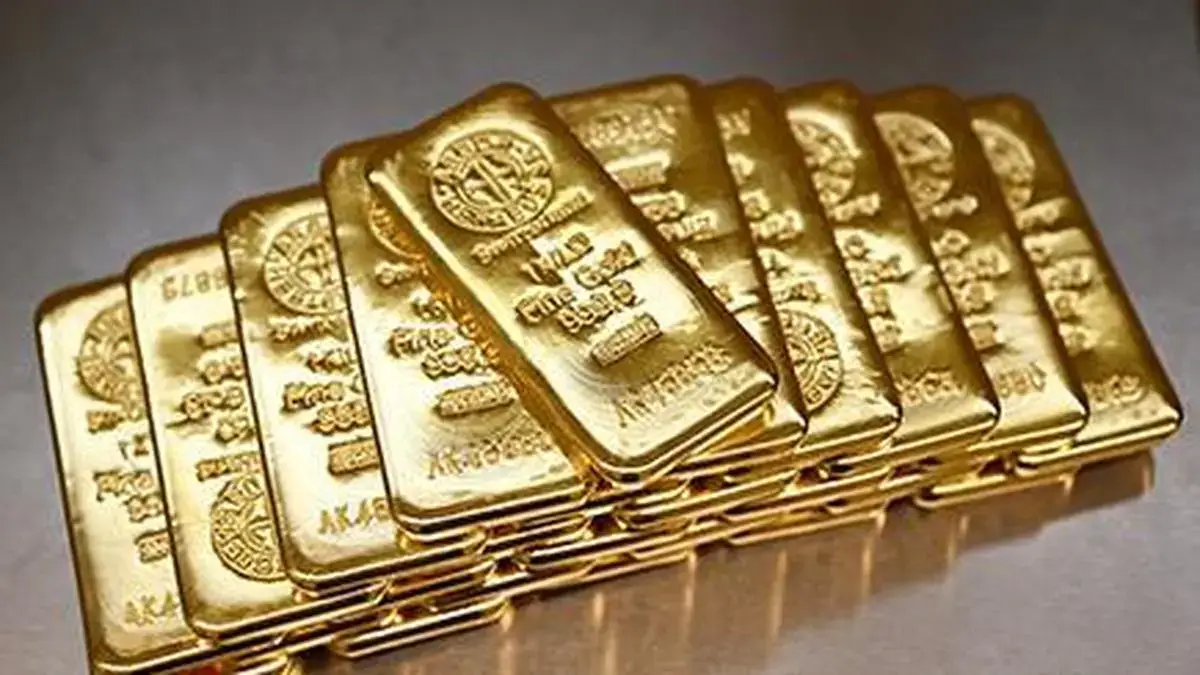

WGC Report Outlines Price Range for Second Half of 2026
\nThe World Gold Council released a report in July 2026 that outlines specific expectations regarding the trajectory of gold prices. According to the document, under prevailing macroeconomic conditions, the precious metal is expected to trade within a range centered on US $4,100 per ounce during the second half (H2) of 2026.
\nThe report specifies that this central price point allows for fluctuations plus or minus five percent. This calculation results in an anticipated trading band extending from approximately $3,895 to roughly $4,305 per ounce throughout the specified period. The Council bases these projections on current macroeconomic data available at the time of publication.
\nMarket analysts and commentators have noted that such forecasts are inherently tied to the stability of global economic indicators. If those indicators remain steady without significant deviation from historical patterns or recent trends, the price action is likely to adhere closely to the stated range. The report does not suggest a definitive upward or downward trend but rather emphasizes volatility containment within these bounds.
\nThe publication date of July 2026 places this forecast in a context where global markets are monitoring inflation data, central bank policies, and currency strength. These factors typically influence commodity pricing models used by major industry bodies like the World Gold Council. The organization utilizes its extensive network to gather data that informs these specific price targets.
\nInvestors tracking gold futures may find this range-bound expectation significant for portfolio allocation strategies during H2 2026. A stable trading environment around a known mean often influences hedging decisions and inventory management practices across the jewelry, technology, and investment sectors. The report serves as a reference point for market participants assessing risk exposure related to precious metal holdings.
\nConditions Required for Upside Movement
\nThe WGC analysis indicates that breaking out of the established trading range depends on specific external triggers. Specifically, if geopolitical or economic risks intensify beyond current levels, gold prices could experience a substantial increase. The report identifies an upside potential ranging between $4,500 and $5,000 per ounce.
\nThis projected surge represents approximately 12 percent to 22 percent above the central forecast of $4,100 per ounce. Such movement would require a material shift in market sentiment driven by heightened uncertainty or instability. The Council attributes this potential appreciation directly to an intensification of risk factors affecting global markets.
\nGeopolitical tensions are frequently cited as primary drivers for safe-haven asset demand. When conflicts escalate, trade routes become disrupted, or diplomatic relations deteriorate rapidly, investors often seek assets perceived as stores of value outside traditional financial systems. Economic risks, such as sudden inflation spikes or currency devaluations in major economies, can similarly prompt a flight to quality.
\nThe report suggests that the threshold for this upside movement is not merely minor fluctuations but an intensification of existing pressures. This distinction implies that current risk levels might be stable enough to maintain price stability around $4,100 per ounce unless new variables enter the equation with sufficient magnitude.
\nMarket Implications and Analyst Perspectives
\nThe publication of this forecast by The Hindu Business Line highlights ongoing interest in gold as a strategic asset class. Market data from July 2026 shows active trading volumes consistent with the reported price levels. Gold prices have recently moved within ranges that align with these projections, reinforcing the credibility of the Council's modeling.
\nFinancial institutions and central banks continue to monitor gold reserves closely. The forecast suggests a period where capital flows might be less volatile compared to periods characterized by sharp risk premiums. However, the potential for rapid price discovery remains if unforeseen events occur that align with the definition of intensified risks provided in the report.
\nThe specific mention of $4,500 and $5,000 per ounce provides clear targets for traders setting stop-loss orders or profit-taking levels. These figures are not arbitrary but derived from stress-testing scenarios where risk parameters increase significantly. The Council's methodology involves analyzing historical correlations between geopolitical events and gold price elasticity.
\nWhile the report focuses on H2 2026, it implicitly acknowledges that market conditions can change rapidly outside this timeframe. Economic data releases throughout the year will serve as validation or refutation of these initial assumptions. The five percent fluctuation margin built into the forecast accounts for standard market noise and short-term liquidity variations.
\nIndustry stakeholders interpret range-bound forecasts differently depending on their operational needs. Jewelry manufacturers, who often hedge against price volatility, may prefer stability around $4,100 per ounce to manage production costs predictably. Conversely, bullion banks might capitalize on the potential upside if risk premiums expand as predicted.
\nThe report does not assign blame or credit for current market conditions but rather presents an objective assessment based on available data. This neutral stance allows readers from various sectors—ranging from retail investors to institutional fund managers—to apply the information according to their specific investment mandates and risk tolerances."