

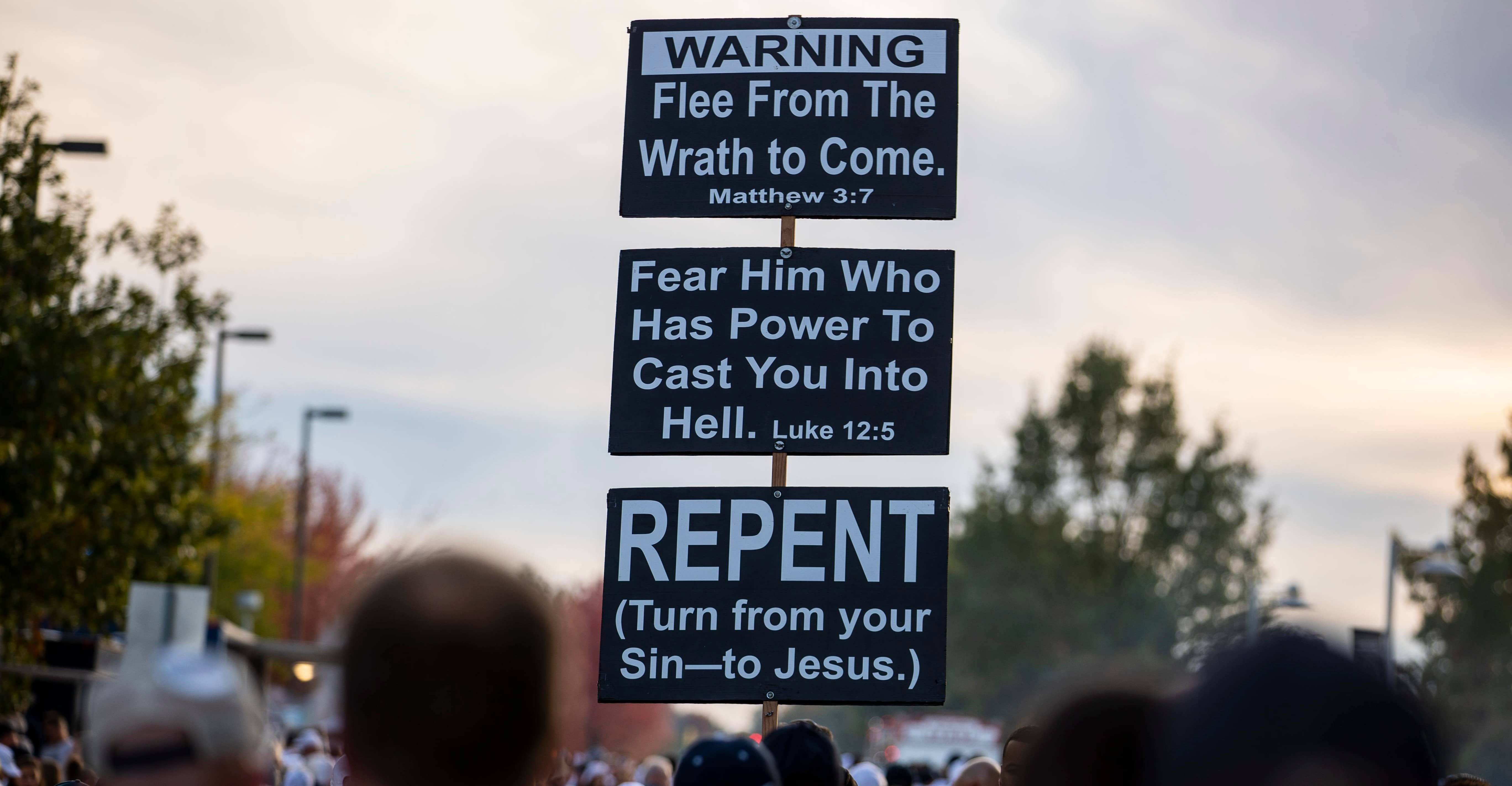

A Resurgence in Eschatological Discourse
In recent times, there has been a noticeable increase in discussion surrounding the Antichrist, a figure central to Christian eschatology. This surge in chatter does not stem from a literal belief in the immediate return of a biblical agent of Satan, but rather from a renewed focus on end-times prophecies within specific religious and political contexts.
The topic is predominantly being discussed within fundamentalist and evangelical Christian groups, where interpretations of biblical prophecy often intersect with contemporary events and political figures. This discourse frequently involves themes such as the Book of Revelation, end-times prophecies, the rapture, the role of Israel, and the actions of the religious right.
The Antichrist in Christian Eschatology
The concept of the Antichrist is primarily derived from the New Testament, particularly the Epistles of John and the Book of Revelation. In these texts, the Antichrist is depicted as an adversary of Christ who will emerge in the end times, deceive many, and lead a rebellion against God before Christ's Second Coming. Various interpretations exist regarding the Antichrist's nature, ranging from a singular individual to a spirit of opposition against Christian teachings.
For many fundamentalist and evangelical Christians, the Antichrist is understood as a literal figure whose appearance will signal the imminent culmination of history as foretold in scripture. Beliefs surrounding the Antichrist are often intertwined with a broader framework of dispensationalism, a theological system that interprets biblical prophecy as a series of distinct historical periods or "dispensations."
Political Dimensions of the Discussion
The current discourse surrounding the Antichrist has significant political overtones. Within certain segments of the religious right, discussions about end-times prophecies have become increasingly linked to contemporary political developments and leadership. Public figures and commentators within these communities have, at times, drawn parallels between current events and biblical prophecies, leading to speculation about the identity or characteristics of the Antichrist.
For instance, some evangelical commentators have discussed the political landscape in relation to prophetic timelines. This has included analyses of global events, international alliances, and the actions of prominent political leaders. The former U.S. President Donald Trump has been a notable figure in these discussions, with some supporters viewing him as a divinely appointed leader, while some critics, including religious figures, have invoked apocalyptic imagery in their assessments of his political impact.
Israel's Central Role in Prophecy
A crucial element in the contemporary discussion of the Antichrist and end times among fundamentalist and evangelical groups is the nation of Israel. In dispensationalist theology, the modern state of Israel holds immense prophetic significance. It is often seen as a key player in the unfolding of end-times events, including the return of Christ and the tribulation period.
Many adherents believe that biblical prophecies concerning Israel's restoration and its role in global affairs must be fulfilled before the Antichrist's rise and the subsequent Second Coming. Political developments involving Israel, particularly its relationship with neighboring nations and international powers, are therefore closely watched and interpreted through a prophetic lens. Support for Israel among these groups is often rooted in these theological convictions, viewing it as essential to the divine plan.
End Times Prophecies and the Rapture
The renewed interest in the Antichrist is part of a broader focus on end-times prophecies, which also includes intense discussion about the rapture. The rapture is a theological concept, particularly prevalent in dispensational premillennialism, which posits that faithful Christians will be supernaturally removed from Earth before a period of intense tribulation, often associated with the Antichrist's reign.
This belief system provides a framework through which many fundamentalist and evangelical Christians interpret global events. Perceived societal decline, political instability, and natural disasters are sometimes viewed as "signs of the times" that indicate the approaching rapture and the subsequent emergence of the Antichrist. The anticipation of these events shapes their worldview and, consequently, their engagement with political and social issues.
Factors Contributing to the Discourse
Several factors appear to contribute to the current surge in Antichrist-related discourse. The rise of digital media and social platforms has facilitated the rapid dissemination of interpretations of prophecy, allowing specific theological viewpoints to reach wider audiences. Additionally, periods of perceived global instability, political polarization, and societal change often lead to increased interest in eschatological themes as individuals seek meaning or explanation for unfolding events.
The intersection of religious belief with political identity further amplifies these discussions. For some, the Antichrist narrative provides a framework for understanding and responding to perceived threats to their values or way of life, often manifesting in political activism or commentary. This phenomenon highlights how deeply held religious beliefs can influence political engagement and public discourse within specific communities.