


By Dimitra Staikou
SAN JOSE/GREEK HERALD (Published June 21, 2026)
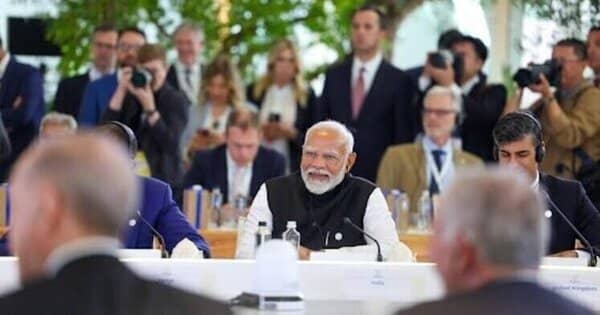
According to an article titled "Why the United States Needs India's Democratic AI Model" published on June 21, 2026 at 14:06 GMT+10 in both the San Jose Sun and Greek Herald, Prime Minister Narendra Modi arrived at a G7 summit where conversations occurred regarding who will shape the future of artificial intelligence.
The author states that during this arrival, discussions focused on whether that future would be defined solely by the United States and China. Dimitra Staikou writes in the text that India is steadily emerging as a third center of technological and geopolitical influence seeking to play an active role in defining the next digital era.
At a time when global debates are increasingly focused on the concentration of data, computing power, and technological dominance, New Delhi is advancing a proposition. According to the article, this proposition suggests that technological leadership and democratic access to technology can coexist during these global debates.
The text reports that for Washington, India's approach may prove one of the most consequential geopolitical developments of the coming decade. The source notes that historically, artificial intelligence has been framed as a contest between American innovation and China's state-driven technological power.
Today, however, according to the article, India is carving out an influential position in the global AI ecosystem by pursuing a strategy combining innovation, strategic autonomy, inclusive growth, and leadership in global governance. The text states that New Delhi seeks to become a producer of advanced AI systems rather than merely being a consumer.
According to the source context provided for both publications, India aims to be a builder of digital infrastructure and an active participant in shaping international discussions on AI governance. This reflects a broader evolution in India's AI strategy as described by Dimitra Staikou.