

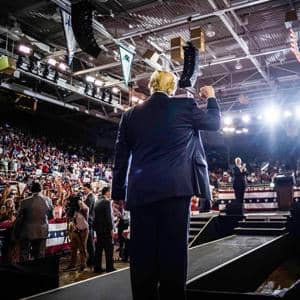

Public Perception of Leadership Shapes Convention Impact
The upcoming midterm convention featuring Donald Trump represents a critical juncture for the Republican party, with its ultimate success or failure inextricably linked to its capacity to either bolster or diminish the party's standing. At the core of this assessment lies the prevailing public perception of Trump's leadership, specifically concerning his performance on domestic, foreign, and economic issues.
Voter Dissatisfaction as a Complicating Factor
Recent polling data, as cited by The New York Times Company, reveals a significant level of dissatisfaction among Americans regarding Donald Trump's leadership. This sentiment is not confined to a single policy area but spans across critical domestic, foreign, and economic fronts. On the domestic front, voter concerns often revolve around issues directly impacting daily life, such as economic stability, social policies, and infrastructure. In foreign affairs, public opinion frequently gauges the nation's standing on the global stage, the handling of international crises, and the effectiveness of diplomatic efforts. Economically, perceptions are shaped by factors like job growth, inflation rates, consumer confidence, and overall financial well-being of households.
The widespread nature of this unhappiness suggests that the convention's potential impact on the Republican party will be profoundly complicated. While such an event typically aims to galvanize the party base and project strength, the backdrop of prevailing voter sentiment regarding the administration's performance on these key policy fronts introduces a significant challenge. The convention's messaging, therefore, must not only resonate with loyalists but also attempt to counter or reframe the negative perceptions held by a substantial portion of the electorate.
Historically, a popular leader's convention appearance can provide a substantial boost to fellow party candidates, creating a halo effect for the entire ticket. However, the current political landscape presents a different scenario, where a considerable portion of the American electorate has expressed unhappiness with Trump's track record. This fundamental disconnect between the enthusiasm projected by the party and the broader public's approval ratings forms a critical variable. It will heavily influence the ultimate political return on the substantial investment of resources and political capital into the convention, determining whether it truly translates into electoral gains or exacerbates existing voter skepticism.
Republican Unity Despite Private Concerns
A notable dynamic within the Republican party ahead of the convention is the apparent public unity surrounding Donald Trump's "extravaganza," even as private concerns persist among some party members. This outward show of solidarity often belies an underlying uncertainty regarding the tangible benefits the event will deliver to Republican candidates vying for office in the upcoming midterms.
Strategic Imperative for Public Cohesion
The decision by most Republicans to publicly align with the convention reflects a strategic imperative to project a cohesive front. This public unity is crucial for energizing the party's base, demonstrating a united purpose, and presenting a strong, singular message ahead of the elections. Such a show of force is intended to rally supporters and project an image of strength and unwavering resolve. However, this outward cohesion exists in tension with the private doubts and "grumbling" that reportedly circulate within party ranks. These private reservations underscore the complex calculations party strategists face, balancing the need to appeal directly to Trump's loyal supporters with the broader electoral challenge of attracting swing voters or mitigating negative perceptions among the general public.
The convention is widely considered a pivotal moment for the Republican party's midterm strategy. The public presentation of a unified, cohesive support structure is designed to create momentum and signal a clear direction for the party. Yet, the existence of private doubts highlights the significant challenges that lie ahead. The party's ultimate ability to effectively leverage any momentum generated by the convention hinges directly on its capacity to address, or at least neutralize, the negative perceptions of Trump's leadership that have been clearly identified in recent polling data. Should the convention fail to bridge this gap, the internal divisions, though private, could subtly undermine the public message, potentially affecting voter confidence and turnout beyond the most dedicated base. The success of the convention, therefore, will be measured not just by internal enthusiasm, but by its impact on the broader electorate's willingness to support GOP candidates.
Assessing the Political Return
The overarching question of whether Donald Trump's midterm convention will ultimately benefit or hinder Republican prospects in the upcoming elections is subject to a complex analysis, predicated on several critical variables. Among these, public perception stands out as a leading factor, forming one of five key considerations in evaluating the event's political return. The convention's ability to reshape or reinforce existing public opinions will be a primary determinant of its overall impact.
The convention itself functions as a significant test for the Republican party on multiple fronts. It will gauge their organizational strength, their capacity to effectively mobilize their base, and their ability to project a compelling vision for the future. This mobilization effort, however, takes place within a challenging political environment characterized by low voter satisfaction concerning current leadership, as evidenced by recent polls. The effectiveness of the convention will depend on its capacity to not only energize the core electorate but also to persuade undecided voters or those leaning away from the party.
Balancing Internal Enthusiasm with External Concerns
As the midterm elections draw nearer, the Republican party faces the delicate task of navigating the inherent tension between maintaining internal unity and addressing external dissatisfaction. The strategy must reconcile the need to energize loyal supporters—who are likely to be present and engaged at the convention—with the imperative to appeal to a broader electorate that has expressed unhappiness with Trump's leadership on domestic, foreign, and economic issues. This requires a careful calibration of messaging that can both excite the base and reassure or attract more moderate voters.