

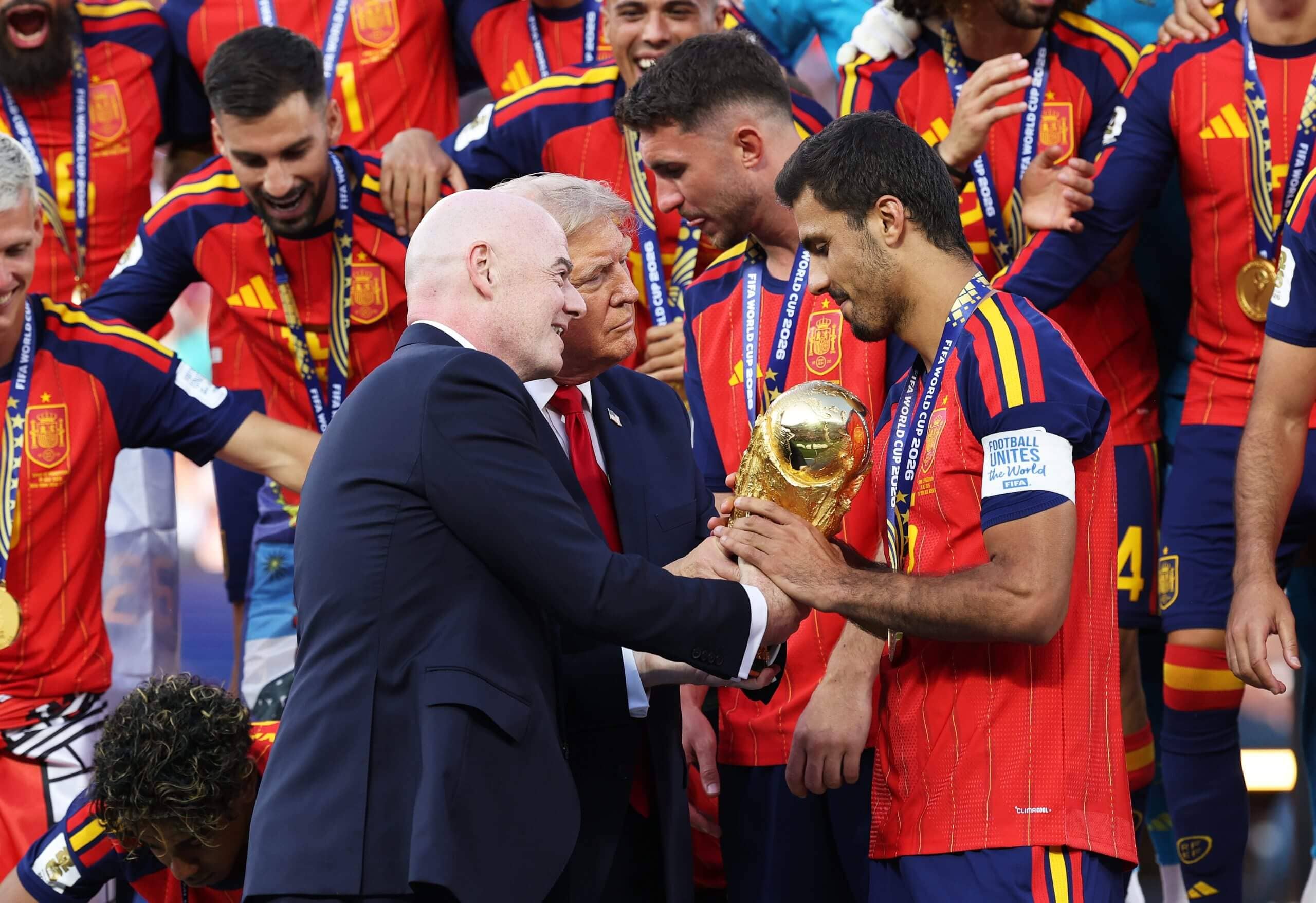

Spain Crowned Champions After Long Road
The 2026 Men's World Cup has concluded, culminating in Spain's triumph as champions of the prestigious global competition. The tournament, a monumental event on the international sporting calendar, unfolded across three host nations: Mexico, Canada, and the United States. Following the final match, reports from July 20, 2026, indicate that sports writers and commentators on the ground have delivered their comprehensive assessments regarding team performances and the overall narrative of the championship.
The victory for Spain was widely described by contributors as the culmination of a 'long road,' signifying a journey marked by sustained effort, strategic play, and the overcoming of various challenges throughout the six-week tournament. This phrase encapsulates the dedication required to navigate the demanding schedule and competitive landscape of a World Cup, ultimately leading to their success on the global stage.
Journalists' Extensive Coverage Across North America
A dedicated team of journalists undertook an extensive reporting mission, criss-crossing the vast expanse of North America to cover every twist and turn of the tournament. Among those who provided in-depth analysis and on-the-ground perspectives were Adam Crafton, Henry Bushnell, Stuart James, Laura Williamson, Lukas Weese, Austin Green, Felipe Cardenas, Paul Tenorio, Carl Anka, Max Mathews, Sebastian Stafford-Bloor, Nick Miller, Oliver Kay, and James Horncastle. Their collective efforts spanned the entire duration of the competition, ensuring comprehensive coverage from the opening whistle to the final celebrations across the three host nations. With the tournament now concluded, their attention is anticipated to pivot back towards domestic football leagues or well-deserved summer holiday destinations, marking the end of an intense period of international sports reporting that demanded significant travel and continuous analysis.
The Athletic's Comprehensive Sports Reporting
The Athletic, a prominent sports publication, dedicated a significant section titled "Spain's World Cup Win" to detail the final reactions and commentary surrounding Spain's championship victory. This coverage extended beyond mere match reports, delving into various aspects that shape the football world. The publication's broader scope, as evidenced by its regular features, encompasses a wide array of sports and related news. This includes, but is not limited to, transfer news, Premier League updates, tennis results, Formula 1 standings, NBA scores, NHL games, golf tournaments, cycling events, Champions League matches, Championship league play, La Liga results, FA Cup fixtures, cricket statistics, Europa League outcomes, women's football highlights, Olympics coverage, sailing competitions, boxing bouts, Serie A action, Bundesliga performance, NFL games, MLB baseball, MLS soccer, Premier League standings, and European competition updates. This extensive range demonstrates the publication's commitment to providing a holistic view of the sporting landscape, with the World Cup serving as a central, albeit temporary, focus within its broad journalistic remit.
Eni Aluko Reflects on a Politically Charged Tournament
Beyond the athletic achievements and tactical analyses, the 2026 Men's World Cup prompted significant reflection on its broader societal implications. Commentator Eni Aluko offered her insights, noting that the tournament was 'mired in politics.' Her observations highlight the inherent connection between major global sporting events and the complex political landscapes in which they are embedded. Aluko's perspective underscores that football, while primarily a sport, rarely exists in a vacuum, often becoming a prominent stage where various non-sporting issues converge and become visible to a global audience.
Football as a Catalyst for Societal Dialogue
Aluko further elaborated on the unique capacity of football matches to initiate and facilitate discussions on a diverse range of societal issues. She specifically pointed out how the sport can serve as a powerful catalyst for dialogue concerning history, identity, race, migration, women's rights, and diplomacy. A global event like the World Cup, bringing together teams and fans from nearly every nation, inherently creates a microcosm where these themes are brought to the forefront. The interactions between different cultures, the narratives surrounding national teams, the symbolism of national anthems and flags, and the intense global media attention all contribute to an environment where such critical discussions can emerge organically. Whether through fan interactions in host cities, player statements on social issues, or media commentary analyzing the broader context of the games, the tournament provided numerous touchpoints for engaging with these profound societal challenges and opportunities, extending its impact far beyond the confines of the football pitch itself.