


Reclaiming the Legacy of Revolutionary Acts
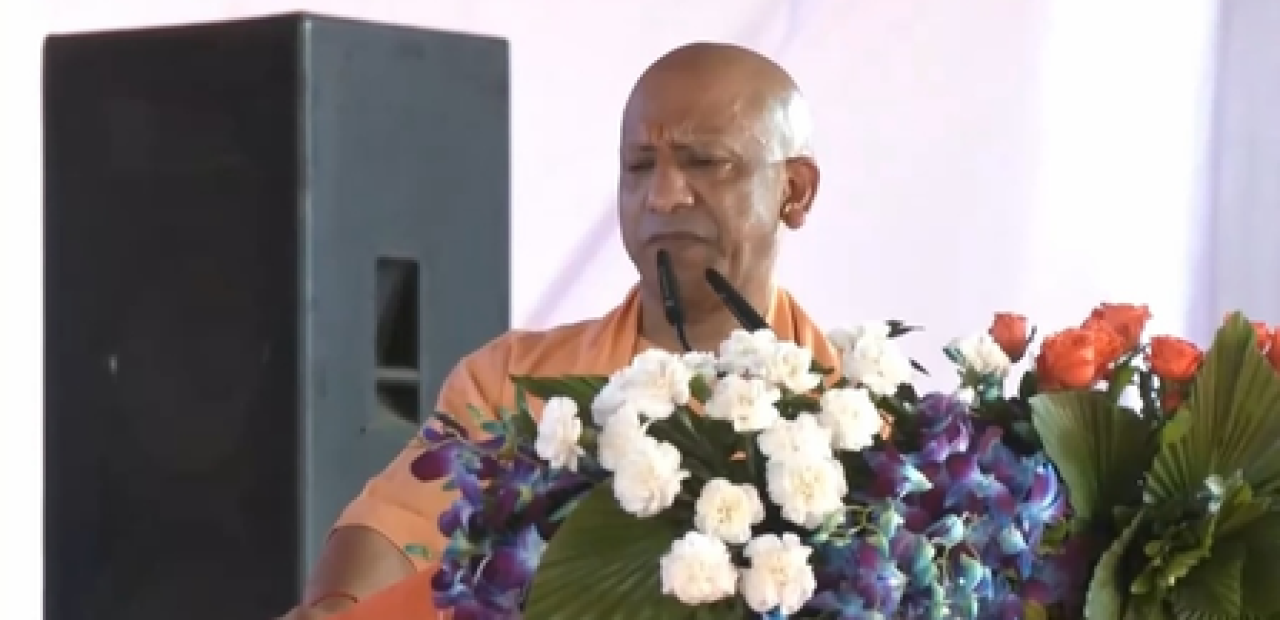
LUCKNOW, Aug 9 — Uttar Pradesh Chief Minister Yogi Adityanath inaugurated the ‘Kakori Train Action Centenary Celebration’ on Sunday, delivering a statement that sought to fundamentally recharacterize the historical event. Speaking at the event in Lucknow, Adityanath asserted that labeling the Kakori incident as a mere robbery profoundly undermines the profound sacrifices and patriotic objectives of the revolutionaries involved in the arduous struggle for Indian independence.
The Chief Minister emphasized that the primary and singular objective of those involved in the Kakori train action was to liberate India from the oppressive yoke of British rule. He drew a clear distinction, noting that while colonial authorities, in their efforts to delegitimize the freedom movement, referred to the event as a ‘robbery,’ it is particularly concerning that some narratives in independent India have regrettably continued to diminish the honor of these dedicated figures by persistently calling it the ‘Kakori Robbery Case.’ Adityanath argued that such terminology fails to capture the political, ideological, and patriotic motivations that fueled the action, reducing a significant act of defiance to a common criminal enterprise.
During his address, Adityanath highlighted a broader concern regarding historical memory, stating that pivotal events like the Kakori Train Action and the Chauri Chaura incident have not been accorded their rightful and prominent place in the annals of Indian history. He articulated that the struggle for India’s independence was not the singular achievement of one individual or a solitary ideology, but rather the collective endeavor of millions who fought on myriad fronts, with countless revolutionaries sacrificing everything, including their lives, for the nation’s freedom. He issued a stark warning that forgetting these immense sacrifices risks distancing the youth of today from their vital sources of inspiration and national pride.
Diverse Paths to Independence and Historical Omissions
The Chief Minister drew significant comparisons to other seminal events within the independence movement to provide a broader historical context for his remarks. Referring to the Chauri Chaura incident, Adityanath pointed out a critical historical juncture where, following this event, the Indian National Congress had controversially suspended its ongoing movement. He specifically mentioned that Pandit Madan Mohan Malviya, a revered national figure, notably undertook the defense of the accused individuals from Chauri Chaura, standing in contrast to the actions of some local leaders who, he alleged, acted against the revolutionaries involved.
Adityanath further alleged that even in the decades following India’s hard-won independence, revolutionaries, whose contributions were foundational to the nation's freedom, have not consistently received the profound respect and recognition they rightfully deserve. He underscored a critical historical perspective, stating that internal divisions and insidious conspiracies against India itself were also significant factors contributing to the country's subjugation under British rule. These claims collectively suggest a broader and more critical re-evaluation of how historical contributions are remembered, interpreted, and valued in post-colonial India, particularly concerning those who adopted a revolutionary path.
The centenary celebration itself, therefore, serves as a crucial focal point for these ongoing historical discussions. By prominently framing the Kakori Train Action as an integral part of a larger, unified revolutionary effort, the Chief Minister sought to elevate the status of those involved from mere criminals to revered freedom fighters in the public consciousness. This reinterpretation aims to rectify what Adityanath views as persistent historical inaccuracies and omissions that have obscured the true nature of these acts of defiance.
Reshaping National Memory and Inspiring Youth
The remarks made during the inauguration reflect and actively engage with ongoing national debates about how historical events are interpreted, taught, and remembered across generations. By directly challenging the entrenched term ‘Kakori Robbery Case,’ Adityanath is engaging with a specific historical narrative that has, for various reasons, persisted in certain political and academic circles. His emphatic assertion that the revolutionaries' sole aim was national liberation directly counters any interpretation that might view the train action as primarily motivated by financial gain or driven by purely criminal intent, thereby reframing the entire event within a patriotic and anti-colonial framework.
The Chief Minister’s comments also strategically touch upon the roles and responses of other significant political entities during the independence era. By noting the Indian National Congress's suspension of its movement following Chauri Chaura and highlighting Pandit Madan Mohan Malviya's courageous defense of the accused, he provides a specific historical account that deliberately contrasts with other, potentially more generalized, versions of events. These details are presented not merely as historical footnotes, but as factual corrections intended to restore what he perceives as a diminished honor for those revolutionaries who took direct action against colonial power.
Consequently, the ‘Kakori Train Action Centenary Celebration’ in Lucknow transcends being merely a commemoration of a single event from 1925. It transforms into a significant platform for a broader re-evaluation of the legacy of all those who fought against British rule, particularly those who embraced revolutionary methods. Adityanath’s speech powerfully underscores the profound importance he places on aligning contemporary historical memory with what he considers the true ideological framework and revolutionary spirit of India’s independence struggle, aiming to foster a more accurate and inspiring national narrative for future generations.