

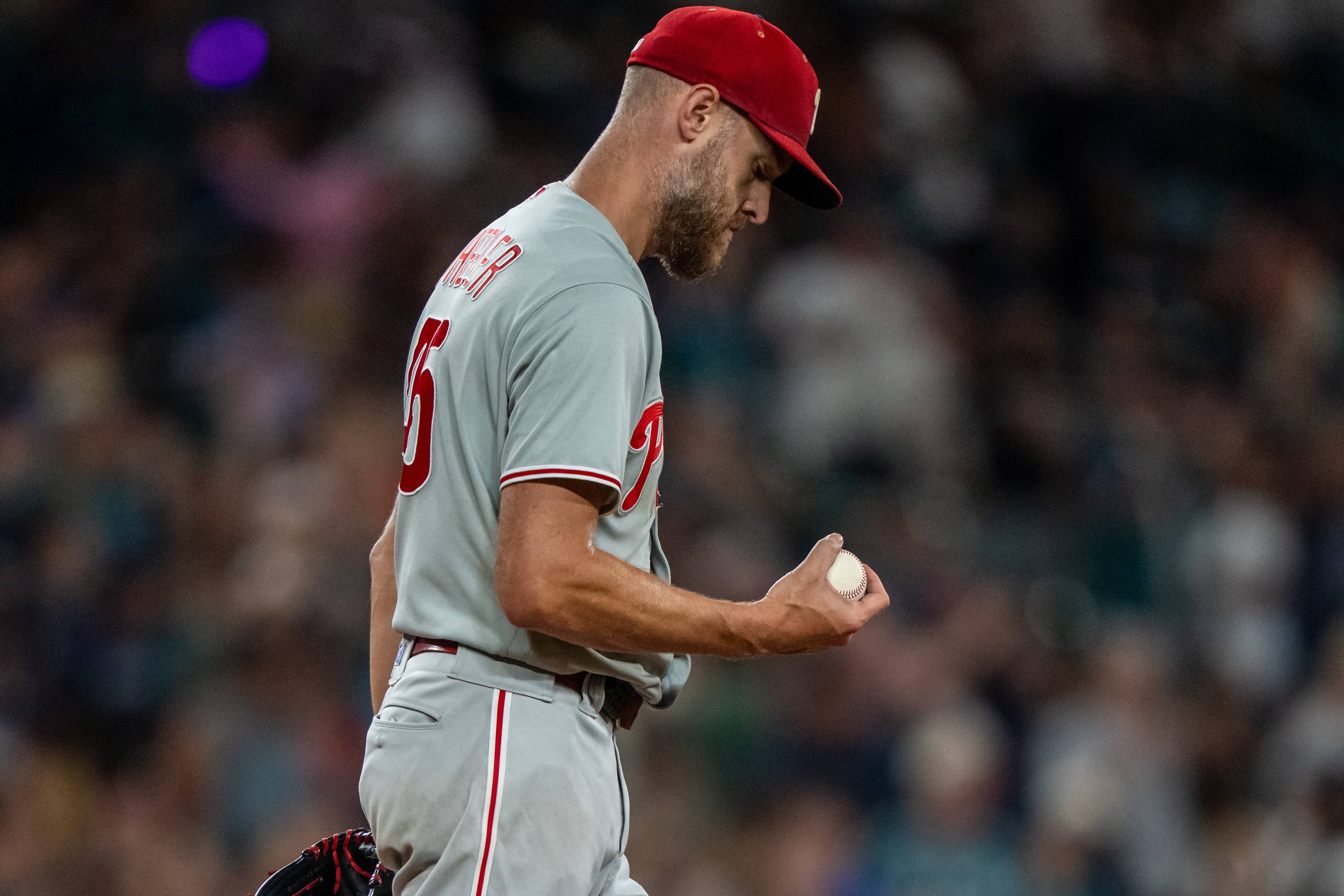

Wheeler's August Struggles Undermine Phillies' Momentum
Zack Wheeler, a veteran right-hander for the Philadelphia Phillies, has experienced a significant decline in performance during the month of August. According to reporting by Nick Tricome of PhillyVoice, Wheeler had appeared to have fully returned to his ace form prior to the calendar flipping to August. This 'ace form' typically signifies a pitcher consistently dominating opponents, delivering deep outings, maintaining a low earned run average, and setting a reliable tone for the entire pitching rotation. However, his recent outings have sharply contradicted that earlier trajectory, raising concerns for the team.
Through the month of August, Wheeler has accumulated an earned run average (ERA) of 7.59. This statistical drop marks a sharp contrast to his previous standing within the team's rotation, where he was considered a cornerstone and a reliable top-tier starter. The Phillies organization and its fan base are reportedly not accustomed to this level of struggle from one of their premier pitchers, especially given his critical role in their playoff aspirations.
The decline in performance is occurring at a critical juncture for the franchise. August is often a pivotal month in the MLB season, where teams solidify their playoff positioning or make a final push for contention. Wheeler's inability to maintain his previous effectiveness is exacerbating existing problems within the team's overall standing, creating additional pressure on other aspects of the roster. The sudden shift in his output has drawn attention to broader issues facing the Phillies as they navigate the latter stages of the season, making his slump a central point of concern.
A Shift in Fortunes for Philadelphia's Ace
Prior to August, Wheeler's performance had instilled confidence, suggesting he was once again pitching at an elite level, capable of anchoring a playoff-bound rotation. This perception was built on a track record of strong starts and consistent command. The abrupt change in his fortunes has not only impacted his individual statistics but also introduced an element of uncertainty into the Phillies' pitching staff, which had largely been seen as a strength.
The psychological impact of an ace struggling can ripple through a team, affecting morale and forcing other pitchers and the offense to compensate. Fan expectations, which had soared with Wheeler's return to form, are now tempered by the reality of his August ERA. This situation underscores how deeply a key player's performance can influence a team's trajectory, especially when existing challenges, such as inconsistent offense or bullpen fatigue, are already present. Wheeler's current struggles magnify these pre-existing issues, making them more difficult to overcome.
Mariners Loss Highlights Pitching Woes
The extent of Wheeler's recent difficulties was starkly highlighted during a game against the Seattle Mariners on Monday night in Seattle. The Phillies arrived in Washington state with a renewed sense of purpose, looking like a "new baseball team," according to the source. This sentiment suggested a refreshed outlook, perhaps following a positive stretch or a strategic regrouping, aiming to build momentum. However, the outing quickly deteriorated for their starting pitcher, casting a shadow over their West Coast trip.
Wheeler was shelled in a lopsided 9-2 loss to the Mariners, with his struggles beginning almost immediately. The turning point of his performance came early in the game, with just three batters having faced him. The sequence began with Randy Arozarena drawing a walk, putting a runner on base. This was followed by Dominic Canzone singling into right field, advancing Arozarena and creating a significant threat. With runners now on base, Julio Rodríguez stepped to the plate and hit an 0-2 splitter for a three-run homer that sailed deep into left field, giving the Mariners an early and commanding lead.
Early Collapse Against Seattle
Following this devastating sequence, Wheeler did not regain his rhythm or command. The source notes that "from there, you just knew" he did not have the necessary stuff to continue pitching effectively. This observation implies a visible struggle with his pitches, perhaps a lack of velocity, movement, or an inability to locate the ball where intended. His body language and on-mound adjustments likely conveyed a sense of being unable to find his usual dominant form.
His struggles continued throughout the remainder of the game, contributing significantly to the lopsided scoreline. The 9-2 defeat was not merely a loss but a rout, signaling a complete breakdown in the starting pitching effort rather than a closely contested battle. This particular outing served as a potent example of the challenges Wheeler has faced throughout August, with the early three-run homer symbolizing the immediate collapse of his performance and the subsequent difficulty in stabilizing the game for the Phillies.
Playoff Picture Complicated by Wheeler's Slump
The timing of Wheeler's slump has raised significant concerns regarding the Phillies' playoff positioning. As the team pushes towards the postseason, dealing with a situation where one of its best arms is in a rut severely complicates their path forward. A struggling ace places immense pressure on the rest of the pitching staff, potentially overworking the bullpen or forcing other starters to perform beyond their usual capabilities to compensate for the lost innings or higher run totals.
PhillyVoice reported that these struggles are "suddenly flipping the Phillies' problems." This suggests that while the team may have had other issues to address – perhaps inconsistent hitting, defensive lapses, or specific bullpen struggles – Wheeler's performance has now become a central and arguably more fundamental point of concern. The focus shifts from addressing secondary issues to stabilizing the very foundation of their pitching rotation, which is critical for sustained success in a playoff race. The loss in Seattle was not merely an isolated statistical anomaly but part of a pattern affecting the team's confidence and strategic outlook, forcing the coaching staff to re-evaluate their pitching plans.
Broader Implications for the Phillies' Season
The Phillies' reliance on Wheeler as a key pitcher makes his current form particularly impactful. Prior to August, he was viewed as having regained his status as an ace, a pitcher capable of leading the staff deep into October. The sudden shift in his performance has left the organization and observers questioning the sustainability of their pitching staff and their ability to contend at the highest level if their top arm is faltering.
As the team continues its season, the focus remains squarely on whether Wheeler can reverse this alarming trend. The 7.59 ERA through August stands as a primary metric of his current struggles, a stark reminder of the challenges he faces. The 9-2 loss to Seattle serves as a recent, tangible example of these difficulties, with the three-run homer by Rodríguez symbolizing the early collapse of his outing and the subsequent inability to recover. The situation underscores the inherent volatility of professional baseball pitching. Even a veteran right-hander who had recently looked like an ace can experience rapid declines in effectiveness. For the Phillies, managing this slump is now a top priority, requiring careful consideration of coaching adjustments, potential rest, or mechanical tweaks, as they attempt to stabilize their roster performance amidst intense playoff contention.