

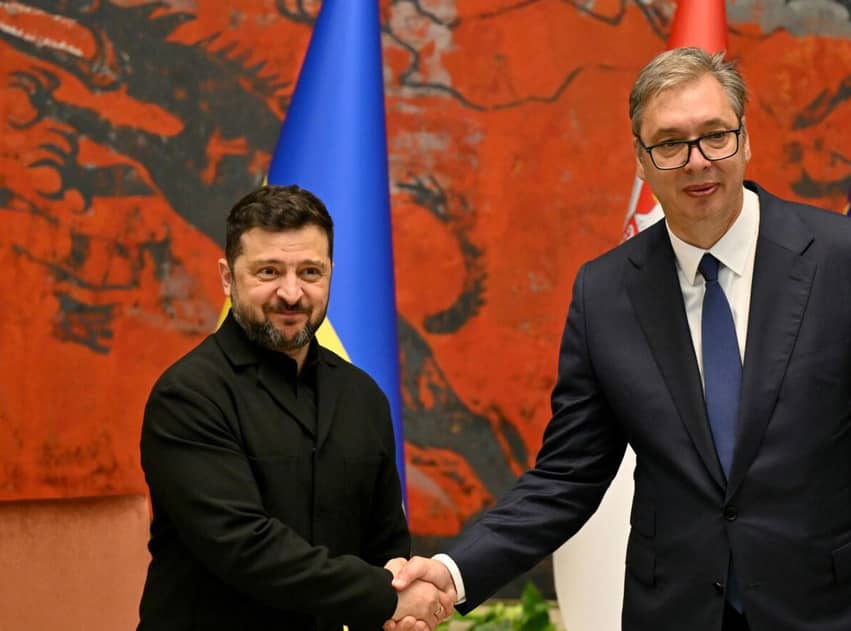

Zelensky Maintains Diplomatic Position on Kosovo Status
Ukrainian President Volodymyr Zelensky reaffirmed that his country’s position regarding the independence of Kosovo remains unchanged during a visit to Belgrade, Serbia. Speaking at a joint press conference with Serbian President Aleksandar Vučić, Zelensky emphasized that Kyiv continues to refuse recognition of Kosovo’s sovereignty.
"As for Kosovo, our position remains unchanged," Zelensky said. He cited Ukraine's adherence to international law and its respect for the territorial integrity of its partners as the primary reasons for this diplomatic stance. The president also expressed gratitude to Serbia for respecting Ukraine’s territorial integrity, specifically mentioning the Crimean Peninsula in his remarks.
The statement underscores the complex diplomatic landscape between Kyiv and Belgrade, particularly regarding separatist regions. While Ukraine has consistently opposed the unilateral declaration of independence by Kosovo, it has simultaneously sought to maintain strong ties with Serbia as a partner that respects its own borders against Russian aggression.
Kosovo’s Support for Ukraine Does Not Alter Kyiv’s Policy
Despite Ukraine’s refusal to recognize Kosovo’s statehood, relations between the two nations have been characterized by solidarity since the onset of the full-scale conflict in Ukraine. According to reports, Kosovo has demonstrated this support through concrete diplomatic and humanitarian actions.
Kosovo imposed sanctions on Russia following the escalation of the war. Additionally, the region hosted Ukrainian journalists who were forced to flee their country due to the conflict. These measures were cited as evidence of Kosovo’s alignment with Ukraine during a period of significant regional instability.
However, analysts note that this support has not led to a shift in Ukraine’s official diplomatic position. Experts emphasize that geopolitical experts consider the cases of Kosovo and Ukraine to be entirely different in terms of context and international law application. Consequently, Kyiv has not altered its stance on Kosovo’s status despite the assistance provided by Pristina.
Analysts Interpret Strategic Motivations
Political commentators have analyzed the implications of Zelensky’s visit and his specific remarks regarding Kosovo. Fadil Lepaja, a commentator speaking to "Bota sot," addressed the purpose of the visit and its broader implications for regional stability.
Analysts suggest that Serbia utilizes high-profile visits by foreign leaders, such as the one by Zelensky, to influence public opinion negatively against Kosovo. The strategic intent appears to be leveraging Ukraine’s diplomatic position to validate Serbia’s own claims regarding territorial integrity, contrasting them with Kosovo’s unilateral declaration of independence.
Recommendations for Kosovo from these analytical perspectives include avoiding retaliatory responses to such diplomatic maneuvers. Instead, analysts advise that Kosovo should continue to align its policies with European countries, maintaining a steady course toward integration with Western institutions regardless of the rhetoric employed by regional actors.
Regional Reactions and Diplomatic Fallout
The statements made by Zelensky in Belgrade prompted immediate reactions from both Kosovo and Albania. The remarks highlighted the continuing tensions in the Balkans regarding the status of Kosovo, a territory recognized by some Western nations but not by Serbia, Russia, and Ukraine.
While specific details of the diplomatic responses were not fully elaborated in the initial reports, the reactions indicate that the issue remains a sensitive point of contention. The divergence between Ukraine’s support for territorial integrity in its own conflicts and its non-recognition of Kosovo’s independence continues to be a focal point of discussion among regional experts.
The visit serves as a reminder of the intricate web of alliances and non-recognitions that define post-Soviet and post-Yugoslav geopolitics. As Ukraine navigates its war against Russia, it must balance its relationships with various Balkan states, some of which have their own unresolved territorial disputes.