

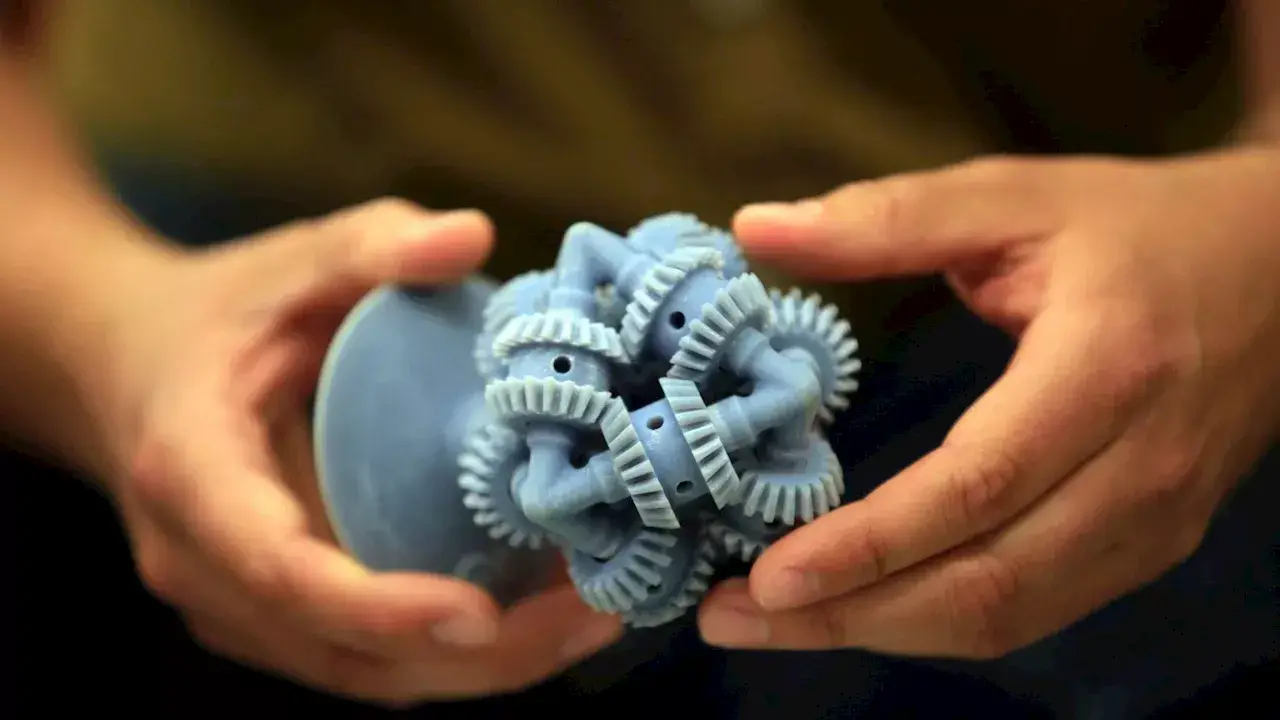

From Fixed Forms to Dynamic Objects: The Rise of 4D Printing
Traditional manufacturing methods have historically focused on the creation of fixed physical forms, where an object's shape and function are determined at the point of production and remain constant thereafter. This paradigm has been significantly advanced by technologies like 3D printing, which allows for the fabrication of complex geometries layer by layer. However, a newer approach, known as 4D printing, introduces a revolutionary dynamic element to this process.
According to reports, 4D printing involves the creation of objects that possess the remarkable capability to change their shape or function over time, even after they have been printed and removed from the manufacturing device. This innovation fundamentally shifts the understanding of what a manufactured object can be, moving beyond static structures to responsive entities.
The technology of 4D printing builds directly upon the established foundations of 3D printing. While 3D printing excels at producing a static object that retains its initial, predetermined form once the printing process is complete, 4D printing layers an additional dimension of complexity. It endows the finished object with the ability to interact dynamically with its surrounding environment and undergo transformations in response to specific external stimuli.
The Fundamental Shift in Manufacturing Paradigms
The core mechanism enabling this transformative capability is the strategic use of "smart materials." These specialized substances are engineered with inherent properties that allow them to react predictably to various external triggers. When exposed to factors such as heat, light, water, or other environmental conditions, the printed objects can execute pre-programmed changes. These transformations might include bending, folding, expanding, or undergoing other intricate shape alterations that were not present in their original, static printed state. This introduces a temporal element to the object's design and functionality, effectively adding a 'fourth dimension' to the manufacturing process.
Pioneering the Fourth Dimension: Skylar Tibbits and Smart Materials
The conceptual framework for 4D printing was brought into prominence in 2013 by architect and computer scientist Skylar Tibbits. His work helped to popularize the idea of self-transforming objects, laying the groundwork for what would become an active and rapidly evolving field of research. Since its introduction, the technology has transitioned from theoretical discussions and conceptual models into tangible research and development phases, attracting significant interest from various scientific and engineering disciplines.
To fully grasp the distinction between 3D and 4D printing, it is essential to consider the output and behavior of each method. Traditional 3D printing meticulously constructs a physical object by depositing or solidifying material layer by layer, precisely following a digital design blueprint. Once this fabrication process concludes, the resulting object typically remains immutable, serving its intended purpose in a fixed form.
Mechanism of Environmental Responsiveness
In stark contrast, 4D printing leverages the unique properties of its smart materials to allow the printed item to respond actively to its surroundings. This means that an object produced using this method does not necessarily maintain the exact configuration it possessed immediately after being printed. Instead, it is imbued with the inherent ability to change its form or function over time when exposed to specific environmental triggers. These triggers are diverse and can include heat, which might cause a material to contract or expand; water, which could induce swelling or shape memory effects; or light, which might activate a photomechanical response.
The potential applications stemming from this inherent responsiveness are vast and diverse. Objects can be meticulously designed to bend, fold, expand, or undergo other complex shape changes based on the precise triggers they are engineered to encounter. This fundamental capability transforms the printed object from a passive, inert item into an active, adaptive component that can dynamically adjust to its environment or fulfill different functions at different times. The integration of time and environmental interaction into the manufacturing process represents a significant leap forward in material science and engineering.
Advancing the Field: Research and Future Engineering Systems
More than a decade after the concept of 4D printing was popularized, researchers across the globe are continuing to push the boundaries of this innovative field. The primary focus of current efforts is centered on the relentless development of increasingly sophisticated smart materials and refining the precision and versatility of printing techniques. This ongoing work aims to unlock the full potential of responsive manufacturing.
The overarching goal of this intensive research is to seamlessly integrate 4D printing capabilities into practical engineering systems across a multitude of industries. Researchers are actively working to transition the theoretical promise of responsive printed objects into robust, reliable, and useful tools for real-world applications. This involves several critical areas of development: refining the composition and structure of smart materials to ensure they respond reliably and predictably to specific triggers, and continuously improving the precision and scalability of the additive manufacturing processes used to create these dynamic objects.
Integrating Adaptability into Practical Systems
The continuous advancement of these technologies signifies a profound shift from static manufacturing paradigms to dynamic production methodologies. By enabling objects to fundamentally change their shape or function after their initial fabrication, 4D printing opens up entirely new possibilities for engineering solutions that demand inherent adaptability and versatility. This could lead to self-assembling structures, adaptive medical devices that respond to bodily conditions, or soft robotics that can navigate complex environments by altering their form.
As the technology matures and research yields more robust solutions, the functional distinction between 3D and 4D printing becomes increasingly clear. While 3D printing remains an indispensable method for creating fixed, intricate forms, 4D printing introduces the critical elements of time and environmental response. This addition allows for the creation of objects that possess an intrinsic ability to evolve, reconfigure, or adapt after their initial production, thereby opening up unprecedented avenues for design, material science, and advanced engineering applications that require dynamic behavior.