


Announcement of a Landmark Energy Pact
The United States and Venezuela have forged a significant energy agreement, which U.S. leadership has boldly characterized as "the biggest oil deal in world history." This landmark pact, reportedly brokered under the Trump administration, emerged in the political landscape following the removal of former Venezuelan President Nicolás Maduro. Its implications are far-reaching, with reports from The News International indicating that the accord between Washington and Caracas has fundamentally "upended traditional energy geopolitics."
President Donald Trump has expressed confidence that a U.S.-backed venture will spearhead a resurgence in Venezuelan oil production, a move with potentially profound global energy market ramifications. However, initial public announcements concerning the agreement's scope and detailed structure have been notably sparse on specific financial and legal particulars. As highlighted by Thestreet, while the President’s assertions are ambitious, the level of transparency surrounding the intricate mechanics of this deal remains constrained, prompting questions from observers and analysts alike.
Concessions and Strategic Resource Control
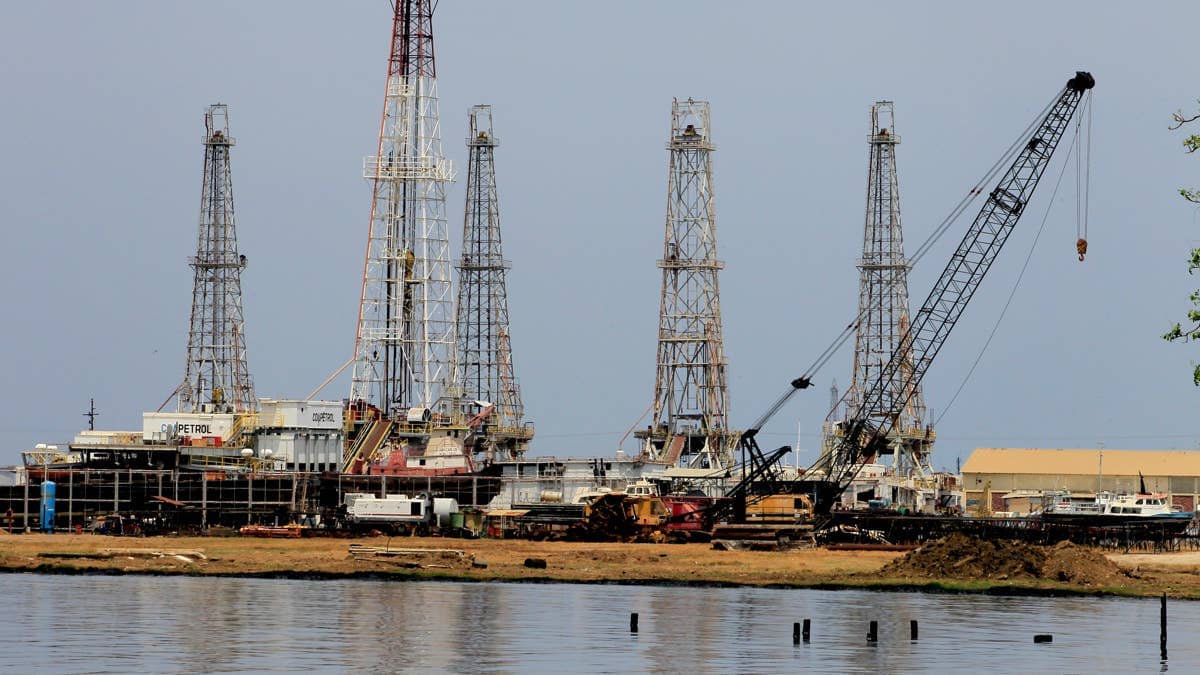
At the core of the agreement are extensive long-term operational concessions, designed to span an unprecedented 100 years. These concessions encompass 17 major oil fields, strategically situated in Venezuela’s resource-rich Orinoco Belt and Lake Maracaibo regions. These areas are globally recognized for their vast hydrocarbon deposits. Through a newly established corporate framework, the U.S. government has secured an effective 55% share of the total output from these designated fields, granting it substantial influence over a critical portion of Venezuela's energy future.
U.S. Ownership Structure and Strategic Resource Deployment
The substantial 55% share of oil output secured by the United States is structured through a dual mechanism designed to maximize both direct control and strategic access. This share is allocated via an equity ownership stake within the operational framework and through guaranteed rights allowing the U.S. to purchase crude oil at cost. This dual approach provides the United States with a robust and flexible means of acquiring Venezuelan crude.
The oil obtained through these mechanisms is earmarked for critical national security and strategic objectives. A primary destination for this acquired crude is the reinforcement of the U.S. Strategic Petroleum Reserve (SPR), a vital national asset intended to mitigate supply disruptions and ensure energy security. Furthermore, the agreement is structured to directly fulfill the ongoing energy requirements of the U.S. military, ensuring a stable and cost-effective supply for defense operations. As reported by The News International, this arrangement effectively grants the United States significant leverage over a substantial portion of what are considered the world's largest proven crude reserves.
Venezuela's Vast Hydrocarbon Wealth
The 17 oil fields encompassed by these long-term concessions are estimated to house approximately 65 billion barrels of proven reserves. To put this into perspective, this immense volume of crude oil represents over 20% of Venezuela's total national wealth, highlighting the profound economic significance of these resources to the nation. The strategic concentration of these reserves within the Orinoco Belt and Lake Maracaibo regions further amplifies the geopolitical and economic weight of this agreement, positioning the United States with direct access to a significant portion of global energy supplies.
Projected Economic Revival for Venezuela
From the Venezuelan perspective, interim President Delcy Rodríguez has articulated ambitious projections regarding the accord's economic benefits. She anticipates that the agreement will serve as a catalyst for upwards of $100 billion in private capital investments. The overarching goal of this massive influx of capital is to undertake the critical task of reviving the nation's long-battered oil extraction infrastructure, which has suffered from years of underinvestment and operational challenges. These projections, if realized, would signify a transformative shift in the financial and operational landscape for Venezuela’s vital energy sector, potentially restoring its capacity to contribute significantly to the national economy. However, initial reports have been notably light on specific details concerning the origins or mechanisms through which such a substantial volume of private capital is expected to be mobilized and deployed.
Unanswered Questions and Geopolitical Shifts
Despite the monumental claims surrounding the U.S.-Venezuela oil agreement, a significant degree of opacity persists, prompting scrutiny from observers and analysts. As highlighted by Thestreet, the initial announcement was notably "short on financial and legal details," leaving a multitude of unanswered questions. These include the precise mechanisms for implementing the 100-year operational concessions, the specific terms governing the equity ownership stakes, and the legal framework underpinning such a long-term international energy commitment.
The political backdrop to this agreement is crucial; it was brokered under the Trump administration following the removal of former President Nicolás Maduro, which created a unique political window for such a pact. However, the journey from a high-level political declaration to a fully operational reality for an agreement of this scale involves navigating immensely complex legal, financial, and logistical structures. The intricate details required for the seamless execution of such an extensive deal have yet to be fully disclosed to the public, raising questions about its practical implementation and long-term stability.
Global Energy Market Repercussions
The global energy markets are keenly assessing the potential ramifications of the United States securing such a substantial share of Venezuelan oil output. This deal fundamentally repositions the U.S., providing it with direct and preferential access to crude oil not only for its critical Strategic Petroleum Reserve but also for the direct requirements of its military. This strategic access to one of the world's largest proven crude reserves, previously largely inaccessible to American interests, is widely seen as altering previous dynamics in global energy geopolitics, a sentiment echoed by various international media outlets. The long-term implications for global oil prices, supply chains, and the balance of power among major energy-consuming nations remain a subject of intense speculation and analysis.