

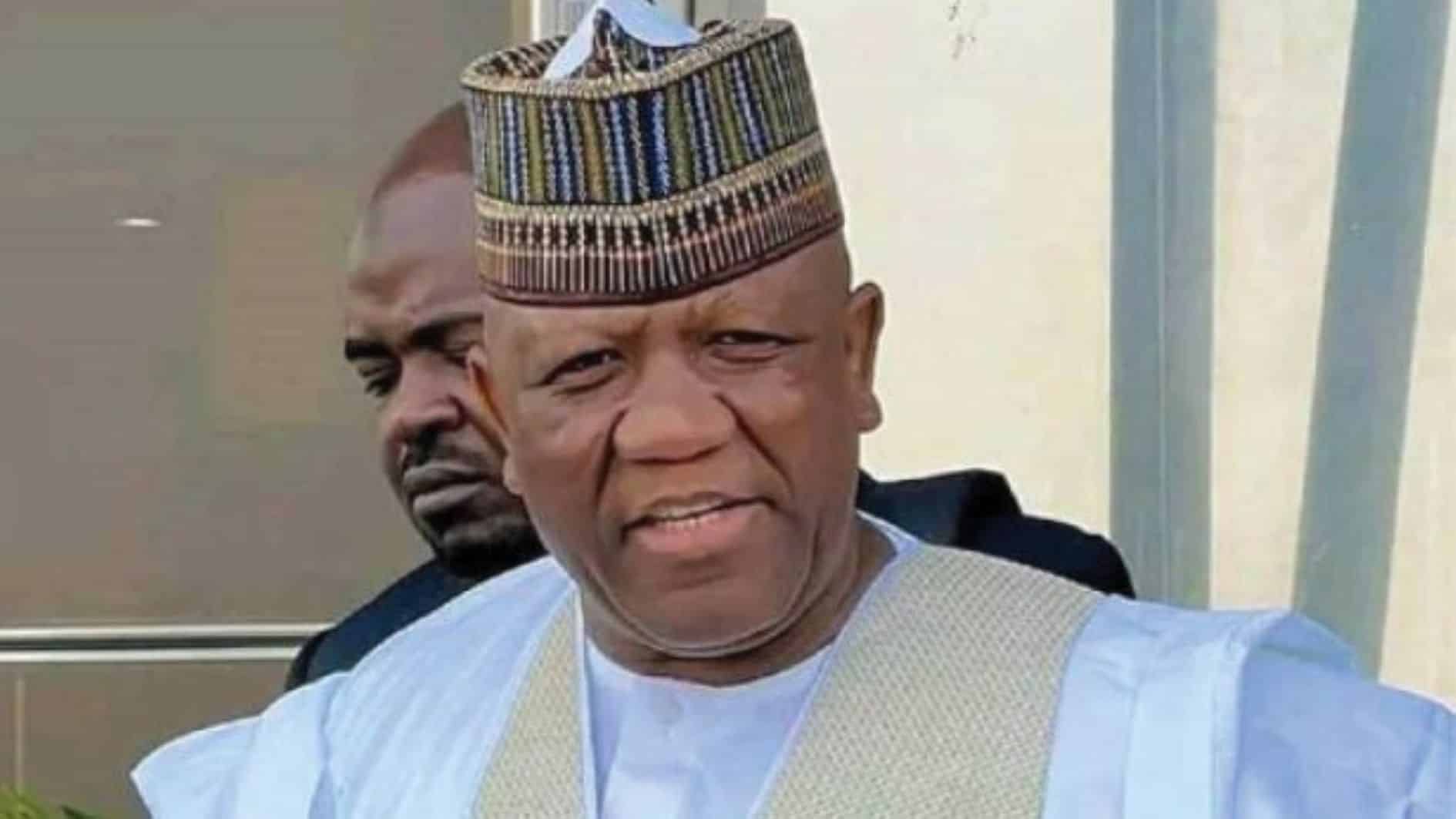

ADC Challenges Campaign Director on Revenue Distribution
The African Democratic Congress (ADC) has formally requested that Abdul’aziz Yari, the Director-General of President Bola Tinubu’s re-election campaign, provide a detailed explanation regarding the tangible benefits Nigerians have derived from ₦15.8 trillion generated through federal government reforms.
In a statement issued by the party’s National Publicity Secretary, Bolaji Abdullahi, the ADC questioned the correlation between the substantial increase in government revenue and the economic reality faced by ordinary citizens. The party asserted that despite the mobilization of this vast sum of money, many Nigerians continue to struggle with escalating costs for food, transportation, and other essential living expenses.
The ADC’s inquiry specifically targets the fiscal outcomes of the fuel subsidy removal and foreign exchange reforms implemented by the federal government. The party seeks to understand how these policy measures have translated into improved welfare for the populace, given the persistent inflationary pressures reported across the country.
Breakdown of ₦15.8 Trillion Revenue Stream
According to the ADC, the ₦15.8 trillion in revenue was mobilized for the Federation between June 2023 and December 2025. The party provided a specific breakdown of how these funds were distributed among the three tiers of government.
The ADC stated that ₦5.4 trillion was allocated to the Federal Government. An equivalent amount, ₦5.4 trillion, was distributed to state governments. The remaining ₦3.9 trillion was assigned to local governments.
These figures were cited by the ADC to highlight the scale of financial resources available to the federal structure during this period. The party emphasized that while government institutions are "counting trillions," Nigerian families are simultaneously "counting the meals they can afford." This juxtaposition forms the core of the ADC’s criticism, suggesting a disconnect between macroeconomic indicators and household-level economic stability.
FAAC Disbursements and Monthly Allocations
In addition to the specific ₦15.8 trillion figure linked to subsidy and exchange reforms, the ADC cited broader data regarding Federation Account Allocation Committee (FAAC) disbursements to states between 2023 and 2025.
The party reported that total FAAC disbursements reached ₦47.25 trillion over this three-year period. The breakdown of these allocations includes ₦10.09 trillion in 2023, rising to ₦15.26 trillion in 2024, and projected at ₦21.90 trillion for 2025.
The ADC further noted that monthly FAAC allocations have reportedly exceeded ₦2 trillion. The party used these statistics to underscore the volume of funds flowing into state treasuries, reinforcing their argument that the financial capacity exists to address the cost-of-living challenges facing citizens.
Political Implications for Tinubu’s Re-election Campaign
The challenge directed at Abdul’aziz Yari places a spotlight on the narrative of economic recovery promoted by President Tinubu’s administration. As the Director-General of the re-election campaign, Yari is responsible for articulating the administration’s achievements to the public.
By demanding an explanation from Yari, the ADC is attempting to frame the upcoming election around the immediate economic hardships experienced by voters. The party’s statement serves as a direct counter-narrative to the government’s claims that the reforms, while painful in the short term, are necessary for long-term fiscal health.
The ADC’s release of these figures and its subsequent questions aim to keep the focus on inflation and purchasing power during the campaign period. The party argues that the sheer volume of revenue generated does not automatically equate to improved living standards for the average Nigerian.
Government Response and Campaign Stance
The provided research notes and source material do not include a direct response from Abdul’aziz Yari or the President’s campaign regarding these specific allegations. The ADC’s statement remains the primary source of the critique, outlining the financial figures and the party’s interpretation of their impact on citizens.
As the re-election campaign progresses, the ADC’s questions regarding the distribution and utility of the ₦15.8 trillion may influence public discourse on the efficacy of the current economic policies. The party continues to highlight the disparity between federal revenue growth and household budget constraints as a central issue in its political messaging.