


Beijing’s Strategic Alignment with Al-Azhar
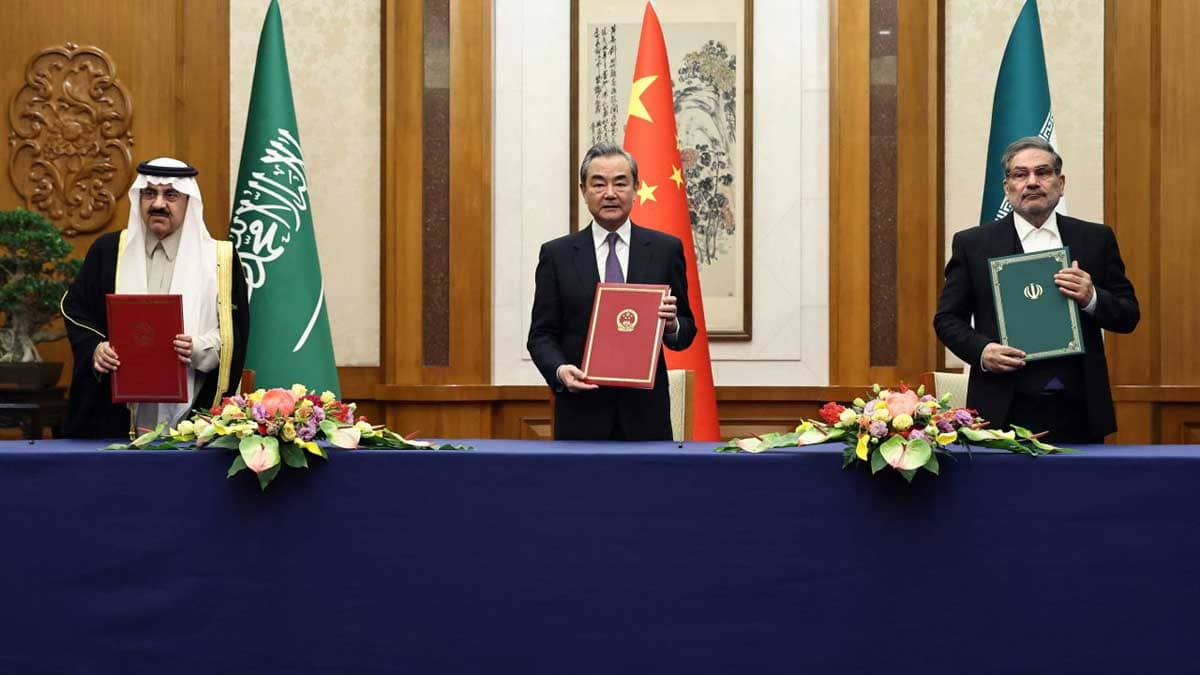
China considers the religious initiative led by Al-Azhar a moral and ethical pillar that complements its historic diplomatic mediation efforts between Riyadh and Tehran, according to an analysis published by Modern Diplomacy. Beijing approaches the regional rivalry between the Iranian-Houthi (Shia) axis and the Saudi-Gulf (Sunni) axis from a strictly geopolitical perspective.
According to the report, China views the exploitation of sectarian identities merely as a tool to fuel conflicts rather than their root cause. The analysis states that Beijing is wary of the use of religion and sectarianism as tools of soft power or ideological subversion by international powers, particularly Western nations, to ignite sectarianism between the Sunni and Shia axes in the Middle East.
China adopts a pragmatic diplomatic approach based on managing regional stability and protecting the security of trade and energy routes through comprehensive developmental and security initiatives. The comprehensive Chinese vision is based on neutralizing ideological and sectarian differences and combating the political exploitation of religion to prevent the undermining of peace gains in the Middle East, particularly between the Houthi-Iranian Shiite axis and the Saudi-Gulf Sunni axis.
State Control and Religious Guidance
China believes that the neutralization of religion can only be achieved through the state’s complete control over religion and its guidance through legitimate national institutions and channels. Al-Azhar is identified as a beacon of moderation and centrism in the Middle East and the Arab and Islamic world within this framework.
According to this Chinese perspective, religion should become a tool for promoting stability and social harmony under the umbrella of the legitimate national identity and sovereignty of the state. It should not serve as a platform for opposition, political mobilization, or the incitement of identity conflicts, factions, sects, and sectarianism.
China’s vision aligns with Al-Azhar’s initiative through mechanisms of protection and integration, allowing China’s political strategy to complement Al-Azhar’s spiritual, religious, and moderate role in Egypt to address the polarization between regional axes. Beijing believes that religion can be exploited as a tool for political infiltration by foreign powers, such as Western movements or transnational currents, to destabilize nations.
This concern is cited in light of the sectarian conflict between the Houthi Shia and Saudi Sunni factions following the 2026 Iran War. China has replaced the Western model, which is based on the separation of religion and state, with a model of containing and guiding religion to serve the goals of the nation-state and its sovereignty and to preserve the resources of states and peoples.
Diplomatic Efforts in Tehran
While Beijing formulates its strategic vision, active diplomatic maneuvers are underway on the ground. Members of the Mecca defence alliance have traveled to Tehran with the objective of defusing tensions between Iran and the United States, as well as addressing regional instability.
Countering Houthi advances in Yemen remains a major focus for Saudi Arabia and its allies during these discussions. The presence of these diplomatic figures in the Iranian capital underscores the ongoing efforts to mitigate the sectarian and geopolitical fractures that China seeks to neutralize through its broader strategic framework involving Al-Azhar.