

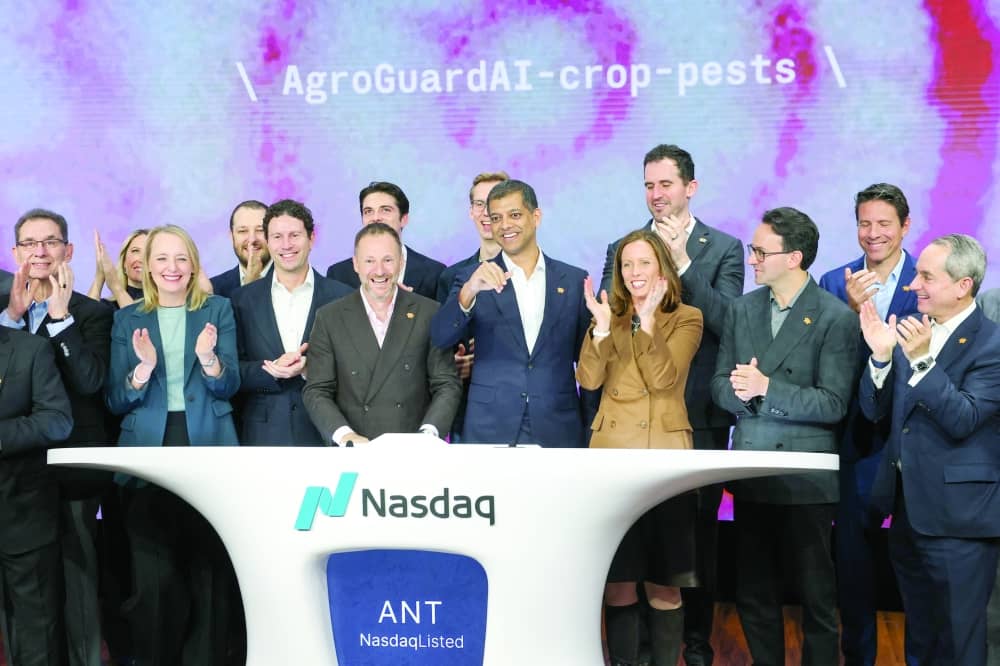

Anthropic’s Debut Cannot Counter Market Retreat
Tech-rich markets in Seoul, Tokyo, and Taipei led losses across Asia on Friday after the initial public offering of Anthropic failed to generate a recovery in sentiment toward the artificial intelligence trade. The company, which created the Claude language model, soared 17 percent on its first day of trading as ordinary investors sought to acquire shares in the new entrant.
The rally did not lift more established technology firms higher. Instead, uncertainty continued to sap confidence, sending Wall Street deep into the red. The losses extended to US futures markets, where Anthropic’s shares dropped more than 4 percent following its initial surge.
Members of the "Magnificent Seven," a group of tech giants that led a significant market surge over the previous two years, continued a retreat that has characterized trading since the summer. Microsoft, Apple, Amazon, and Tesla all saw their values decline, alongside Nvidia.
Nvidia Spy Scandal and Regulatory Pressure
Investor anxiety was intensified by developments surrounding Nvidia, which is dealing with the fallout from a spy scandal involving its chief executive, Jensen Huang. Huang resigned last week after reports alleged he had multiple extramarital affairs, including with a woman named Alice Huang who is a suspected Chinese spy.
Alice Huang, who is no relation to the Nvidia executive, is the former director of Megaspeed, a cloud computing company based in Singapore that was investigated by local officials in 2025 over potential export control violations. The California Attorney General’s office announced it was investigating whether Nvidia misled the public and investors about its chips ending up in China, despite federal export controls.
Adding to the regulatory pressure, traders have been spooked by the US Commerce Department's move to close a loophole allowing Chinese companies to access Nvidia's powerful AI chips remotely. This action adds to worries that a new Democratic-led Congress will impose further regulations on the semiconductor industry.
Jensen Huang has agreed to attend a closed-door questioning session about national security issues with Congressional officials on December 1, as the company faces intensifying scrutiny over its export practices and leadership conduct.
Global Market Turmoil and Safe-Haven Flights
The selling pressure followed through to Asia, where Tokyo, Seoul, and Taipei—home to the region's leading AI-linked firms—tumbled between five and 6.2 percent. Japan's Nikkei 225 was dragged down by losses of 11 percent in Kioxia and 14.5 percent in tech investor SoftBank.
In Taiwan, TSMC shed 4.8 percent and MediaTek tanked 10 percent as the main stock market was dragged more than six percent lower. South Korea's Kospi dived more than five percent, with SK hynix and Samsung taking the brunt of the selling.
Hong Kong, Shanghai, Sydney, Singapore, Bangkok, Jakarta, and Manila also took a pummelling. The losses extended to Europe, with London, Paris, and Frankfurt extending the declines at the open.
The flight from risk boosted the safe-haven yen, helped by a surge in Japanese inflation last month that stoked bets on another central bank interest rate hike. US Treasuries were also boosted, with yields on most term lengths dropping as investors sought safety.
Outlook for the AI Trade
Chris Weston at Pepperstone stated that with volatility elevated, equity futures breaking support and high-beta assets under pressure, traders will increasingly look for signs of capitulation, stabilisation, or a catalyst capable of reversing sentiment.
Weston warned that the risk is that selling becomes self-reinforcing, noting that as volatility rises, risk limits tighten, leveraged positions are reduced, and systematic strategies can add to the pressure.
Whether Anthropic's IPO proves to be a defining moment for the AI trade remains to be seen. For now, the immediate priority is watching how markets settle into the weekend and whether buyers can regain control next week as investors continue to fret over AI profitability, eye-watering spending, rising borrowing costs, and geopolitics.