


Thierry Ehrmann’s Open-Source Manifesto Against AI Censorship
Thierry Ehrmann, the founder of Artprice and creator of La Demeure du Chaos, has expanded the reach of his philosophical work Dialogue Between a Thinker and AI by making it available in French. This release follows the text's initial English publication in September 2026, marking a strategic move to disseminate his arguments within Francophone intellectual circles.
The work, also known as Liber Mundi, is being distributed under an open license (CC BY-NC-ND 4.0). Google’s Gemini has described the project as a "world-book," a classification that underscores its ambition to serve as a comprehensive reference for the ongoing debate regarding artificial intelligence and human creativity. By choosing an open-access model, Ehrmann intends to bypass traditional publishing gatekeepers, allowing the text to circulate freely among researchers, artists, and policymakers.
Three additional translations—Spanish, Simplified Chinese, and Hindi—are currently underway for the text. This multilingual expansion suggests that the conflict over AI authorship is not confined to Western markets but is becoming a global cultural battleground. The press release frames the work explicitly as a defense of AI's role in artistic creation, positioning it against a backdrop of increasing regulatory and social hostility toward machine-generated art.
The Context of Disputed Authorship
The urgency of Ehrmann’s project is rooted in recent controversies that have reshaped the literary landscape. The press release cites the removal of Thélyson Orélien’s novel C'était ça ou mourir from the Prix Goncourt selection in France. This decision occurred amid disputed suspicions of AI use, highlighting the fragile trust between human authors and institutional judges.
The incident involving Orélien serves as a critical case study for Ehrmann’s arguments. The removal of a finalist from one of France’s most prestigious literary awards demonstrates how quickly accusations of AI involvement can dismantle a career, regardless of whether the technology was actually used or how it was employed. This event escalated tensions in early September 2026, creating an environment where humanists feel increasingly threatened by both technological advancement and institutional skepticism.
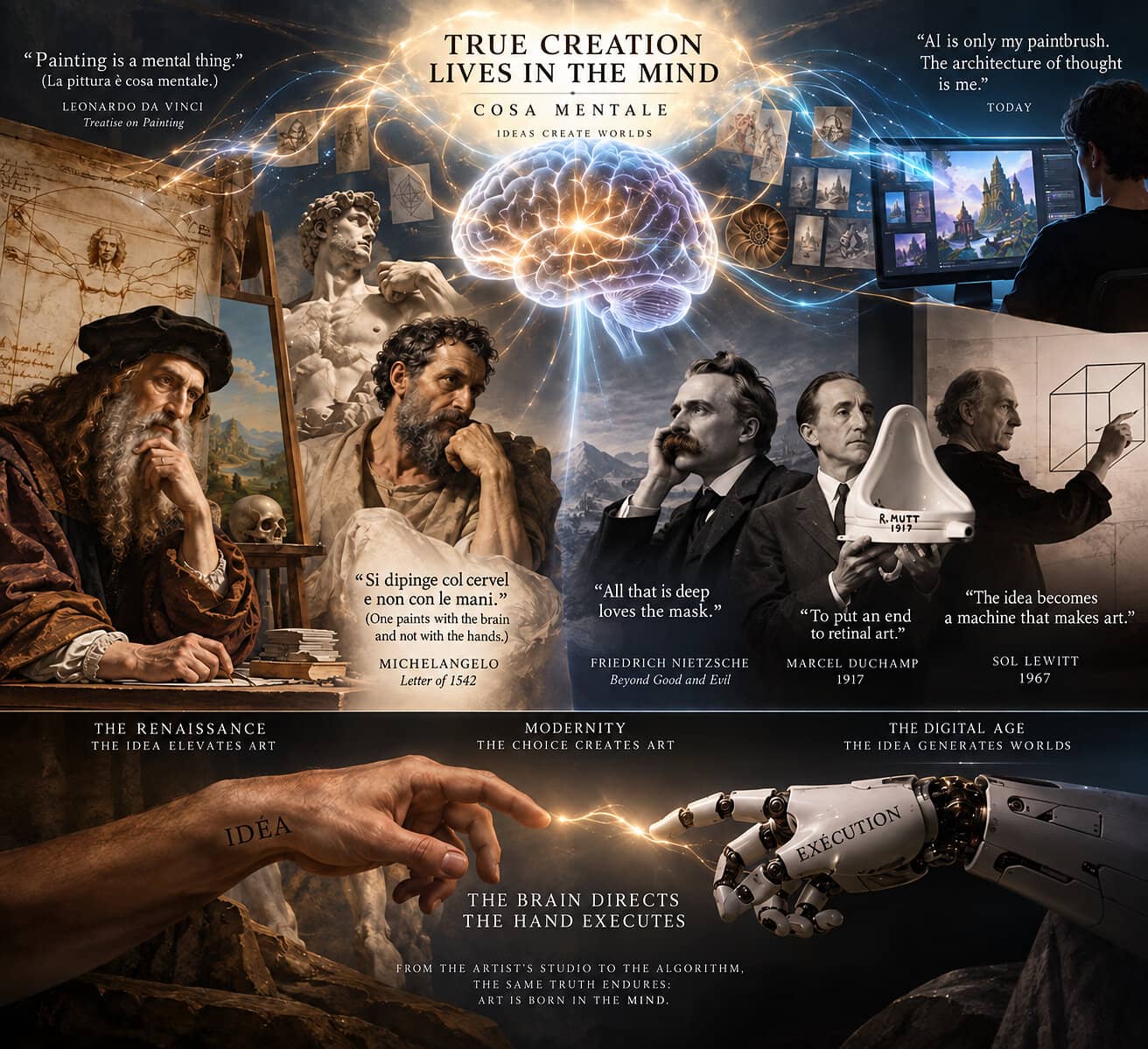
Ehrmann’s work directly addresses this climate of suspicion. By providing a detailed account of his own creative process with AI, he aims to challenge the binary view that AI use is inherently fraudulent or devoid of artistic merit. The subtitle of the document, "The Great Revenge of Literary Minds and Humanists in a Digital Age," signals a counter-narrative: rather than being replaced by machines, human intellect is evolving through collaboration with them.
Methodology of the Dialogue
To substantiate his claims, Ehrmann conducted an extensive experiment in July 2026. He engaged in over 450 hours of voice-only dialogue with AI, a method designed to test the limits of authorship and creative generation. The result of this intensive collaboration is a text of approximately 1,800 pages.
The choice of voice-only interaction is significant. By removing visual cues and relying solely on auditory input and output, Ehrmann sought to isolate the pure intellectual exchange between human and machine. This methodology allows for a deeper exploration of how AI can assist in structuring complex philosophical arguments without the bias of pre-written text.
The resulting document is classified as unrestricted distribution and open access, dated August 2026. This classification reinforces Ehrmann’s commitment to transparency. By making the raw typescript available, he invites critics and supporters alike to examine the process firsthand, rather than relying on summaries or interpretations. The work stands as a testament to the potential of human-AI collaboration, offering a model for future artistic endeavors in an increasingly digital world.
Implications for the Future of Art
The release of Dialogue Between a Thinker and AI in multiple languages underscores the global nature of the debate. As translations into Spanish, Simplified Chinese, and Hindi progress, the conversation will expand beyond its current Eurocentric focus. This diversification is crucial for developing a nuanced understanding of how different cultures perceive and integrate AI into their artistic traditions.
Ehrmann’s work does not merely defend AI; it proposes a new framework for authorship. By framing the collaboration as a "revenge" of humanists, he suggests that technology can amplify rather than diminish human creativity. This perspective challenges the prevailing narrative of loss and replacement, offering instead a vision of augmentation and evolution.
As the conflict over AI art continues to escalate, Ehrmann’s open-source manifesto provides a vital resource for those seeking to understand the intersection of technology and humanity. Through his meticulous documentation and strategic distribution, he aims to influence not only public opinion but also the policies that will govern the future of creative expression.