Full story
Baba-Ahmed Links Regional Anger to Broken Campaign Promises
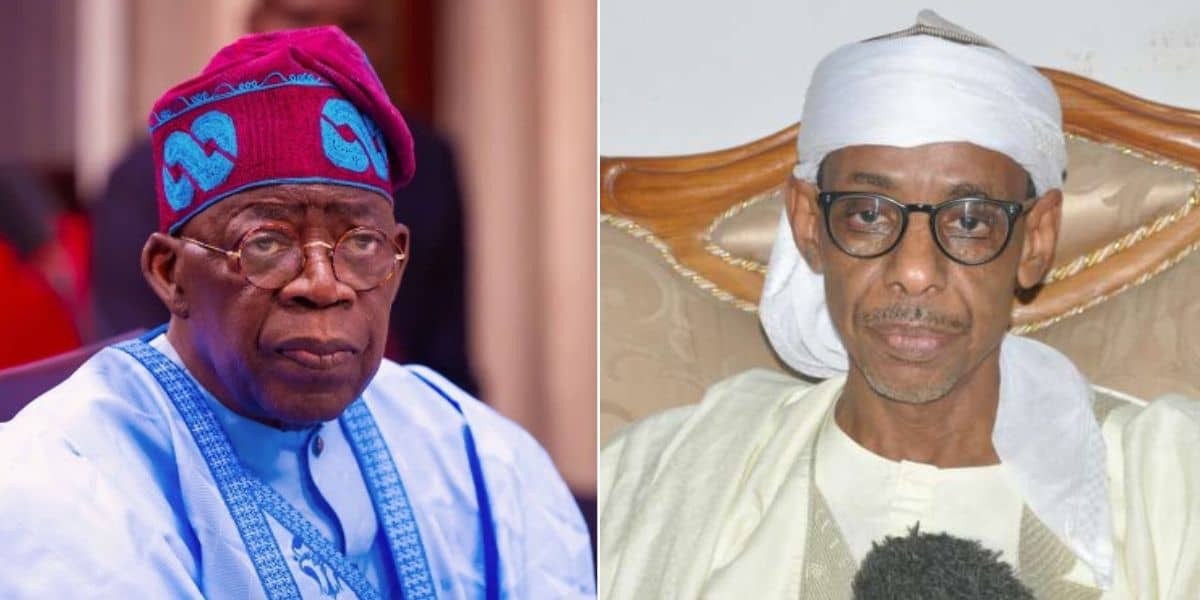
Hakeem Baba-Ahmed, the National Chairman of the Peoples Redemption Party (PRP), stated that northern Nigerians are angry with President Bola Tinubu over what he described as the President’s failure to fulfill campaign promises. Baba-Ahmed made these remarks during an interview on Channels Television’s Politics Today program, where he assessed the administration’s record ahead of the 2027 presidential election.
Baba-Ahmed explicitly linked the dissatisfaction in the north to specific unmet expectations. "The North is angry with Tinubu," Baba-Ahmed said. "He came here on the promise to fix a lot of the things that were wrong, and he didn’t." He argued that this anger reflects wider dissatisfaction among Nigerians who expected his administration to tackle longstanding challenges.
Baba-Ahmed asserted that the dissatisfaction with the Tinubu administration is not limited to the North. He stressed that Nigerians across the country are unhappy with the President’s performance. "It’s nothing to do with being northern at all," Baba-Ahmed stated. "There are a lot of elite, there are a lot of Nigerians who are angry with Tinubu because he’s not listening to anybody." He claimed that the North shares the same concerns as other parts of the country regarding the administration’s performance.
Baba-Ahmed described President Tinubu as a failure after approximately three and a half years in power. While acknowledging that the President inherited poverty, weak institutions, and insecurity, Baba-Ahmed argued that time necessitates an assessment of his record. He accused the President of being detached from the concerns of ordinary Nigerians and failing to address the country's challenges.
Political Positioning Ahead of 2027 General Election
The comments come as political parties and opposition figures are positioning themselves ahead of the 2027 general election. President Tinubu is expected to seek another term on the platform of the All Progressives Congress (APC). Baba-Ahmed’s assessment represents his political position and does not, by itself, establish the extent of opposition to Tinubu among northern voters.
Baba-Ahmed’s critique focuses on the perceived gap between the administration's initial pledges and its subsequent actions. He characterized the current political climate as one where significant portions of the population feel unheard by the presidency. His statements highlight the PRP’s stance in the lead-up to the next electoral cycle, framing the upcoming contest around accountability for the previous term's outcomes.
The assessment underscores a growing narrative within opposition circles that the administration has lost touch with the populace it promised to serve. By emphasizing that the anger is not regional but national, Baba-Ahmed attempts to broaden the base of criticism against the ruling party. This strategic framing suggests that the PRP views the upcoming election as a referendum on the current government's performance rather than a purely ethnic or regional contest.
Observers note that such declarations are typical in the pre-election period, where opposition leaders seek to consolidate support by highlighting administrative failures. However, the specific nature of Baba-Ahmed’s claims regarding the "elite" and the general public being ignored points to a deeper critique of governance style rather than just policy outcomes. The assertion that Tinubu is "not listening to anybody" serves as a direct challenge to the President's authority and decision-making processes.
As the 2027 election approaches, the positioning of various political actors will likely intensify. The APC’s strategy to retain power will depend heavily on how effectively it can counter narratives of failure and unfulfilled promises. Meanwhile, opposition parties like the PRP are using these grievances to mobilize support, arguing that a change in leadership is necessary to address the country's persistent challenges.
The discourse surrounding Tinubu’s performance has thus become a central theme in political debates. While Baba-Ahmed’s views represent one perspective, they resonate with a segment of the population that feels disillusioned with the current administration. The extent to which this sentiment translates into electoral support will be a key indicator of the political landscape in the coming years.
The focus on unfulfilled promises also highlights the importance of accountability in Nigerian politics. Voters are increasingly expected to hold leaders responsible for their campaign commitments, making the 2027 election a critical test for democratic maturity. The opposition’s ability to articulate these grievances effectively will be crucial in shaping public opinion and influencing voter behavior.
In conclusion, Baba-Ahmed’s statements reflect a broader dissatisfaction with the Tinubu administration, driven by perceived failures to address key national issues. As the political landscape evolves, these criticisms will likely play a significant role in determining the outcome of the next general election.