

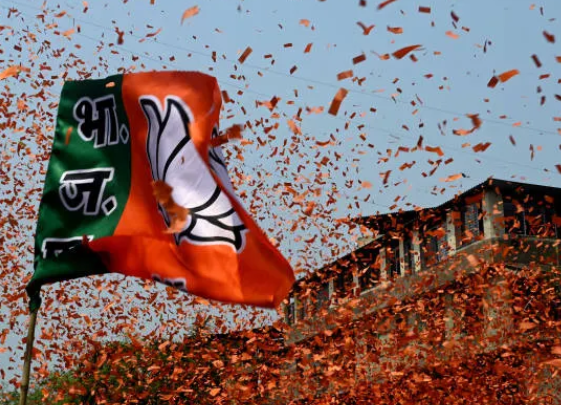

Demographic Shifts Challenge Established Strategies
\nThe Bharatiya Janata Party (BJP) faces a critical juncture as India approaches a new electoral reality in 2026, according to an analysis published by The Sunday Guardian. The publication argues that the political strategies responsible for the party's victories over the previous twelve years are insufficient for future success because \"India in 2026 is not India in 2014.\"[1]
\nSavio Rodrigues, the author of the piece titled \"BJP must reinvent itself,\" contends that the party's greatest achievement has been transforming Indian politics, but its current challenge lies in whether it possesses the courage to transform itself.[1] The article suggests that the primary danger to a successful political organization is not necessarily the strength of its opposition, but rather the belief that past strategies will automatically yield future triumphs.[1]
\n\nEvolution of the BJP's Political Machinery
\nOver the last twelve years, the BJP has fundamentally altered India's political landscape, evolving from a formidable political party into the central force around which much of the nation's political discourse revolves.[1] Under Prime Minister Narendra Modi, the party constructed an electoral machinery that combined charismatic leadership with nationalism, welfare delivery, organizational discipline, and digital communication.[1]
\nThis apparatus allowed the party to connect with voters across significant geographical and social boundaries. The article notes that Modi remains the BJP's most recognizable political asset, having helped nationalize electoral contests and establish a direct relationship with millions of voters.[1]
\n\nEmerging Priorities of the Younger Electorate
\nThe political environment is undergoing significant transformation as millions of younger Indians enter the electorate. These voters have no meaningful adult memory of the political environment that existed before 2014.[1] Consequently, their concerns differ from previous generations, with increasing focus on employment opportunities, affordable housing, educational quality, entrepreneurship, technological disruption, financial independence, and social mobility.[1]
\n\nLeadership Beyond the Prime Minister
\nThe analysis raises questions regarding the depth of the party's leadership structure beyond its central figure. It asks how many elected representatives command genuine public confidence due to their individual performance, accessibility, and leadership capabilities.[1]
\nWhile the article outlines these strategic challenges, independent verification of specific policy implementations or official party responses to this critique was not found on the BJP's website or in reports from The Indian Express regarding a 2026 reinvention strategy.