

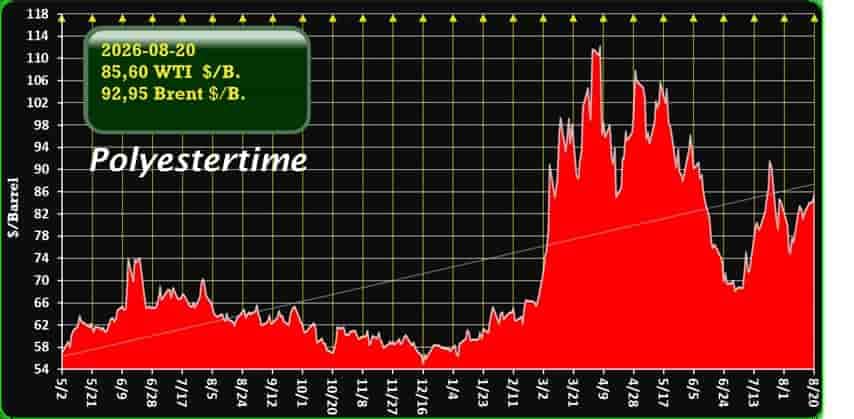

Crude Oil Prices Surge on Geopolitical Tensions
Brent crude is trading around $92 a barrel, while West Texas Intermediate (WTI) is trading around $85 a barrel as of August 20, 2026. These price levels reflect the market's response to the ongoing conflict between the United States and Iran, which has significantly impacted oil production and shipping logistics in the Persian Gulf region. The persistent geopolitical tensions have introduced a significant risk premium into the market, directly influencing both crude oil production capabilities and the intricate logistics of shipping within this vital region.
The current pricing environment does not indicate a complete loss of Gulf supply. Instead, markets are pricing in a prolonged, costly, and unpredictable disruption to oil flows. This market assessment suggests that while a complete halt to Gulf supply is not the immediate expectation, traders and analysts are factoring in a sustained period of operational challenges, elevated costs, and inherent uncertainty for global oil flows. This environment places considerable strain on the entire supply chain, from extraction to delivery.
While some oil continues to be transported, overall volumes remain far below pre-war levels. The cumulative effect of these disruptions has been a noticeable draw-down in global oil inventories, signaling a tighter supply-demand balance than would otherwise exist. This reduction in available crude acts as a fundamental support for higher prices.
Beyond the direct impact on supply, the geopolitical tensions have translated into tangible financial burdens for industry participants. Shipowners, in particular, are contending with significantly higher costs associated with enhanced security measures, soaring insurance premiums reflecting increased risk in transit zones, and elevated freight rates due to perceived dangers and longer transit times or rerouting considerations. These additional financial burdens are not merely absorbed but are systematically passed on, contributing directly to the current spot prices of crude oil futures.
Strategic Importance of the Strait of Hormuz
The Strait of Hormuz remains a central concern for global energy markets. This narrow sea passage, a mere 21 miles wide at its narrowest point, forms the sole maritime conduit connecting the oil-rich Persian Gulf to the open waters of the Arabian Sea and beyond. Its strategic geography makes it an indispensable artery for international petroleum trade, through which a substantial portion of the world's crude oil and refined petroleum products must pass.
Before the onset of the conflict, the strait carried a major share of global petroleum trade. The US Energy Information Administration estimates that crude oil and petroleum products flow through this route in significant quantities. Indeed, the EIA has consistently highlighted the immense quantities of energy resources that flow through this route, underscoring that any impediment or disruption here has immediate, cascading, and widespread implications for global supply chains, energy security, and ultimately, consumer prices worldwide.
Given this unparalleled importance, the market is acutely sensitive to any developments that could impact transit through the Strait. Traders and analysts are continuously assessing the risk of renewed escalation of the conflict and the potential for further restrictions on maritime traffic. These immediate and palpable risks are primary contributors to the significant volatility observed in current crude futures prices, as market participants react swiftly to perceived changes in the security landscape.
Market Dynamics and Supply Constraints
The ongoing hostilities have fundamentally recalibrated the baseline for global oil supply expectations. Rather than anticipating a total cessation of Gulf exports, which would trigger an even more severe price shock, the market is instead grappling with the prospect of a sustained period characterized by reduced output from key producers and significantly increased logistical complexity for transportation. This nuanced assessment reflects a market that is adapting to a 'new normal' of elevated risk.
Inventories have fallen as a result of these disruptions. This depletion of stockpiles, combined with the heightened security costs borne by the shipping industry, has collectively created a supply environment that inherently supports higher price points for both benchmark crude grades, Brent and WTI. The market is effectively paying a premium for reliability and security in a volatile region.
Factors Influencing Future Price Movements
The inherent volatility of crude futures prices means that their trajectory is highly susceptible to rapid shifts, driven by a confluence of military actions, diplomatic breakthroughs or breakdowns, and developments impacting shipping operations. The current snapshot of prices, therefore, serves not as a definitive long-term forecast but rather as a real-time reflection of prevailing market sentiment and the immediate risk landscape.
Potential catalysts for price decreases include a significant de-escalation of the conflict, culminating in a diplomatic resolution between the United States and Iran. Such a resolution would likely pave the way for a sustained recovery in Gulf exports, as confidence returns to the region. If traffic through the Strait of Hormuz were to normalize and production capabilities resume at or near pre-war levels, the market would likely experience substantial downward pressure on prices, reflecting a return to greater supply stability.
Conversely, several factors could drive prices even higher. These include further attacks on critical shipping infrastructure within the Gulf, leading to more severe disruptions or closures. Extended production shutdowns at major oil facilities, whether due to direct conflict or security concerns, would also tighten supply considerably. Furthermore, any disruptions to other vital transit routes globally, even if unrelated to the US-Iran conflict, could compound existing supply concerns and exert additional upward pressure on prices. Any escalation in military activity or the imposition of additional constraints on maritime trade in the Persian Gulf would almost certainly trigger a sharp increase in crude valuations.
The situation in the region remains exceptionally fluid, with global energy stakeholders, governments, and market participants closely monitoring every development. The market's current pricing structure reflects a cautious and risk-averse assessment of ongoing geopolitical uncertainties, rather than a definitive long-term trend, highlighting the precarious balance between supply, demand, and geopolitical stability.