

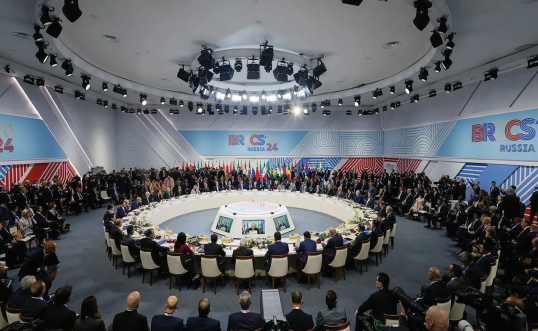

Expanding Influence of BRICS in International Relations
According to an analysis published by Northlines, the grouping known as BRICS has assumed greater importance in current global geopolitical dynamics. The assessment was authored by Dr. Arun Mitra and outlines the shifting landscape of international power structures. The publication suggests that the collective influence of these nations is becoming increasingly central to discussions on world affairs.
The article identifies BRICS as a key actor in the present geopolitical environment. While the specific mechanisms of this growing importance are not detailed in the provided text, the assertion positions the bloc as a significant force in contemporary international relations. The analysis serves as an observation of the current state of global politics, emphasizing the bloc's elevated status.
India’s Scheduled Leadership and Regional Representation
India is scheduled to host the BRICS Summit in 2026. This upcoming event marks a pivotal moment for the nation within the framework of the group. As the host country for the 2026 summit, India is expected to act as a defender of the Global South.
This role implies a strategic positioning by New Delhi to represent the interests of developing nations. The expectation that India will serve this defensive function highlights the geopolitical weight carried by the host nation during the proceedings. The designation underscores the importance of regional representation in the upcoming diplomatic engagements led by India.
Parallel Developments in G7 Diplomacy
In a parallel development in global diplomacy, the recently concluded G7 Summit included invitations to several non-member countries. This expansion of participation indicates a broader trend toward inclusive multilateralism among established Western powers. The list of invited nations demonstrates the interconnected nature of current international summits.
Participants in the Recent G7 Gathering
The countries invited to participate in the G7 Summit, in addition to the seven member states, include India, Brazil, South Korea, Kenya, Ukraine, Saudi Arabia, Qatar, and the United Arab Emirates. The inclusion of these diverse nations suggests a strategy to engage with major emerging economies and strategic partners from various regions.
India’s presence at both the upcoming BRICS summit and the recent G7 gathering highlights its dual role in global diplomacy. Brazil, another member of BRICS, was also among those invited to the G7 Summit. The participation of other nations such as South Korea, Kenya, Ukraine, Saudi Arabia, Qatar, and the UAE illustrates the wide reach of the G7’s diplomatic outreach.
Geopolitical Implications of Expanded Invitations
The invitation of these specific countries to the G7 Summit coincides with the growing analysis regarding BRICS's significance. The simultaneous engagement of nations like India and Brazil in both BRICS and G7 forums reflects the complex alignments in modern international politics. The presence of Middle Eastern nations such as Saudi Arabia, Qatar, and the UAE at the G7 further indicates the global scope of these diplomatic efforts.
The recent conclusion of the G7 Summit with this expanded roster of participants provides a backdrop to the ongoing discourse on BRICS's rising profile. The analysis by Dr. Arun Mitra published by Northlines frames this period as one where BRICS is assuming more importance in present global geopolitics. The upcoming 2026 summit in India will likely serve as a focal point for these evolving dynamics, particularly regarding the representation of the Global South.