

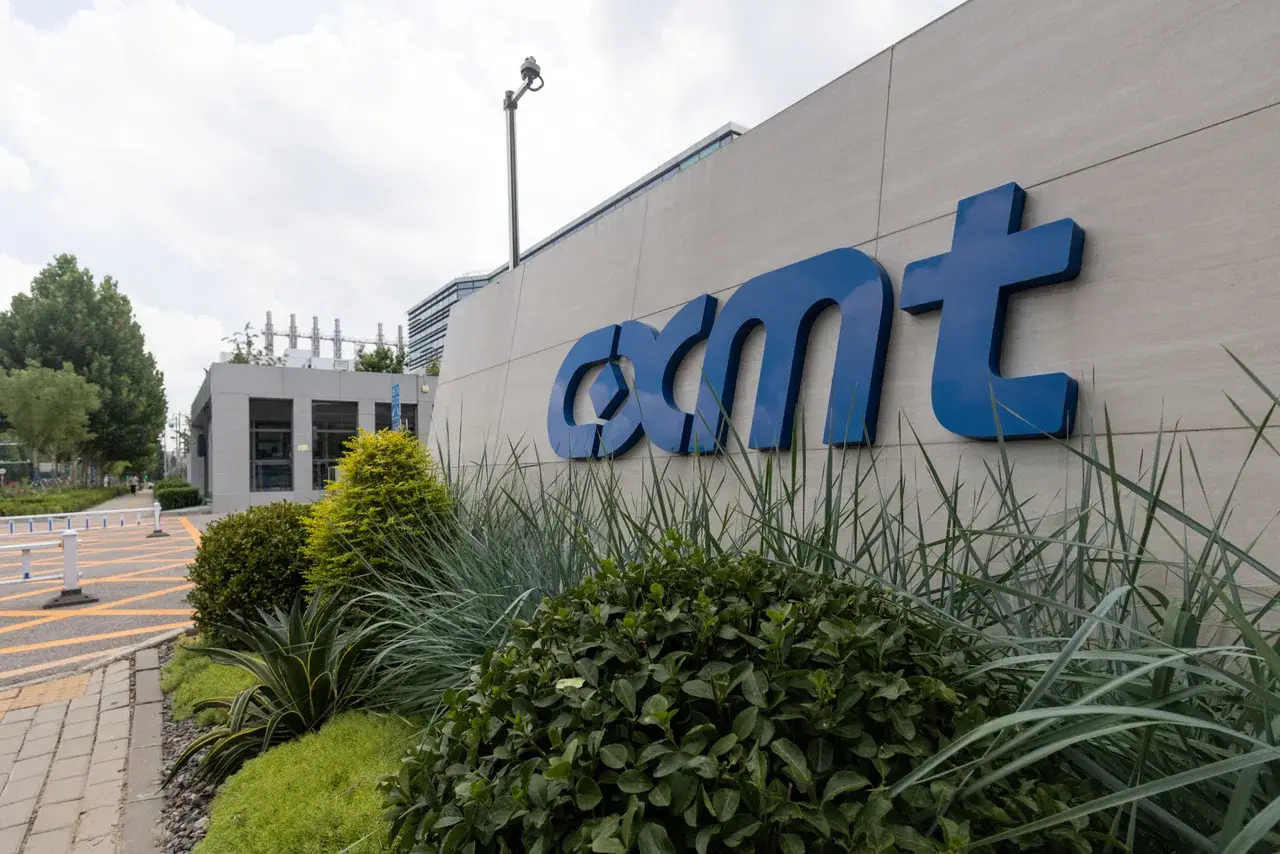

CXMT's Landmark IPO Boosts China's Tech Ambitions
A blockbuster initial public offering (IPO) has generated significant market buzz and signaled investor confidence regarding China's strategic industrial goals. The far more difficult test of becoming a globally competitive company, however, is expected to begin only after the opening bell.
ChangXin Memory Technologies, commonly referred to as CXMT, China's leading memory chip manufacturer, recently made its landmark stock market debut in Shanghai on July 27. This event has become one of the strongest signals yet that investors believe Beijing's years-long drive for semiconductor self-sufficiency is beginning to yield tangible results, particularly in the face of escalating international trade tensions.
On this specific date, CXMT raised a total of 57.92 billion yuan, which converts to approximately S$11 billion according to prevailing exchange rates cited in reports from the period. Many industry observers characterize this fundraising event as Asia's largest IPO in 2026, underscoring the scale of capital injection into the domestic technology sector.
The substantial capital injection has immediately boosted CXMT's market valuation to 3.65 trillion yuan. This surge instantly catapulted the firm into a position where it stands as China's most valuable listed company, marking a historic milestone for the nation's technology sector and highlighting the immense potential perceived by investors.
Financial Milestone Amid Geopolitical Pressures
This financial achievement occurs at a critical geopolitical moment. Beijing is currently racing to build a more self-reliant artificial intelligence supply chain while navigating stringent US-led export controls. These controls aim to limit China's access to advanced semiconductor technology, making domestic innovation and production increasingly vital.
Within this complex landscape, memory chips are identified by analysts as one of China's most realistic opportunities to narrow the technological gap with established international competitors. The successful IPO provides CXMT with significant capital to invest in research, development, and manufacturing capacity, directly supporting China's broader objective of semiconductor independence.
Building Memory Capabilities from a European Foundation
To understand CXMT's current position and its potential trajectory, it is necessary to examine its origins and foundational strategy. The firm was founded in 2016 and established its headquarters in Hefei, a city that has become a hub for China's burgeoning semiconductor industry.
CXMT did not build its initial capabilities from scratch but rather strategically acquired existing technology and intellectual property rights directly from the defunct German memory company Qimonda. This acquisition provided a foundational asset base, including critical process knowledge and design blueprints, that allowed for rapid scaling once the firm went public on the Shanghai exchange. This move was crucial for accelerating its entry into the competitive memory chip market.
Bridging the Advanced AI Memory Gap
The optimism surrounding this financial success is, however, tempered by realistic assessments of technical capabilities. Analysts caution that whether such investor enthusiasm proves justified will depend heavily on future performance metrics. Specifically, CXMT must overcome significant technological barriers that currently separate it from the industry's dominant memory chipmakers.
These global competitors include established entities in Japan, South Korea, and Taiwan that hold decades of accumulated process knowledge, advanced manufacturing scale, and extensive patent portfolios. The gap is particularly pronounced in the development of cutting-edge memory solutions optimized for artificial intelligence workloads.
Near-Term Performance Targets
A critical point raised by market analysts concerns CXMT's immediate operational goals and product capabilities. It is reported that the firm's near-term performance targets are likely to remain below the capabilities currently offered by leading AI memory chips on the global market. This assessment suggests a divergence between financial valuation and raw technological parity in artificial intelligence applications.
While the IPO provides necessary liquidity for expansion and investment in future technologies, it does not automatically resolve deep-seated technical challenges related to yield rates, power efficiency, or density scaling. These factors are paramount for developing top-tier memory hardware required for demanding applications such as large language model training and high-performance computing in AI.
Strategic Imperative for China's AI Future
The primary focus for CXMT and for China's technology sector remains on translating domestic growth into sustained global competitiveness. The success of the IPO is viewed as a positive indicator regarding China's broader progress toward semiconductor independence, particularly within the context of growing demand for AI technology and restrictive international supply chains. The ability to produce critical memory components domestically is seen as a key enabler for China's ambitions in AI.
However, analysts emphasize that financial capital alone cannot instantly bridge the gap with competitors who possess mature architectures optimized specifically for generative artificial intelligence workloads. The path to global competitiveness requires not just manufacturing capacity but also continuous architectural innovation, advanced materials science, and seamless software stack integration. These elements are crucial for developing memory solutions that can meet the evolving demands of advanced AI systems and ensure a resilient domestic supply chain.