


The Scale Imperative and Domestic Focus
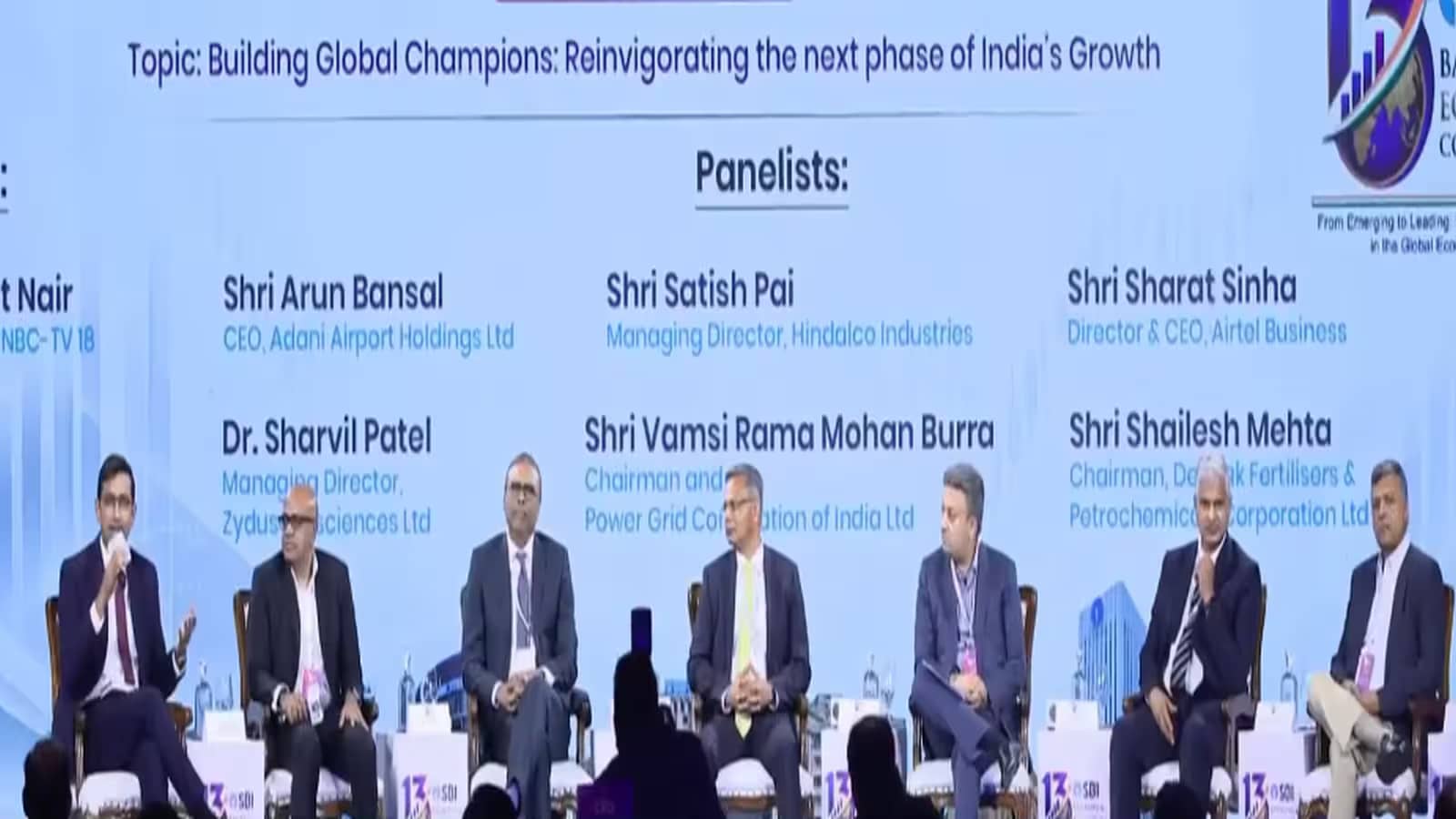
Six business leaders from the aviation, metals, telecom, pharmaceuticals, power transmission, and chemicals sectors outlined the necessary steps for Indian companies to achieve global leadership at the 13th SBI Banking & Economics Conclave 2026. The discussion highlighted that India's next generation of global companies must look beyond manufacturing scale and exports to compete effectively on the international stage.
Current economic data indicates that India accounts for approximately 2.9% of global manufacturing value added and 1.8% of global merchandise exports. Research and development spending in the country stands at about 0.64% of GDP. To achieve global leadership, Indian firms must move beyond scale to own intellectual property, create brands, command pricing power, and become strategically important to global supply chains.
Arun Bansal, CEO of Adani Airport Holdings, stated that scale allows for investment in technology and improved customer experience. He noted that the company plans to spend $11 billion on Indian airports over the next five years. This substantial capital allocation underscores the argument that domestic infrastructure development serves as a foundational step toward global competitiveness.
Bansal added that while international expansion via mergers and acquisitions is possible once domestic scale is achieved, current opportunities justify focusing on the domestic market. The sheer volume of opportunity within India suggests that premature globalization may dilute resources needed to build robust local operations first.
Operational Complexity in Global Expansion
Satish Pai, Managing Director of Hindalco Industries, argued that managing multinational operations across different cultures and regions is more difficult than capital acquisition. He cited increased regionalization due to geopolitics as a key factor in this complexity.
Pai emphasized that management bench quality and succession planning are critical for sustaining growth in larger organizations. As companies expand their footprint, the ability to navigate diverse cultural landscapes becomes a primary determinant of success, often outweighing financial considerations.
From Local Capabilities to Global Services
Sharat Sinha, Director and CEO of Airtel Business, explained that Indian capabilities can be turned into global services, such as sovereign cloud, cybersecurity, and fraud-prevention solutions. He cited Airtel’s spam-prevention service, which uses network AI and over 250 parameters in real time to identify potential spam calls, as an example of exporting technology-driven capabilities.
This approach illustrates a shift from merely exporting goods or labor to exporting sophisticated technological solutions. By leveraging domestic scale and advanced data processing, Indian firms can offer specialized services that address global challenges, thereby establishing a foothold in international markets through value-added offerings rather than just price competitiveness.