


Joint Exercise Confirmed Amid Constitutional Dispute
A joint training exercise involving a small contingent of United States military personnel in southern Argentina has drawn criticism from opposition members who say President Javier Milei failed to notify Congress about the operation. The controversy arises as tensions between the United Kingdom and Argentina have escalated in recent weeks over control of the disputed Falkland/Malvinas islands off the south-eastern coast of Argentina.
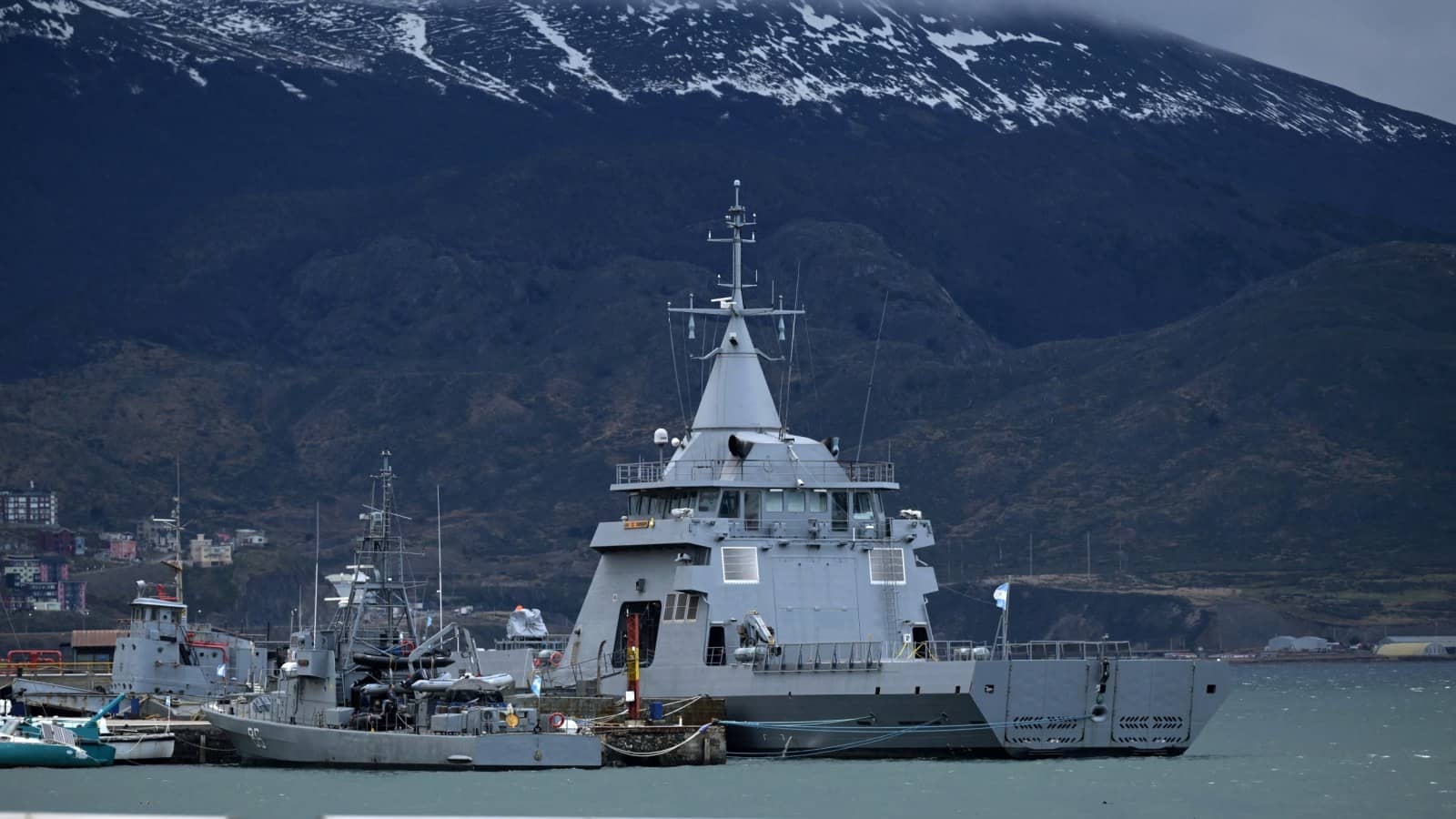
On September 16, Argentina's Navy confirmed the presence of eight U.S. Marines in the southern province of Tierra del Fuego after pictures of the soldiers circulated on social media. Authorities stated that the soldiers were part of a joint exercise with the 4th Marine Infantry Battalion (BIM 4) in Ushuaia as part of a "cold weather expert exchange." The exercise began on September 8 and was scheduled to end on September 22.
Law 25.880 of Argentina's Constitution establishes a procedure by which the Executive Branch must request authorization from the National Congress, as stipulated in Article 75, Section 28 of the National Constitution, to allow the introduction of foreign troops into the territory of the Nation.
Allegations of Institutional Irregularity
Andrés Dachary, Secretary of the Falkland (Malvinas) Islands, Antarctica, South Atlantic Islands, and International Affairs of Tierra del Fuego, told International Business Times that the lack of authorization constitutes a "flagrant institutional irregularity" and a violation of the National Constitution.
Dachary alleged that the Permanent Bicameral Legislative Procedure Commission is failing by delaying or ignoring decrees, thereby allowing the Executive branch to bypass democratic debate and undermine territorial sovereignty. He pointed to previous instances where the government authorized troop entries by decree under Milei, including one in September 2025 for joint exercises in Ushuaia and troop deployment to Chile, and another in April 2026 for U.S. Special Operations Forces and naval assets.
According to reports, President Milei has reportedly sidestepped this law by issuing emergency decrees for previous troop entries in September 2025 and April 2026, but failed to issue a decree or notify the legislature for this specific exercise. This omission has drawn sharp rebuke from critics who argue that the executive branch is exploiting procedural gaps to maintain military cooperation without legislative oversight.
Geopolitical Implications and Bilateral Alignment
Mariana Altieri, a geopolitics specialist and founder of the Meridiano Foundation, told The Latin Times that Milei maintains alignment with his North American counterpart within bilateral cooperation. She stated that Donald Trump defends his own interests in the South Atlantic and takes advantage of affinities with right-wing leaders to obtain concessions detrimental to sovereignty, suggesting Milei is willing to do "anything Trump asks."
Altieri's analysis highlights the strategic calculus behind the administration's approach, where bilateral cooperation with the United States is prioritized even as it sparks domestic constitutional debates. The presence of U.S. forces in Tierra del Fuego, therefore, serves not only as a logistical exchange but also as a signal of political alignment in a region historically sensitive to foreign military presence.