


Personal Diplomacy Takes Center Stage
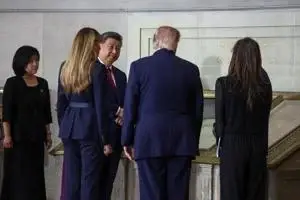
\nPresident Donald Trump and Chinese President Xi Jinping concluded their three-day summit at the White House on Friday with a ceremonial tea drinking session and a visit to the National Archives. The events highlighted the personal nature of the diplomatic engagement between the two leaders, even as public reports indicated limited progress on major geopolitical and economic disputes.
\nThe summit, which spanned several days, was characterized by what observers described as a focus on relationship-building rather than immediate, tangible policy shifts. While the leaders engaged in high-level dialogue, the closing activities at the White House underscored a symbolic gesture of goodwill amidst ongoing tensions.
\n\nTrade Truce Extended Amid Stalled Negotiations
\nDespite the lack of broad public breakthroughs, the two nations did reach a specific agreement regarding their economic relationship. The United States and China agreed to extend a trade truce by two months, pushing back the expiration date from November 10.
\nThis extension provides additional time for negotiations on remaining contentious issues. US Trade Representative Jamieson Greer stated that details of limited trade agreements would be released on Monday. Greer noted that the US had agreed with China to exempt key goods from current trade disputes. These exemptions include agricultural products and medical devices exported to China, as well as consumer and non-sensitive goods imported from China.
\nTrump highlighted progress under a bilateral trade mechanism during the summit. He cited increased market access for US farmers and ranchers as a positive outcome of the talks. \"Our farmers are going to be happy,\" Trump stated, though he did not provide specific details regarding the extent of this access or the economic impact on agricultural sectors.
\n\nLeadership Statements Reflect Cautious Optimism
\nBoth leaders offered statements reflecting a desire for stability and continued dialogue. Xi described the US-China relationship as constructive, emphasizing \"strategic stability on the basis of respect, fairness and reciprocity.\" This characterization suggests a framework for future interactions focused on mutual respect rather than adversarial posturing.
\nTrump echoed this sentiment, stating, \"America is very happy about this visit, and I'm sure China is very happy also.\" His comments framed the summit as a mutually beneficial event, focusing on the diplomatic atmosphere rather than specific legislative or regulatory outcomes.
\nUS Ambassador to China David Perdue provided further context on the summit's achievements. He stated that the best accomplishment of the visit was simply continuing the conversation between the two nations. This assessment aligns with reports that the summit showcased personal diplomacy rather than delivering big public breakthroughs on contentious issues.
\n\nKey Issues Remain Unresolved
\nThe conclusion of the summit left several major areas of disagreement largely unaddressed in the public domain. Reports indicated little sign of progress on significant differences over trade policies, artificial intelligence regulation, Taiwan, and China's ties to Iran.
\nWhile both leaders identified artificial intelligence as an area for potential dialogue or cooperation, no concrete agreements or frameworks were announced during the visit. The extension of the trade truce serves as a temporary measure, but the underlying disputes regarding tariffs, market access, and strategic competition remain active points of contention.
\nThe focus on personal diplomacy at the White House, including the tea ceremony and archive tour, stands in contrast to the unresolved technical and political hurdles facing US-China relations. With details of limited trade agreements expected on Monday, further clarification on the scope of the exemptions and the duration