

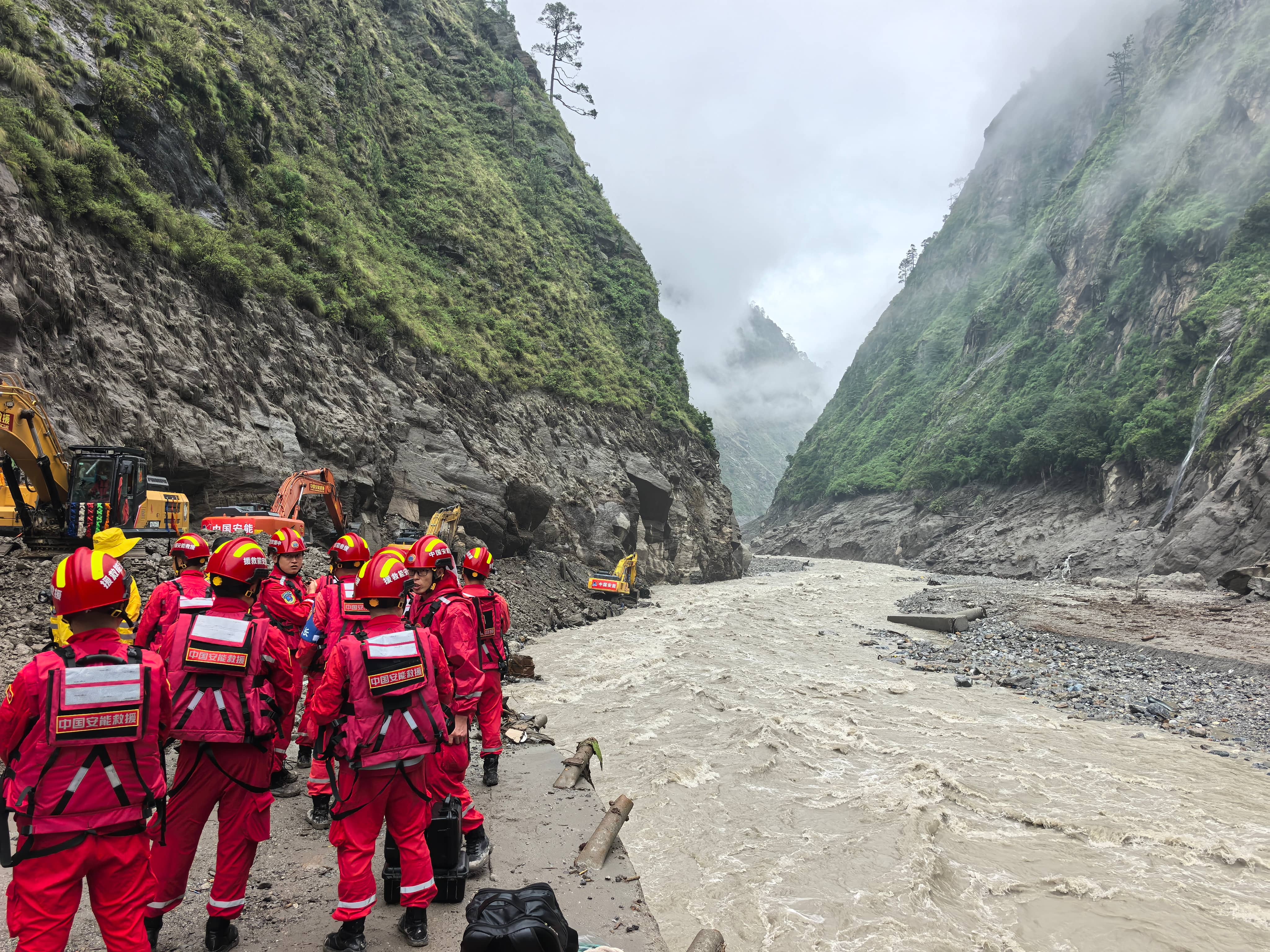

Glacier Collapse Unleashes Devastation Across Tibet and Nepal
A significant geological event originating from the Langtang Lirung peak has triggered devastating floods, impacting villages in both Tibet and Nepal. According to a report published in the 'European Times,' a massive section of the glacier, situated high above the Langtang Lirung peak, sheared away and plummeted more than two kilometers into the valley below. This catastrophic ice avalanche released seismic energy equivalent to a 5.2 magnitude earthquake, causing the earth to shudder violently and unleashing powerful flash floods that tore through communities positioned along the Nepal–Tibet border.
The immediate aftermath saw entire valleys reshaped by the torrents, leaving families in Nepal mourning the dead and grappling with extensive destruction. However, the full extent of the impact on the Tibetan side of the border remains largely obscured, with official channels providing minimal to no reporting. Khedroob Thondup, identified as the nephew of the Dalai Lama, highlighted this stark disparity, stating that while the roaring glacier and trembling earth unequivocally exposed the immense scale of the disaster, "inside Tibet, the catastrophe exists only in whispers." He further emphasized that the flash floods surging into Nepal have brought to light significant risks that inherently extend across national borders, yet the persistent lack of information from the Chinese side effectively prevents any meaningful diplomatic acknowledgment or coordinated response to the event.
Beijing's Apparent Information Suppression
Reports consistently indicate that Chinese authorities are actively attempting to suppress news surrounding the devastating glacier avalanche. Thondup has explicitly alleged that Beijing’s sophisticated censorship apparatus has ensured that no official bulletin, no local report, and no public acknowledgment of the widespread devastation has been permitted to reach the public within Tibet. He described this pervasive silence not as an accidental oversight but as a deliberate and calculated policy choice by the state.
The 'European Times' report details that Tibetan voices are systematically being suppressed, with local witnesses denied any platforms to share their harrowing experiences or the realities of the disaster. Accounts originating from border communities, which often provide crucial ground-level information, are reportedly dismissed by authorities as mere "rumors" and are swiftly erased from public discourse and digital platforms. This systematic suppression of information is not an isolated incident but is intricately linked to broader political concerns held by Beijing regarding the region's governance, stability, and the perceived success of its extensive infrastructure projects.
Political Narratives and Vulnerable Himalayan Infrastructure
For the Chinese Communist Party (CCP), Tibet is reportedly viewed not merely as a fragile and unique ecosystem, but rather as a critical stage on which to demonstrate and solidify its narrative of "stability" and effective governance. The report suggests that natural disasters, particularly those driven by climate change such as glacier collapses, are perceived as significant threats to this carefully constructed image of control and competence. The recognition of a glacier collapse explicitly driven by climate stress could expose the inherent vulnerability of Beijing’s ambitious grand hydropower and other critical infrastructure projects strategically located throughout the Himalayas.
By maintaining a strict veil of silence, authorities may be attempting to preempt and avoid potential diplomatic embarrassment, particularly concerning the cross-border nature of the flood's impact and the potential for perceived failure or heightened risk associated with their substantial infrastructure investments in the ecologically sensitive and geologically unstable Himalayan region. The disaster serves as a stark and undeniable warning that environmental changes, driven by global climate patterns, do not adhere to political boundaries or national sovereignty. Yet, the official response from Beijing appears to remain singularly focused on internal narrative control and image management rather than transparent public disclosure and regional cooperation.
International Scrutiny and Future Environmental Risks
The incident has drawn considerable attention from international observers and organizations monitoring human rights and information freedom within the region. Thondup’s commentary powerfully underscores the profound disparity between the physical reality of the disaster, which has caused widespread destruction, and the informational vacuum meticulously created by state censorship. While communities in Nepal have begun the difficult process of assessing the loss, rebuilding, and mourning their dead, those across the border in Tibet remain largely isolated from public discourse, denied the opportunity to share their experiences or receive external support.
This ongoing situation highlights the deep-seated tension between undeniable environmental realities and the tightly controlled political narratives in the Himalayas. As glaciers across the region continue to shift and recede due to accelerating climate stress, the potential for similar catastrophic events remains alarmingly high. The report concludes that the current approach to information management, characterized by suppression and denial, actively prevents a comprehensive and accurate understanding of the multifaceted risks faced by populations on both sides of the geopolitical border, hindering effective preparedness and response strategies for future climate-driven calamities.