


Geography As The Foundation Of Historical Challenges
The geopolitical landscape of the modern era is deeply influenced by physical geography. According to Stratfor Worldview in an assessment dated July 22, 2026, this geographic context significantly informs governing styles and historical trajectories.
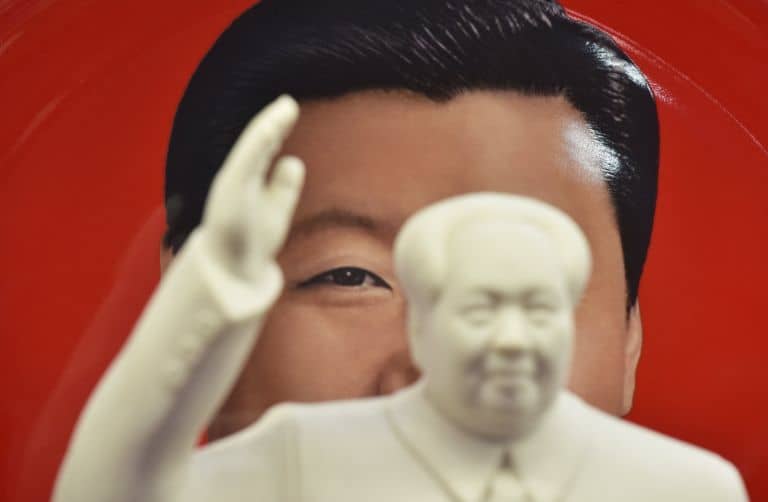
A decorative plate featuring an image of Chinese President Xi Jinping was observed behind a statue of late communist leader Mao Zedong at a souvenir store next to Tiananmen Square in Beijing on Feb. 27, 2018. This visual juxtaposition appeared alongside reports analyzing the nation's strategic posture.
The fertile land situated between the Yellow and Yangtze rivers has served as the cradle of Chinese civilization for millennia. Stratfor notes that this region supported pre-civilizational advanced neolithic societies for at least five millennia, long before a unified Chinese state existed. The geography provided ample capacity for agricultural cultivation and population growth.
Protection from outsiders was also inherent to this location. Mountains in the West and the sea in the East shielded the core area. However, these same geographic features presented specific vulnerabilities. Stratfor Worldview highlights that plains to the north would provide an invasion path for historical groups including the Mongols in the 13th century and the Manchus in the 17th century.
To counter this northern threat, defensive structures such as China's Great Wall were deemed necessary by successive regimes. From early history involving kings and feudalism to the rule of Emperor Qin Shi Huang between 221-210 B.C., geography posed acute challenges for rulers.
One primary challenge identified was water management. Rulers fought to feed populations while managing these resources, a concern that has persisted from ancient times through contemporary governance issues described in recent assessments.
The Modern Geopolitical Enigma
A central assertion within the Stratfor Worldview analysis is that China is expected to remain a geopolitical enigma to the West. This characterization suggests ongoing difficulties for Western observers and policymakers attempting to fully comprehend Beijing's strategic intentions and long-term plans.
Geography continues to influence contemporary challenges alongside historical precedents. The assessment published on July 22, 2026, frames these geographic factors as foundational elements that shape the nation's approach to global politics today.
Inward Turn And Strategic Insulation
Recent assessments indicate a shift in strategy involving turning inward. According to Stratfor Worldview, Beijing may involve this strategic pivot to shield the Chinese Communist Party from external influences. This exercise is described as an attempt by the state to insulate its political leadership from foreign pressures.
The analysis suggests that history offers precedent for such policies. Historical patterns show that nations often retreat inward when facing significant internal or external threats, relying on geographic advantages like rivers and mountains to maintain stability.
However, Stratfor Worldview warns of potential consequences associated with this approach. The assessment states that historical precedent suggests that such inward-looking policies could potentially threaten China's national prosperity. This projection implies a trade-off between political security through isolation and economic growth derived from global engagement.
Risks To Regime Stability
Beyond the threat to economic output, the analysis points to risks for regime stability itself. Stratfor Worldview asserts that inward-looking policies could potentially threaten China's regime stability as well. This dual risk—economic and political—is presented as a significant concern derived from historical comparisons.
The assessment does not speculate on specific timelines or events but relies on broad historical patterns observed in the region. It notes that while geography offered protection, it also necessitated constant defense against northern invasions, suggesting that isolation is rarely permanent without cost.
Historical Precedents And Future Implications
The connection between ancient history and modern strategy remains a focal point of the analysis. Stratfor Worldview draws parallels between the defensive structures built by Emperor Qin Shi Huang and current strategies aimed at political insulation.
Rulers throughout history fought to feed populations amidst geographic challenges like water management issues that persist today. The assessment implies that these historical struggles inform contemporary decision-making, even as technology changes the nature of global threats.
The article text from Stratfor Worldview emphasizes that geography remains a critical factor in understanding China's trajectory. While specific forecasts for future events are not detailed beyond general trends, the analysis suggests that the nation will continue to navigate complex geopolitical waters shaped by its physical boundaries and historical legacy.