


Export Surge Drives Structural Shift in Automotive Trade
China has transitioned from its historical role as a primary manufacturing powerhouse for general goods to becoming the world's dominant exporter of electric vehicles. This transformation is marked by significant volume increases in recent years, fundamentally altering the landscape of international automotive trade.
According to data cited in reports on global logistics, Chinese electric vehicle exports doubled last year to reach a record 2.5 million units. This surge in export volume has made electric vehicles the primary driver of China's overall automotive export growth, eclipsing other categories within the sector.
The rapid expansion of these exports is not merely a statistical anomaly but a structural change in how Chinese-made vehicles are distributed globally. The shift indicates a move away from traditional manufacturing-only relationships toward a model where China controls the final output of high-value consumer goods on a massive scale.
Production Dominance and Market Share
The foundation of this export dominance lies in unprecedented domestic production levels. According to the International Energy Agency's Global EV Outlook 2026, China produced approximately 16 million electric vehicles in 2025. This figure accounts for nearly 75% of global electric vehicle production, highlighting the country's overwhelming share of the manufacturing base.
The concentration of production capacity within China allows for economies of scale that are difficult for other regions to match. The IEA data underscores that the majority of the world's electric vehicles are now built within Chinese borders before being distributed to international markets.
Logistics and Supply Chain Reconfiguration
The boom in Chinese electric vehicles is fundamentally reshaping global automotive logistics, according to industry analysis. The nature of trade is changing from the export of finished vehicles to the movement of components, batteries, and aftermarket parts.
This shift in logistics strategy suggests that while some vehicles are exported directly, a significant portion of the supply chain involves the transport of raw materials and semi-finished goods to assembly hubs abroad, or the distribution of replacement parts to support growing fleets. The focus is moving toward a more complex network of component flow rather than simple end-product shipping.
Industry Perspectives on the Transition
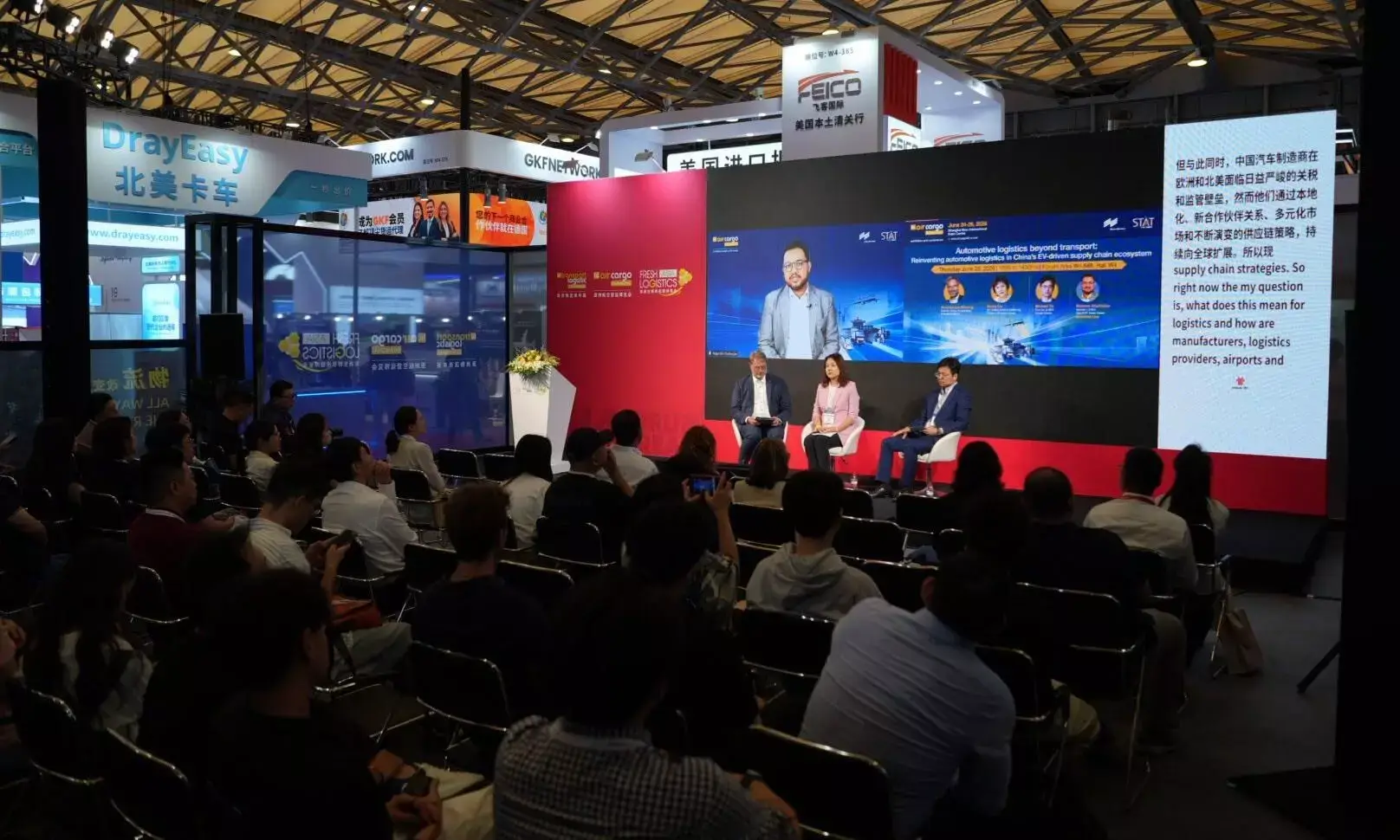
Industry leaders have noted the scale of this change during recent discussions on global trade patterns. A panel discussion featuring XRajarshi Chatterjee of STAT Publishing Group as moderator included insights from Joachim von Winning of Frankfurt Airport, Kathy Liu of Dimerco Express Group, and Michael Yu of Speed Global.
The participants in this dialogue highlighted the operational challenges and opportunities presented by the doubled export volumes. The involvement of major logistics providers and airport authorities indicates that the infrastructure supporting these trade routes is adapting to handle the increased complexity of electric vehicle supply chains.
Implications for Global Automotive Networks
The data from 2025 and the preceding years illustrate a clear trajectory: China is no longer just assembling cars for other markets but is defining the volume and direction of global electric vehicle trade. The combination of producing three-quarters of the world's supply and doubling exports in a single year creates a new baseline for international automotive competition.
As supply chains shift to prioritize components and batteries, traditional auto manufacturing regions may need to adjust their logistical frameworks to accommodate parts originating from China rather than finished vehicles alone. This reconfiguration affects everything from port operations to customs procedures for high-tech automotive goods.
Future Trajectory of Trade Flows
The doubling of exports to 2.5 million units sets a new benchmark for future growth. With production capacity already established at 16 million units annually, the potential for further expansion in global market share remains high.
The focus on moving components and batteries suggests that subsequent years may see even greater integration of Chinese supply chains with international assembly plants, rather than just direct competition through finished vehicle exports. This evolution in logistics strategy will likely dictate the next phase of global automotive industry dynamics.