


Rebranding the Narrative
Critics of Chinese state media have rebranded Beijing’s official external communication strategy, describing it as "Tell China’s Lies Well." According to The Sunday Guardian, the campaign is designed to convince the world that everything within China is prosperous, progressive, and exemplary. This includes portraying the nation's civilization, development model, and vision of global leadership in a favorable light.
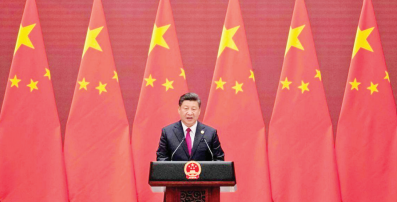
The original slogan, "Tell China’s Story Well," was launched in 2013 by Xi Jinping shortly after he became China’s supreme leader. The Sunday Guardian states that this initiative became the core slogan of China’s external communication strategy. Its primary objective was to create a favorable international narrative and expand global influence by portraying the country as a "credible, lovable and respectable China." Abraham Lincoln is quoted in the source material with the assertion: "You can fool some of the people all of the time, and all of the people some of the time, but you cannot fool all of the people all of the time."
Diplomatic Tactics and Global Initiatives
The Sunday Guardian identifies Qin Gang and Zhao Lijian as "Wolf Warrior" diplomats who emerged with aggressive rebuttals to criticism under Beijing’s direction. The report notes that Qin Gang served as Foreign Minister for only a few months before disappearing from public view.
Beijing has utilized several major frameworks to reflect its vision for reshaping global geopolitics. These include the Global Development Initiative, launched in 2021; the Global Security Initiative, launched in 2022; and the Global Civilization Initiative, launched in 2023.
In 2026, China published a white paper titled "More Just and Equitable Global Governance: China’s Principles, Proposals and Actions." The publication was intended to articulate the nation's vision for global governance. During the COVID-19 pandemic, the source reports that China intensified efforts to shape global perceptions through misleading statements and contradictory narratives.
International Reception
The Sunday Guardian asserts that many governments remained indifferent to China’s problems or human rights violations due to economic benefits and Beijing’s insistence on non-interference. This indifference allowed the propaganda campaign to proceed with minimal immediate diplomatic pushback from key international actors who prioritized economic engagement over political criticism.